Snapper Hole
Protected Area
Grand Cayman East
Why dive here
With 327+ marine species recorded in the area - including barracuda, bull sharks, oceanic whitetip sharks, orcas and sea turtles - Snapper Hole offers some of Grand Cayman's richest reef diving. Water ranges 27-31°C, warmest August, September, October.
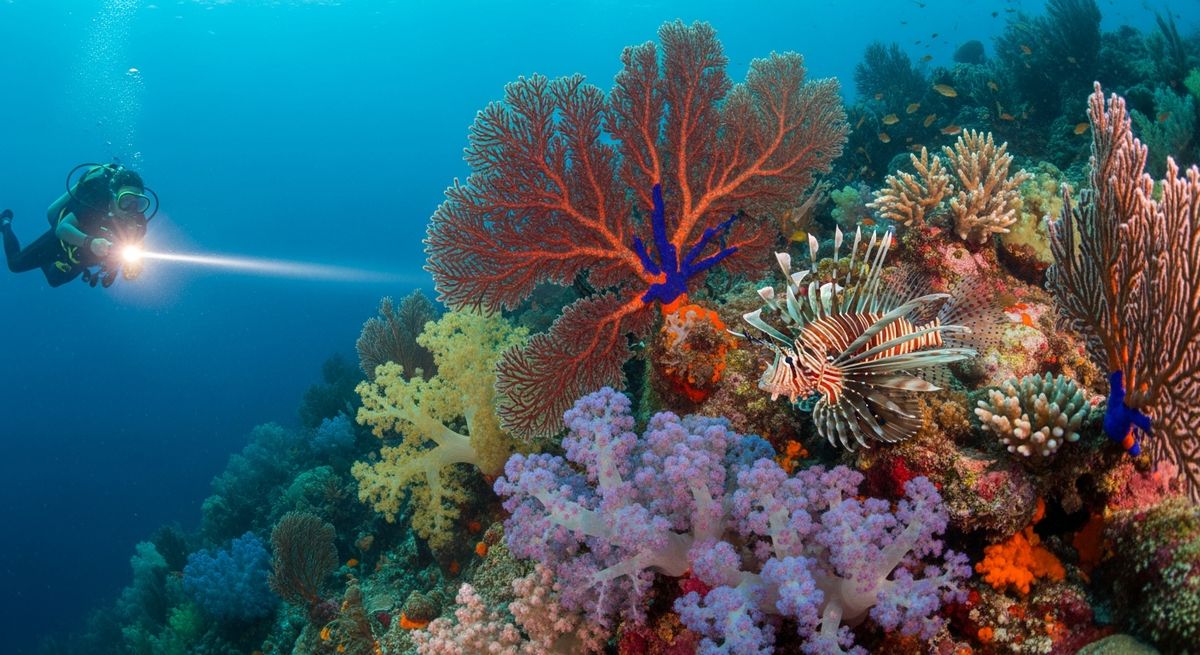
Snapper Hole, on Grand Cayman's East End, is a chaotic good kind of dive. It’s a tangle of swim-throughs and caverns that always keeps us guessing, maxing out at about 20m. We love getting lost in its maze-like structure, ducking under arches and squeezing through tight spots, though if you're not comfortable with overhead environments, maybe ease into this one. The BBC documentary cavern is impressive, dark and full of nooks. Look for the massive 1872 Spanish anchor propped against a coral head, a real piece of history down there. Our favourite feature has to be Papa Smurf’s House, a mushroom-shaped coral formation that’s just fun to swim around. In summer, the silverside swarms are so thick they blot out the sun, bringing in tarpon and jacks, a real spectacle. You'll often find schoolmaster snappers hanging out, and we’ve spotted a grumpy-looking green moray eel more than once. Keep an eye out for the smaller stuff too, we've had good luck finding blennies and jawfish tucked into the sand patches between coral heads. It’s a site that rewards slow exploration, best for divers who enjoy poking into every corner.
Nearest Dive Centres to Snapper Hole
Dive shops near Snapper Hole
Tortuga Divers
Ocean Frontiers
Silver Thatch Watersports
Living the Dream Divers
OCTOPUS
Divers Supply
Reviews for Snapper Hole
Conditions
Ocean conditions, forecast and tides for Snapper Hole
Snapper Hole Ocean Conditions
Monthly averages for Snapper Hole, sourced from Open-Meteo marine data + Copernicus Marine (EU) - nearest station: Open-Meteo marine grid (19.38, -81.32) (5km away)
October Averages
Sea Temperature
30°C
87°F · Range: 29.1–31.8°C
Current Speed
4.47 cm/s
Direction: NW (296.6°)
Chlorophyll-a
0.045 mg/m³
Very clear (oligotrophic)
Salinity
36.14 PSU
Based on 4 years of monitoring data · Data sources: Open-Meteo marine data + Copernicus Marine (EU)
Plan & book
Ways to dive Grand Cayman, from day trips to liveaboards.
Day trips & courses
via GetYourGuideGuided dives, courses and snorkel trips with instant booking.
Find dive trips in Grand CaymanPlaces to stay
via Booking.comHotels and dive resorts near Grand Cayman.
Search stays in Grand CaymanDive insurance
Most travel insurance excludes or limits scuba. Check what you need before you go.
Dive insurance explainedPartner links: we may earn a commission if you book, at no extra cost to you. How we make money
Where to Stay near Snapper Hole
Prices from Booking.com. We may earn a commission at no extra cost to you.