Sunset House Reef
Protected Area
Old Pageant Beach - Sand Cay Apartments (Grand Cayman)
Why dive here
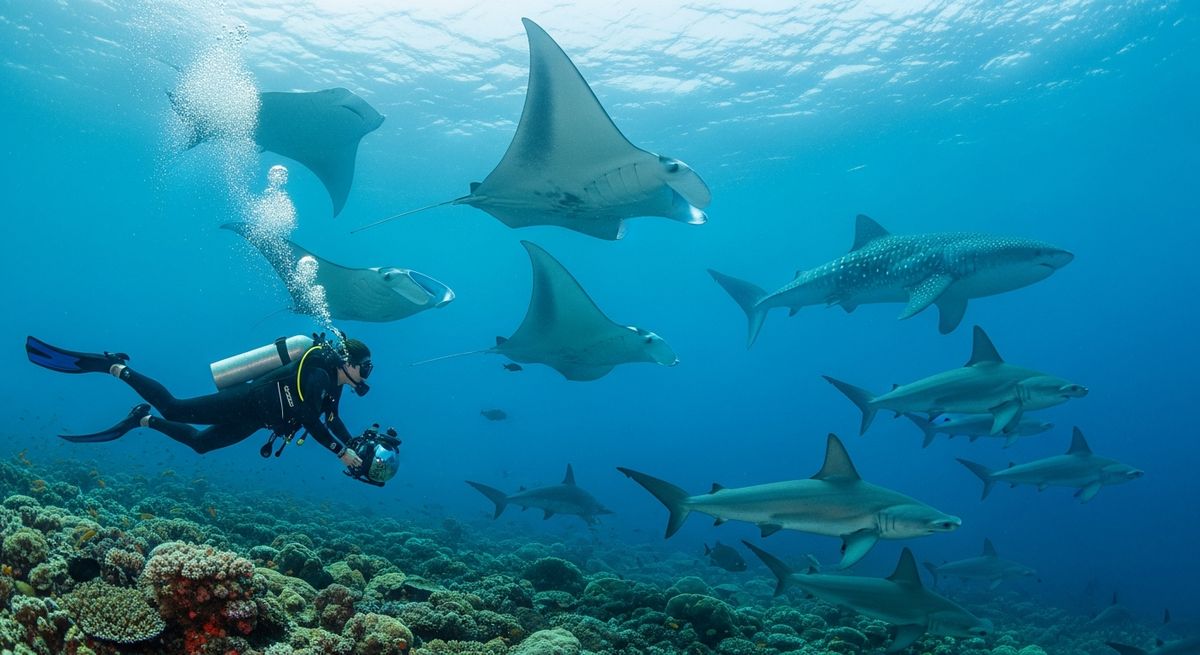
With 327+ marine species recorded in the area - including barracuda, bull sharks, oceanic whitetip sharks, orcas and sea turtles - Sunset House Reef offers some of Grand Cayman's richest drift diving. Water ranges 27-31°C, warmest August, September, October.
Sunset House Reef gets a lot of hype, and honestly, we think it deserves it. This isn't a deep, drift-diving spectacular, but for easy shore access and finding cool critters, it’s a winner. We’ve spent countless hours finning around here, and it rarely disappoints. Drop in right off the steps and you’re immediately into a busy, shallow world. The maximum depth of 16m means plenty of bottom time to hunt for the smaller stuff. We’ve had incredible luck spotting Secretary Blennies peering from their holes and even found a few shy Long-snout Seahorses tucked into the coral. Keep an eye out for the resident green turtles that glide by, seemingly unbothered by divers. The reef structure itself isn't dramatic, more of a gentle slope with plenty of nooks and crannies, perfect for spotting everything from parrotfish munching on coral to lurking moray eels. We’d suggest going in the late afternoon; the light is softer, and the dive boats usually clear out, leaving you with a more peaceful experience. It’s an ideal spot for macro enthusiasts, new divers building confidence, or anyone who just wants a relaxed, accessible dive without needing a boat.
Safety Notes
Drift dive - carry a surface marker buoy (SMB) and stay with your group. Brief the current direction before entry.
Nearest Dive Centres to Sunset House Reef
Dive shops near Sunset House Reef
SUNSET DIVERS
Don Foster's Dive Cayman, Ltd.
Atlantis Dive Center
Divers Down
Divers Supply
OCTOPUS
Reviews for Sunset House Reef
Conditions
Ocean conditions, forecast and tides for Sunset House Reef
Sunset House Reef Ocean Conditions
Monthly averages for Sunset House Reef, sourced from Open-Meteo marine data + Copernicus Marine (EU) - nearest station: Open-Meteo marine grid (19.38, -81.32) (5km away)
October Averages
Sea Temperature
30°C
87°F · Range: 29.1–31.8°C
Current Speed
4.47 cm/s
Direction: NW (296.6°)
Chlorophyll-a
0.045 mg/m³
Very clear (oligotrophic)
Salinity
36.14 PSU
Based on 4 years of monitoring data · Data sources: Open-Meteo marine data + Copernicus Marine (EU)
Plan & book
Ways to dive Grand Cayman, from day trips to liveaboards.
Day trips & courses
via GetYourGuideGuided dives, courses and snorkel trips with instant booking.
Find dive trips in Grand CaymanPlaces to stay
via Booking.comHotels and dive resorts near Grand Cayman.
Search stays in Grand CaymanDive insurance
Most travel insurance excludes or limits scuba. Check what you need before you go.
Dive insurance explainedPartner links: we may earn a commission if you book, at no extra cost to you. How we make money
Where to Stay near Sunset House Reef
Prices from Booking.com. We may earn a commission at no extra cost to you.