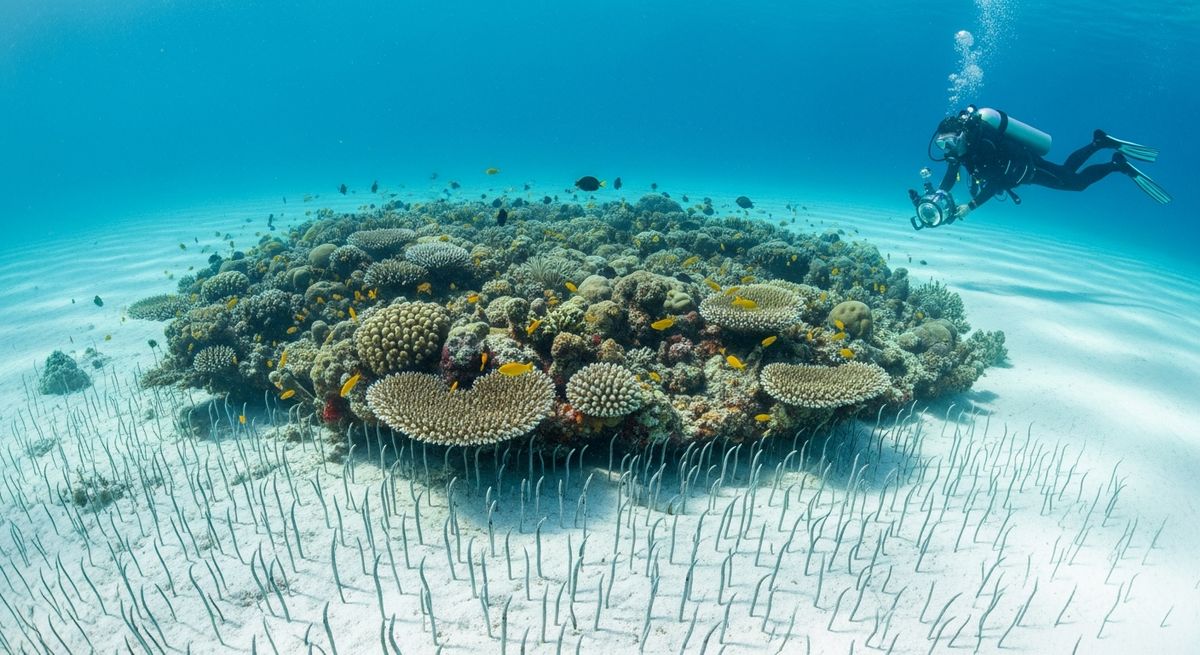
Trinity Caves
Protected Area
North West Point - West Bay Cemetery (Grand Cayman)
Why dive here
With 327+ marine species recorded in the area - including barracuda, bull sharks, oceanic whitetip sharks, orcas and sea turtles - Trinity Caves offers some of Grand Cayman's richest reef diving. Water ranges 27-31°C, warmest August, September, October.
Trinity Caves is one of those sites that just puts a grin on your face. We love how it starts, dropping straight into the main tunnel at about 21 metres. Sunlight dapples through the openings above, making the water glow in shades of blue as you weave through the limestone formations. It’s not a tight squeeze, more like a natural obstacle course. Keep an eye out for the resident Greater Soapfish tucked into crevices and the tiny Forked Bar Blennies perched on coral heads. Once you pop out onto the wall, usually around 28 metres, the reef life really picks up. We’ve seen everything from cruising eagle rays to some surprisingly large schools of jacks here. It’s a site that rewards taking your time, especially in the darker sections where the smaller gobies and blennies tend to hide. For the best light play, we'd suggest an earlier morning dive; the sun angle really makes the caves sing.
Nearest Dive Centres to Trinity Caves
Dive shops near Trinity Caves
Indepth Watersports Ltd
Divetech
Living the Dream Divers
OCTOPUS
Divers Supply
Divers Down
Reviews for Trinity Caves
Conditions
Ocean conditions, forecast and tides for Trinity Caves
Trinity Caves Ocean Conditions
Monthly averages for Trinity Caves, sourced from Open-Meteo marine data + Copernicus Marine (EU) - nearest station: Open-Meteo marine grid (19.38, -81.32) (5km away)
October Averages
Sea Temperature
30°C
87°F · Range: 29.1–31.8°C
Current Speed
4.47 cm/s
Direction: NW (296.6°)
Chlorophyll-a
0.045 mg/m³
Very clear (oligotrophic)
Salinity
36.14 PSU
Based on 4 years of monitoring data · Data sources: Open-Meteo marine data + Copernicus Marine (EU)
Plan & book
Ways to dive Grand Cayman, from day trips to liveaboards.
Day trips & courses
via GetYourGuideGuided dives, courses and snorkel trips with instant booking.
Find dive trips in Grand CaymanPlaces to stay
via Booking.comHotels and dive resorts near Grand Cayman.
Search stays in Grand CaymanDive insurance
Most travel insurance excludes or limits scuba. Check what you need before you go.
Dive insurance explainedPartner links: we may earn a commission if you book, at no extra cost to you. How we make money
Where to Stay near Trinity Caves
Prices from Booking.com. We may earn a commission at no extra cost to you.