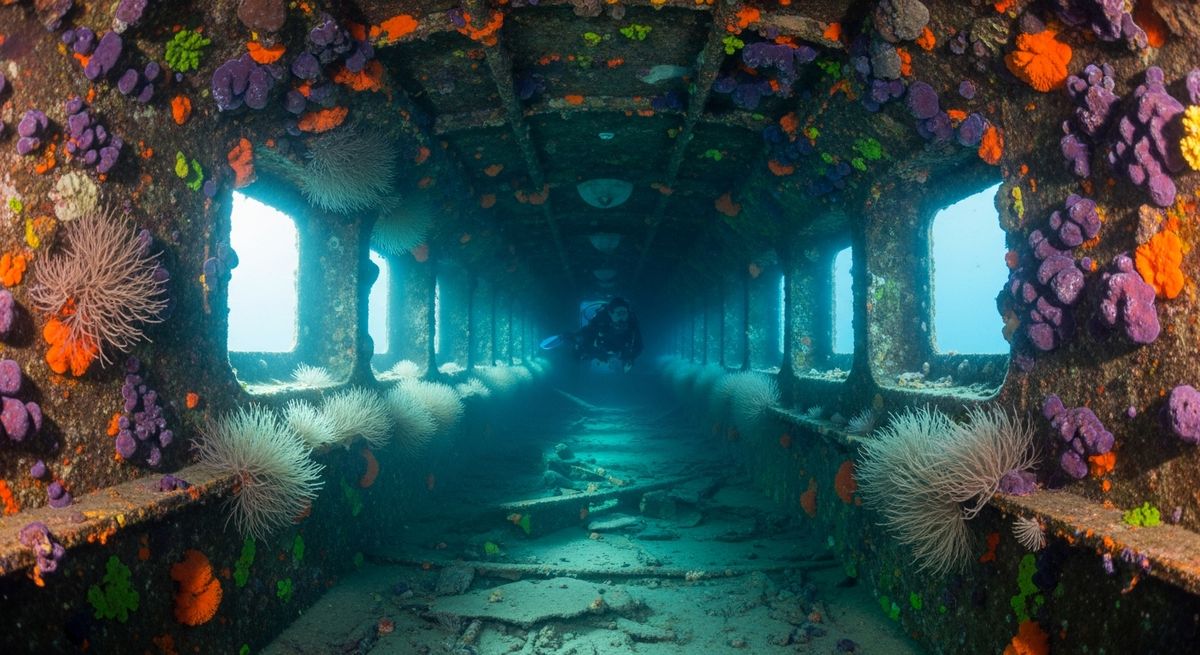
White Sand Beach, Carriacou
Protected Area
Sandy Island-Oyster Bay
Why dive here
With 292+ marine species recorded in the area - including barracuda, dolphins, humpback whales, nurse sharks and orcas - White Sand Beach, Carriacou offers some of Carriacou's richest wreck diving. Water ranges 27-30°C, warmest August, September, October.
White Sand Beach might sound like any other Caribbean beach dive, but it’s one of those spots that consistently over-delivers. We love dropping onto the sandy bottom, which is often crisscrossed with the tracks of stingrays and the perfectly camouflaged Sand Stargazer. It's a gentle, relaxing dive, rarely deeper than 13 metres, making it ideal for a leisurely afternoon or a first post-travel splash. What we really appreciate here is the macro life and the way larger species move through. Keep an eye out for Mottled Conger Morays peering from sandy crevices and the occasional Chain Moray tucked into the coral rubble. We've seen Atlantic Spotted Dolphins cruise by in the blue, though that's always a bonus. For us, the highlight is often watching the smaller reef fish, like the Bicolor Damselfish darting among the corals, and the endless parade of French Grunts and Yellowhead Wrasse. Visibility averages around 14 metres, which is usually plenty to enjoy the peaceful atmosphere and the surprising density of life for such a shallow site. It’s definitely our pick for a chill dive after a few days of deeper wrecks or drift dives.
Typical White Sand Beach, Carriacou Dive Profile
Illustrative profile based on site depth and type. Actual dive profiles vary - always follow your dive computer and training.
Safety Notes
Wreck site - avoid penetration without wreck diving certification. Watch for sharp metal and entanglement hazards.
White Sand Beach, Carriacou Wreck History
Year Sunk
2001
Vessel Type
fishing vessel
Cause
scuttled
Tonnage
433 GRT
The ADVANCE II spent her working life as a 185-foot menhaden fishing vessel, plying the waters of the Atlantic in search of the small, oily fish used for industrial purposes. Built in 1957, she was a classic example of the mid-century fishing fleet, a workhorse that contributed to the coastal economy for decades. After a long and productive career, the vessel was retired and prepared for a new purpose: to serve the marine ecosystem rather than harvest from it.
On January 25, 2001, the ADVANCE II was purposefully sunk to become a key feature of the AR-145 artificial reef, also known as the Jim “Catfish” Hunter reef. She settled upright on the sandy bottom in approximately 70 feet of water. Today, the wreck is a thriving hub of marine life. Divers can explore her large, open structure, which has become completely encrusted with corals and sponges. Schools of baitfish swarm her decks, attracting larger predators like amberjack, barracuda, and sand tiger sharks, making for an exciting and fish-filled dive.
Nearest Dive Centres to White Sand Beach, Carriacou
Dive shops near White Sand Beach, Carriacou
View all dive centres in CarriacouReviews for White Sand Beach, Carriacou
Conditions
Ocean conditions, forecast and tides for White Sand Beach, Carriacou
White Sand Beach, Carriacou Ocean Conditions
Monthly averages for White Sand Beach, Carriacou, sourced from Open-Meteo marine data - nearest station: Open-Meteo marine grid (12.47, -61.5) (1km away)
October Averages
Sea Temperature
30°C
86°F · Range: 29–31.4°C
Air Temperature
28°C
82°F
Wind Speed
8.08 m/s
15.7 knots
Atmospheric Pressure
1011.6 hPa
Based on 4 years of monitoring data · Data sources: Open-Meteo marine data
Plan & book
Ways to dive Carriacou, from day trips to liveaboards.
Day trips & courses
via GetYourGuideGuided dives, courses and snorkel trips with instant booking.
Find dive trips in CarriacouPlaces to stay
via Booking.comHotels and dive resorts near Carriacou.
Search stays in CarriacouDive insurance
Most travel insurance excludes or limits scuba. Check what you need before you go.
Dive insurance explainedPartner links: we may earn a commission if you book, at no extra cost to you. How we make money
Where to Stay near White Sand Beach, Carriacou
Prices from Booking.com. We may earn a commission at no extra cost to you.