Escape Reef - Southwest Coast

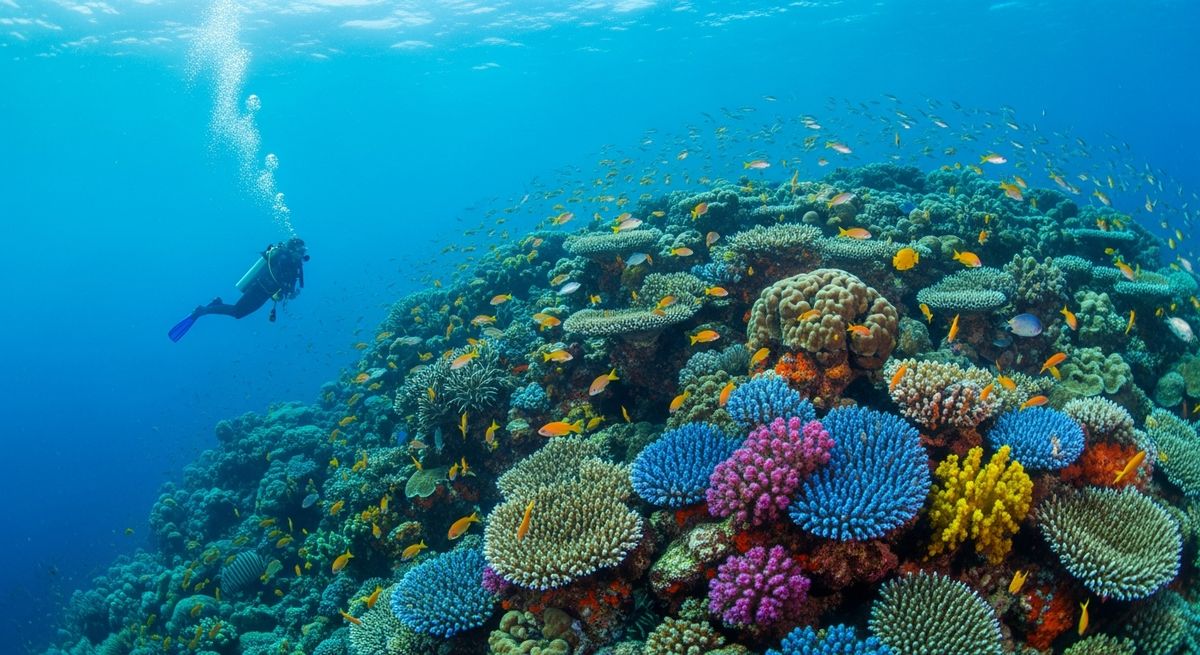
Karang Sari sits on Nusa Penida's east coast, a site you can explore in different ways. We like the reef plateau around 10-12m, with its big bommies and plenty of interesting macro life, plus some healthy hard corals, including good patches of staghorn. Drop deeper, and the wall reveals sea fans, overhangs, and the chance for a passing whitetip reef shark or even a manta ray. Visibility often hovers around 19m, making it a good spot for a relaxed dive, especially if you're keen to spot a freckled anglerfish or a silver-cheeked toadfish tucked away.

Location
Southwest Coast, Grenada, Caribbean
Coordinates
12.029500, -61.777600
Type
reef

Marine Protected Area: Grand Anse

Best Time to Dive in Southwest Coast

The warmest water temperatures in Southwest Coast occur in January, averaging 27.4°C. The coolest conditions are in December at 27.4°C.

Monthly Water Temperatures

  • January: 27.4°C (air: 25.9°C)
  • February: 27.4°C (air: 26.0°C)
  • March: 27.4°C (air: 26.2°C)
  • April: 27.4°C (air: 26.9°C)
  • May: 27.4°C (air: 27.5°C)
  • June: 27.4°C (air: 27.3°C)
  • July: 27.4°C (air: 27.2°C)
  • August: 27.4°C (air: 27.6°C)
  • September: 27.4°C (air: 28.3°C)
  • October: 27.4°C (air: 28.0°C)
  • November: 27.4°C (air: 27.1°C)
  • December: 27.4°C (air: 26.5°C)

Nearby Dive Sites in Southwest Coast

Nearest Dive Centres to Escape Reef

Marine Life in Southwest Coast

Home to 267 recorded species including 231 reef fish, 13 hard corals, 10 whales & dolphins, 3 seagrass & algae, 2 jellyfish, 2 sea snails & nudibranchs.

Notable Species

Recommended Packing List for Escape Reef

Based on average water temperature of 27.4°C.

  • Shorty or Rashguard - warm 27°C water needs minimal exposure protection
  • Mask - essential for every dive
  • Fins
  • BCD - buoyancy compensator
  • Regulator - your most safety-critical piece of gear
  • Dive Computer - tracks depth, time, and NDL
  • Surface Marker Buoy (SMB) - essential for boat pickups
  • Dive Torch - useful for crevices and colour at depth
  • Underwater Camera - capture your diving memories

Frequently Asked Questions

What is the typical diving depth at Escape Reef and what is the maximum depth?
At Escape Reef, divers typically explore sections between 40 ft/12 mtr and 72 ft/21 mtrs. While some parts of the reef can extend to 30 mtrs/100ft, the stated maximum depth for diving at this site is 18m.
What kind of marine life and coral formations can divers expect to see at Escape Reef?
Divers at Escape Reef can expect to encounter vibrant marine life and impressive coral formations. The reef is adorned with large Elephant ear and barrel sponges, providing a colorful backdrop. Depending on the current, you might see schools of creole wrasse everywhere, a few Horseeye jacks, and if you're lucky, even a school of Barracuda. For more on marine species, visit our wildlife database.
How challenging is diving at Escape Reef, and is it suitable for intermediate divers?
Diving at Escape Reef is rated as intermediate in difficulty, primarily due to the potential for strong currents up to 2 Kts. This site is well-suited for intermediate divers who are comfortable with drift diving and managing varying current conditions. Be prepared for a dynamic experience where marine life can pass by very quickly.
What is the best time of year to dive Escape Reef for optimal conditions and marine encounters?
The provided data does not specify the best time of year to dive Escape Reef for optimal conditions or marine encounters. For general information on seasonal diving conditions in the region, please refer to our When to Dive guide.
What scuba diving certifications are recommended or required to dive at Escape Reef?
The provided data does not specify particular scuba diving certifications recommended or required to dive at Escape Reef. Given its intermediate difficulty and potential for strong currents, divers should ensure they are adequately trained and comfortable with such conditions. Always check with your local dive operator for specific requirements and recommended equipment.
What are the typical current conditions and visibility like at Escape Reef, especially on its different sides?
Escape Reef is known for its dynamic current conditions, which can reach up to 2 Kts, earning it its name. This is due to its location as one of the last sections of reef on the Caribbean side before the Atlantic. Divers can expect an average visibility of 16m, offering clear views of the fast-moving marine life.