Glovers Island
Protected Area
Grand Anse
Why dive here
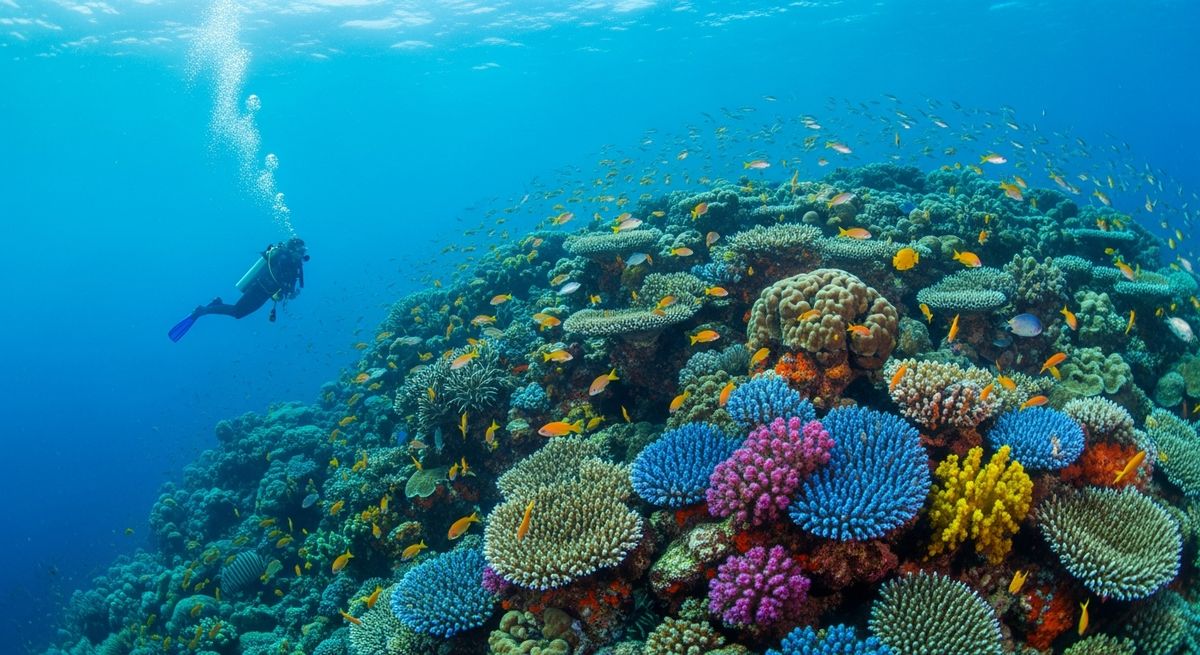
With 263+ marine species recorded in the area - including barracuda, humpback whales, nurse sharks, orcas and sea turtles - Glovers Island offers some of Southwest Coast's richest reef diving. Water ranges 27-30°C, warmest August, September, October.
Glovers Island is shallow, really shallow, topping out at 7m. Don't expect dramatic walls or towering coral heads here. This site is all about the sand, and trust us, it’s worth a look. We love drifting over the rippled bottom, eyes peeled for what’s hiding. It’s a fantastic spot for eagle rays gliding past, and we’ve seen more than a few stingrays too. Our favourite moments here are spotting a saddle stargazer, buried with just its eyes poking out, or the shy trunkfish navigating the sparse seagrass. Visibility averages 11m, which is plenty for this kind of subtle exploration. You need good buoyancy control here. Seriously good. In certain seasons, the sand gets absolutely carpeted with long-spined urchins, and a clumsy fin kick will definitely ruin your day. This isn’t a site for ripping through a tank. It’s for slow, deliberate looking, a genuine search for the camouflaged. Bring your macro lens if you have one, because there’s plenty to find if you’re patient. We've often found reef scorpionfish hunkered down, blending perfectly with the substrate. This is a site for the observant, for those who find joy in the subtle movements of sand-dwellers, and for anyone who appreciates the quiet magic of a shallow, sandy expanse.
Nearest Dive Centres to Glovers Island
Dive shops near Glovers Island
Aquanauts Grenada
Scuba West Indies
Dive Grenada
Sandals La Source
Reviews for Glovers Island
Conditions
Ocean conditions, forecast and tides for Glovers Island
Glovers Island Ocean Conditions
Monthly averages for Glovers Island, sourced from Open-Meteo marine data - nearest station: Open-Meteo marine grid (12.03, -61.78) (0km away)
October Averages
Sea Temperature
30°C
86°F · Range: 29–31.7°C
Air Temperature
28°C
82°F
Wind Speed
5.61 m/s
10.9 knots
Atmospheric Pressure
1011.8 hPa
Based on 4 years of monitoring data · Data sources: Open-Meteo marine data
Plan & book
Ways to dive Southwest Coast, from day trips to liveaboards.
Day trips & courses
via GetYourGuideGuided dives, courses and snorkel trips with instant booking.
Find dive trips in Southwest CoastPlaces to stay
via Booking.comHotels and dive resorts near Southwest Coast.
Search stays in Southwest CoastDive insurance
Most travel insurance excludes or limits scuba. Check what you need before you go.
Dive insurance explainedPartner links: we may earn a commission if you book, at no extra cost to you. How we make money
Where to Stay near Glovers Island
Prices from Booking.com. We may earn a commission at no extra cost to you.