Spotters Reef - Southwest Coast

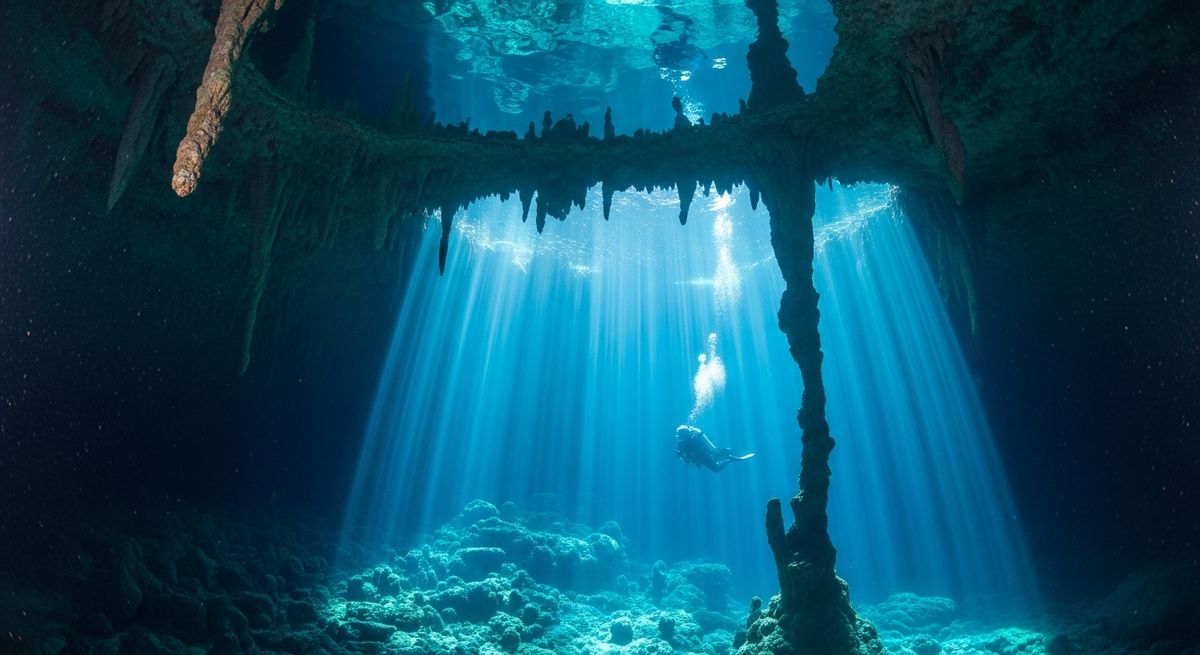
Twin Caves in Vava’u gives us that perfect blend of cave exploration and vibrant reef action. We love starting over the sun-drenched coral garden, letting our eyes adjust as we fin towards the first, wider opening. Inside, the light plays off the walls in mesmerizing ways, and the air pocket above offers a fleeting chance to surface and hear the jungle sounds from above. Exiting that first cave, you’re greeted by a wall absolutely plastered with soft corals. It’s here we often see schools of Pacific Half-and-half Chromis darting, and if you’re patient, a flash of silver might be a Humphead Unicornfish gliding past. The second cave is where the macro magic truly happens. It’s darker, more intimate, and we always take our time, running a finger (carefully, of course!) along the cracks to spot those tiny nudibranchs, maybe even a Carnelian Cowry clinging to the rock. Visibility averages around 15m, which is plenty for navigating the spaces. This site is a great pick for divers who enjoy a bit of overhead environment combined with some excellent critter hunting. It suits those who appreciate topography and don’t mind slowing down to look for the small stuff.

Location
Southwest Coast, Grenada, Caribbean
Coordinates
12.021300, -61.784600
Type
cave
Maximum Depth
10-25m

Marine Protected Area: Grand Anse

Best Time to Dive in Southwest Coast

The warmest water temperatures in Southwest Coast occur in January, averaging 27.4°C. The coolest conditions are in December at 27.4°C.

Monthly Water Temperatures

  • January: 27.4°C (air: 25.9°C)
  • February: 27.4°C (air: 26.0°C)
  • March: 27.4°C (air: 26.2°C)
  • April: 27.4°C (air: 26.9°C)
  • May: 27.4°C (air: 27.5°C)
  • June: 27.4°C (air: 27.3°C)
  • July: 27.4°C (air: 27.2°C)
  • August: 27.4°C (air: 27.6°C)
  • September: 27.4°C (air: 28.3°C)
  • October: 27.4°C (air: 28.0°C)
  • November: 27.4°C (air: 27.1°C)
  • December: 27.4°C (air: 26.5°C)

Nearby Dive Sites in Southwest Coast

Nearest Dive Centres to Spotters Reef

Marine Life in Southwest Coast

Home to 267 recorded species including 231 reef fish, 13 hard corals, 10 whales & dolphins, 3 seagrass & algae, 2 jellyfish, 2 sea snails & nudibranchs.

Notable Species

Recommended Packing List for Spotters Reef

Based on average water temperature of 27.4°C.

  • Shorty or Rashguard - warm 27°C water needs minimal exposure protection
  • Mask - essential for every dive
  • Fins
  • BCD - buoyancy compensator
  • Regulator - your most safety-critical piece of gear
  • Dive Computer - tracks depth, time, and NDL
  • Surface Marker Buoy (SMB) - essential for boat pickups
  • Dive Torch - useful for crevices and colour at depth
  • Underwater Camera - capture your diving memories

Frequently Asked Questions

What is the typical depth range for diving at Spotters Reef, and are there any specific deep or shallow areas to be aware of?
The typical depth range for diving at Spotters Reef is between 10-25m, with a maximum depth of 22m. This range offers opportunities for both shallower exploration and deeper dives within the site. Divers should be mindful of their depth limits, especially when exploring the deeper sections.
What kind of marine life, corals, and unique underwater features can divers expect to see at Spotters Reef?
Spotters Reef is renowned for its unique marine life, including rare sightings of Frogfish, Seahorses, Sharptail Morays, and Goldentail Morays. Divers can also spot Scarlet ladies, Purple Crowned Seagoddess’, lobsters, Juvenile drums, and Scarlet Lady shrimps. Keep an eye out for the extremely elusive Black Cyphoma (Flamingo Tongue) on deep water sea fans, and explore the site's interesting cave features. For more information on these species, visit our marine life database.
What is the difficulty level for diving at Spotters Reef, and is it suitable for beginner or advanced divers?
Diving at Spotters Reef is rated as an intermediate difficulty level. While not typically recommended for absolute beginners due to its cave features and potential for unique critters requiring careful observation, it is well-suited for certified divers with some experience. Advanced divers will particularly enjoy the challenge and the opportunity to spot rare species.
What is the best time of year or day to dive Spotters Reef for optimal visibility and marine life encounters?
The average visibility at Spotters Reef is 16m, offering good conditions for spotting marine life. Unfortunately, specific data regarding the best time of year or day for optimal visibility or marine life encounters at this particular site is not provided in our current context. For general guidance on dive seasons, you can consult our When to Dive section.
What scuba diving certifications are required or highly recommended to safely dive at Spotters Reef?
Given the intermediate difficulty rating and the presence of cave features at Spotters Reef, an Advanced Open Water certification or equivalent is highly recommended. This ensures divers have the necessary experience and skills for navigating deeper sections and potentially more challenging environments. While not explicitly stated as required, additional specialty certifications like Cavern or Cave Diver would enhance safety and enjoyment for exploring the cave aspects.
What are the typical current conditions and visibility like at Spotters Reef, and how do they affect the dive experience?
Spotters Reef typically offers an average visibility of 16m, which is excellent for spotting the site's unique and often camouflaged marine life. Information regarding typical current conditions at this specific site is not available in our current data context. Divers should always check with local dive operators for real-time conditions before planning their dive.