The Blade - Southwest Coast

Wonderview, for us, is a shallow sanctuary, perfect for when the weather kicks up or you just want to take it slow. The entry can be a scramble down a steep track, so we always suggest taking your time with your gear. Once in, you’re greeted by a jumble of boulders, each one draped in thick kelp. We love following the shafts of sunlight that cut through the canopy, illuminating the electric blue of New Zealand demoiselles darting amongst the fronds. Keep an eye out for the roughy sheltering in the dimmer pockets, and often you’ll spot a short-tail stingray resting on the sandy patches between the rocks. It’s a site for lingering, for peering into crevices where a blackfoot pāua might be clinging on, or watching the oblique-swimming triplefins flitting about. Wonderview really suits those who appreciate the smaller details and enjoy a relaxed, bright dive without the pressure of going deep.

Location
Southwest Coast, Grenada, Caribbean
Coordinates
12.070600, -61.765100
Type
reef

Marine Protected Area: Molinier-Beausejour

Best Time to Dive in Southwest Coast

The warmest water temperatures in Southwest Coast occur in January, averaging 27.4°C. The coolest conditions are in December at 27.4°C.

Monthly Water Temperatures

  • January: 27.4°C (air: 25.9°C)
  • February: 27.4°C (air: 26.0°C)
  • March: 27.4°C (air: 26.2°C)
  • April: 27.4°C (air: 26.9°C)
  • May: 27.4°C (air: 27.5°C)
  • June: 27.4°C (air: 27.3°C)
  • July: 27.4°C (air: 27.2°C)
  • August: 27.4°C (air: 27.6°C)
  • September: 27.4°C (air: 28.3°C)
  • October: 27.4°C (air: 28.0°C)
  • November: 27.4°C (air: 27.1°C)
  • December: 27.4°C (air: 26.5°C)

Nearby Dive Sites in Southwest Coast

Nearest Dive Centres to The Blade

Marine Life in Southwest Coast

Home to 267 recorded species including 231 reef fish, 13 hard corals, 10 whales & dolphins, 3 seagrass & algae, 2 jellyfish, 2 sea snails & nudibranchs.

Notable Species

Recommended Packing List for The Blade

Based on average water temperature of 27.4°C.

  • Shorty or Rashguard - warm 27°C water needs minimal exposure protection
  • Mask - essential for every dive
  • Fins
  • BCD - buoyancy compensator
  • Regulator - your most safety-critical piece of gear
  • Dive Computer - tracks depth, time, and NDL
  • Surface Marker Buoy (SMB) - essential for boat pickups
  • Dive Torch - useful for crevices and colour at depth
  • Underwater Camera - capture your diving memories

Frequently Asked Questions

What is the typical depth profile for dives at 'The Blade', and are there any particularly deep sections or shallow areas to explore?
The Blade features a distinctive depth profile, beginning with a reef top at approximately 8 meters (25 ft). From this shallow area, the reef drops sheer to about 35 meters (125 ft) on each side, with a large horseshoe slope extending below 50 meters (150 ft). While the topography offers deep sections, the maximum recommended depth for diving The Blade is 29 meters, providing a comprehensive exploration of its varied structure.
What specific marine life and coral formations are commonly encountered at 'The Blade' dive site?
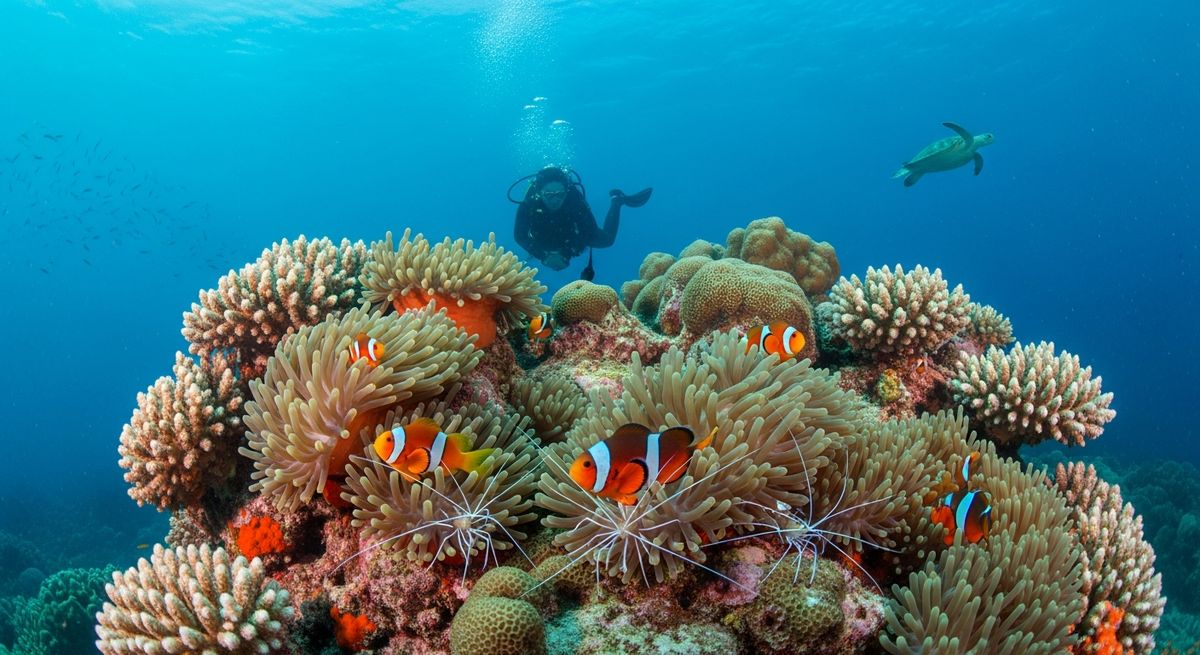
At The Blade, divers can expect to encounter a diverse range of marine life. Due to its varied topography and proximity to deep water, there's a good chance of spotting pelagic species like rainbow runner and mackerel. Closer to the reef, among the rocks, keep an eye out for fascinating creatures such as pipefish, seahorses, and frog fish. The site itself is characterized as a vibrant reef, offering a rich environment for these species.
How would you rate the difficulty of diving 'The Blade' for an experienced Open Water diver, considering currents and exposure?
Diving The Blade is rated as an intermediate difficulty dive. For an experienced Open Water diver, this means it presents a manageable challenge, likely due to factors such as depth or potential currents, though specific current conditions are not detailed. It's a rewarding site for those with some experience beyond basic certification.
What is considered the best time of year to dive 'The Blade' for optimal visibility and chances of seeing pelagic species?
Information regarding the best time of year to dive The Blade for optimal visibility and increased chances of seeing pelagic species is not available in the provided data. For general guidance on seasonal diving conditions in the region, you may wish to consult our When to Dive section.
Are there any specific diving certifications, beyond Open Water, that are required or highly recommended for diving 'The Blade'?
The provided data does not specify any required certifications beyond Open Water for diving The Blade. However, given its intermediate difficulty rating and a maximum depth of 29 meters, an Advanced Open Water certification or equivalent would be highly recommended to comfortably explore the site's deeper sections and varied topography.
What are the prevailing current conditions and typical visibility at 'The Blade' dive site, and how do they vary?
At The Blade, divers can typically expect an average visibility of 15 meters. The provided data does not, however, detail the prevailing current conditions or how visibility and currents may vary at the dive site.