Diving in Tobago
Why dive here
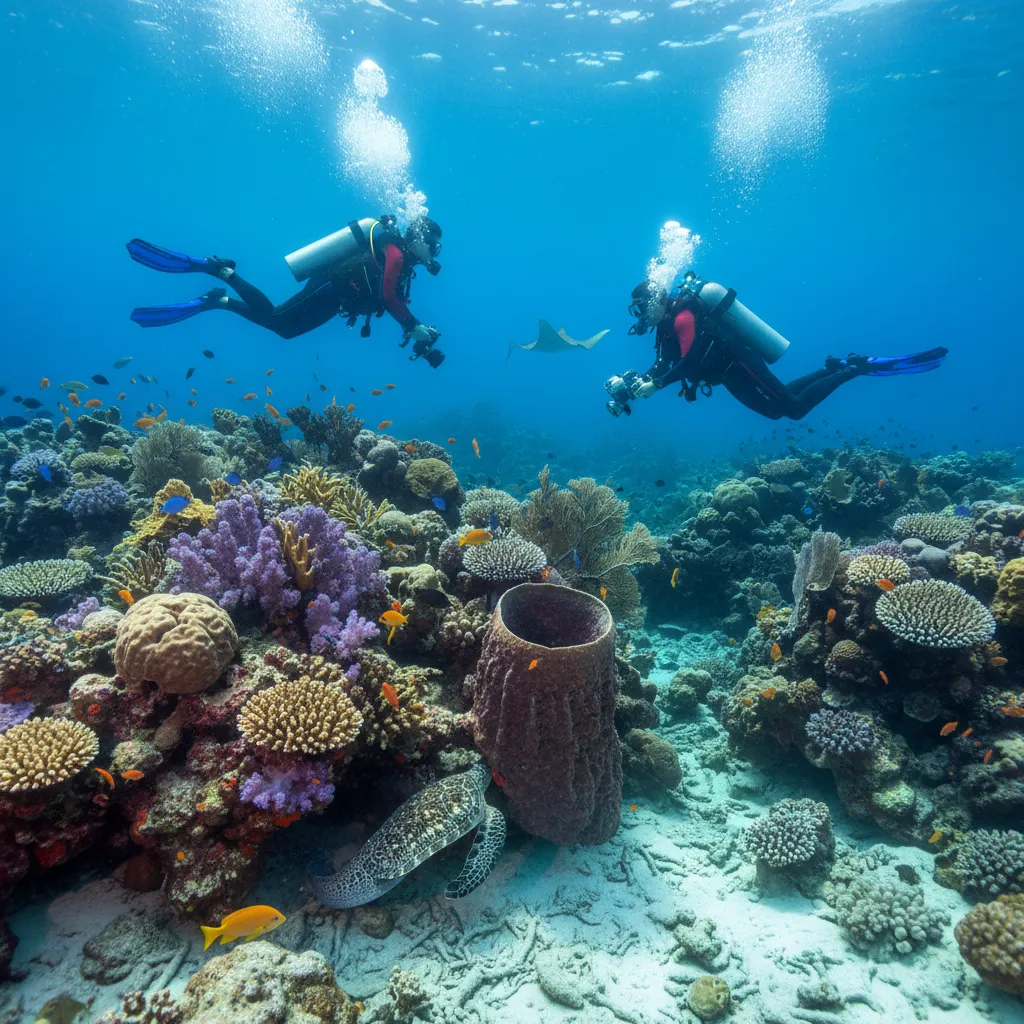
Tobago offers some of Trinidad & Tobago's richest diving, with 343+ marine species recorded in the area - including barracuda, dolphins, humpback whales, sea turtles and frogfish. Water sits around 28°C.
Tobago diving often feels like a secret handshake among those in the know. We love the exhilarating drift dives that whisk you past vibrant reefscapes. Think schools of jacks flashing silver, barracuda hanging motionless, and occasionally, a manta ray gliding by with serene indifference. Visibility stays pretty good year-round, but come dry season, from January to May, the water really clears up, making those deeper encounters with things like prickly lanternfish or the shy lined sole a real treat. The island’s currents are its superpower. They bring in the nutrients, fueling the reefs and making for genuinely exciting diving. We’d suggest getting comfortable with drift diving here. Sites like Speyside are our favourite for this, where you can practically fly over coral heads bursting with colour. Keep an eye out for the elusive polka-dot batfish or a crafty cleaver wrasse. And if you’re lucky, really lucky, you might even catch a glimpse of a Bryde’s whale making its seasonal pass.
Tobago Dive Site Map
Dive sites and dive centres in Tobago
Tobago Dive Sites
70 dive sites in Tobago
ADVENTURER 1 (POSSIBLY)
The Adventurer 1, well, *possibly* the Adventurer 1, is a great little intro to wreck diving, sitting in just five metres of water off Tobago. We love it because it’s so accessible, perfect if you’re looking to practice buoyancy or just enjoy a long, easy dive. This isn't some grand, intact vessel; it’s more a scattered collection of ribs and plates, broken apart by time and the surge. Despite its low profile, it’s a surprisingly busy place. Schools of sergeant majors flit through the gaps, and we’ve often spotted eagle rays gliding over the sand nearby. Keep an eye out for moray eels tucked into crevices, their heads poking out with that characteristic gaping mouth. The real joy here is the light, streaming down and illuminating every detail, making the rusted metal glow with a soft orange hue. It's a relaxed, contemplative dive, a gentle reminder of the ocean's power to reclaim. We’d suggest going early in the morning for the calmest water and best visibility.
AGHIA ANASTASIA
The Aghia Anastasia isn't just a wreck; it's a colossal piece of history brought to life by the Caribbean Sea. We dive it again and again because of its sheer scale, a 134-meter steamship, now utterly covered in growth. Dropping down, the bow looms first, then you follow the deck structure, seeing where the ocean has peeled back sections, revealing ribs and cargo holds. Schools of grunts and snapper hang in the shadows of the deeper sections, particularly towards the stern, where the light struggles to reach. Our favourite part has to be the engine room access, if conditions allow penetration. The sunlight filters through the gaps above, creating these ethereal shafts of light that illuminate the machinery below, now fused with coral. You’ll spot plenty of barracuda too, often just hovering motionless, watching you with that blank stare. Current can be a factor here, so we’d suggest timing your dive for slack tide to properly explore the deeper sections without fighting a surge. It’s a dive for those who appreciate wrecks with a strong sense of place, a solid challenge, and plenty of opportunities to just drift and absorb the sheer magnitude of it all.
ATHELBRAE
The *Athelbrae* is a wreck dive, but it's really more of a historical marker than a full penetration experience. Sitting in just six metres, it’s a perfect chill-out dive, especially if you’ve had a few days of battling currents elsewhere. What we love about it is how accessible the history feels; you can just fin around and imagine the stories. The tanker went down after hitting a mine in 1942, and while much of the hull is broken up, the sheer scale of the plates scattered across the seabed is impressive. You'll spend your time exploring the flattened ribs and plating, now completely encrusted with sponges and hard corals. We've often seen schools of snapper circling the larger metal sections, and our favourite find here is always the garden eels that pop up from the sand nearby. It's an ideal spot for macro photographers, too, with nudibranchs and small crabs hiding in the crevices. We’d suggest going in the morning; the light filtering through the shallow water really brings out the colours on the corals. Perfect for a relaxed last dive of the trip.
BALABAC
Balabac isn't about depth, it's about story. At a mere 3 metres, this isn't a dive for chasing big fish or pristine coral. What you get here is a fully intact wooden schooner, incredibly preserved, practically in the shallows. We love poking around the bow, where the anchor chain still lies draped, almost ready to be dropped again. Sunlight filters through the water, illuminating every plank and beam, and it's easy to imagine her sailing days. You'll find schools of juvenile snapper flitting between the ribs and a surprising number of moray eels peering from shadowy nooks – they seem to enjoy the shelter as much as we enjoy finding them. This site is our pick for photographers, especially macro enthusiasts, or anyone who appreciates a truly historical wreck without the nitrogen narcosis. Just watch for the surge if there's a north swell; it can get a bit rolly, making those tight shots tricky.
BALTIC RESCUER
The *Baltic Rescuer* sits bolt upright in just 7m of water off Tobago, making it a fantastic second dive or a long, leisurely exploration. We love how accessible she is, even for newer divers, but don’t mistake "easy" for "boring." This old tug, purposefully sunk, has become a proper home for marine life. You can swim right into the wheelhouse and engine room, feeling the cool water as you penetrate the structure. Light streams in through various openings, illuminating schools of snapper that dart through the corridors. Look closely in the darker corners for nurse sharks often tucked away, or moray eels peering out from pipes. The deck is carpeted in soft corals, swaying gently with the surge, and we always find something interesting, whether it’s a tiny nudibranch or a camouflaged scorpionfish. The shallow depth means you get incredible bottom time, so take it slow and really poke around.
BCSL ENDEAVOUR
The BCSL Endeavour, a 100m long roll-on/roll-off cargo ferry, sits upright at 26m, sunk deliberately in 2020. It's quickly become a proper artificial reef, with schooling fish like jacks and barracudas already present. Penetration is possible for suitably qualified divers, exploring the vehicle deck and bridge. We think it’s a good wreck for those looking to see how quickly a new site gets colonised.
BEER CAT
The Beer Cat wreck is a strange one, a little tug that decided to go out in a blaze of glory during a Port of Spain gale back in '75. Now it sits in a respectable 7 metres, perfect for a long, relaxed dive. We love this site for its sheer accessibility; you can spend ages tracing the outline of what’s left, which isn't a lot in terms of structure, but provides a fantastic playground for smaller critters. What you'll find here is less about penetration and more about the abundant life that’s made a home on the scattered steel. Look closely and you’ll spot yellowhead jawfish popping in and out of the sand, garden eels swaying in the gentle current, and the occasional southern stingray gliding over the wreck. It’s an ideal spot for macro photographers, or anyone who enjoys a calm, shallow dive where you can truly slow down and observe. We often suggest going in the late afternoon; the light is softer and brings out the colours of the sponges and anemones clinging to the metal. It’s not a grand, imposing wreck, but a quiet, unassuming one that offers its own kind of charm.
BIRD OF PARADISE
The Bird of Paradise wreck isn’t about depth, it’s about history and how nature reclaims things. This old ferry, built in 1960 and sunk intentionally in 1988, sits upright in just five metres of water. We love that it’s still relatively intact, a proper ghost ship. You can swim right into the car deck, where shafts of light pierce the gloom, illuminating thick encrustations of sponge and colourful soft corals. It’s our favourite kind of wreck dive for a chill afternoon. The shallow depth means endless bottom time, and the visibility here is usually excellent. Look for schools of snapper hanging around the superstructure, and if you peer into the crevices, you'll often spot moray eels. It’s a photographer's dream, especially with that clear, turquoise water. We'd suggest going in the late afternoon; the light plays beautifully through the wreck then. Perfect for anyone who loves easy wreck exploration and wants to see a slice of Tobago’s maritime past.
Black Jack Hole
Black Jack Hole is one of those sites that just feels right, especially if you catch it when the trevally are in. We've seen schools of blackjack fish so thick here in late spring and early summer, they turn the water dark. It’s an exhilarating wall dive, dropping to about 21 metres, perfect for experienced divers who appreciate a good current and bigger fish action. Even without the trevally, the reef itself is beautiful. Large sea fans and sponges coat the slope, creating plenty of hidey-holes. We often spot green morays peering out, and the Nassau groupers here are particularly chunky. Keep an eye out for spotted eagle rays gliding past in the blue, and if you’re lucky, a blacktip shark might cruise by. The visibility is usually excellent, around 20-25 metres, making for some epic wide-angle photo opportunities. We’d suggest diving this one early in the morning, before the dive boats from Crown Point arrive, to really soak up the atmosphere. It’s a site that always delivers something exciting, a real highlight of Tobago diving.
Black Jack Hole
Black Jack Hole is one of those sites that just feels right, especially if you catch it when the trevally are in. We've seen schools of blackjack fish so thick here in late spring and early summer, they turn the water dark. It’s an exhilarating wall dive, dropping to about 21 metres, perfect for experienced divers who appreciate a good current and bigger fish action. Even without the trevally, the reef itself is beautiful. Large sea fans and sponges coat the slope, creating plenty of hidey-holes. We often spot green morays peering out, and the Nassau groupers here are particularly chunky. Keep an eye out for spotted eagle rays gliding past in the blue, and if you’re lucky, a blacktip shark might cruise by. The visibility is usually excellent, around 20-25 metres, making for some epic wide-angle photo opportunities. We’d suggest diving this one early in the morning, before the dive boats from Crown Point arrive, to really soak up the atmosphere. It’s a site that always delivers something exciting, a real highlight of Tobago diving.
BONANZA
Bonanza isn't just another wreck dive; it's a slice of Tobago’s fishing history, and we love it for that gritty, real feel. This old fishing trawler ran aground back in '77 and now rests in relatively shallow water, making it perfect for divers who enjoy a more relaxed pace. The hull is largely intact, with plenty of openings to peek inside, though penetrations are best left to those with proper training and equipment. What we really enjoy is the way the sea has reclaimed it. Schools of grunts and snapper hang out in the shadowy holds, and you’ll spot moray eels tucked into crevices, their heads poking out with that curious, slightly menacing look. We’ve seen barracuda cruising the deck, their silvery bodies glinting in the shafts of light that pierce the water. If you get there early, before the crowds, the quiet calm around Bonanza is almost meditative. Keep an eye out for the small, colourful nudibranchs that cling to the metalwork – they’re easy to miss but worth seeking out. This site is a great option for newer wreck divers or photographers wanting a more contained subject, with depths rarely pushing past 15 metres.
CAPTAIN HOWARD
The Captain Howard, a fishing vessel built in ’64, went down in rough seas back in 1980. Now she rests upright at a comfortable 22 meters, just off Tobago’s coast. We love a good wreck, and this one has settled into its new role beautifully. The ship’s superstructure is still largely intact, allowing for some straightforward penetration if you’re comfortable with it – think wheelhouse, engine room access. Even if you prefer to stay outside, there’s plenty to explore. The deck is a riot of colour now, encrusted with sponges and hard corals. Look closely for moray eels tucked into the shadowed compartments, and keep an eye out for schools of snapper swirling around the bow. The fish are curious here, often swimming quite close. We’d suggest diving this one in the late morning, after any overnight surface chop has died down, for the best light on the deck. It’s a great site for photographers keen on capturing that classic wreck shot, and suitable for advanced open water divers looking for a mellow but interesting dive.
Show all 70 dive sites in Tobago
- CITY OF CORINTH
- COROMOTO I
- DAMIEN
- DEAN TERRILL (POSSIBLY)
- DIXIE ROVER
- DOLORES
- Extra Divers
- First Lady
- GUAICAMACUTO
- HANSEN (POSSIBLY)
- HERMA A
- HOPPER 212
- INGRAM DERRICK BARGE NO.6
- Japanese Gardens
- JULIA
- Kelleston Drain
- KIOTO
- LADY KAY M
- LOUIS M MORAGES
- LUKAS - M
- MABCO 190
- MABIRI
- MACABI
- MATHURA
- Maverick Wreck
- MICHAEL H
- MM 151
- MONDOC
- MV TREASURE QUEEN II
- NICLAN I
- NRC RESOLUTE
- OSPREY
- PADEREWSKI
- REMUS
- RIKANAU & ESSO 606
- ROSALINE B
- ROSARENE
- SAMOS SUN
- SAYONARA
- SCEPTRE
- STA. FILOMENA
- ST GEORGE
- SUNBRIGHT
- SUNSHINE ISLAND
- SURVEYOR
- TAMANA
- The Sisters
- TRADERS CHOICE
- TREWORLAS
- TRINGO
- Undersea Tobago
- UNITED VENTURE
- VASILLIA EXPRESS
- VIKING
- WAI WAI II
- WAMARA
- W L EUNICA II
- WOODBROOK
Tobago Dive Centres
2 dive shops and operators in Tobago
Ocean Wildlife in Tobago
343 species recorded in Tobago
Tobago Daylight & Sunrise/Sunset
Sunrise and sunset times for Tobago, calculated from coordinates
Today - Sunday 11 October
Sunrise
05:55
Sunset
17:51
Daylight
11h 57m
Golden Hour
17:23
First light (dawn) at 05:33 · Last light (dusk) at 18:13
Monthly Averages
| Month | Sunrise | Sunset | Daylight |
|---|---|---|---|
| Jan | 06:28 | 18:02 | 11h 34m |
| Feb | 06:27 | 18:14 | 11h 47m |
| Mar | 06:14 | 18:17 | 12h 3m |
| Apr | 05:56 | 18:17 | 12h 21m |
| May | 05:45 | 18:21 | 12h 36m |
| JunLongest | 05:44 | 18:29 | 12h 44m |
| Jul | 05:51 | 18:32 | 12h 41m |
| Aug | 05:56 | 18:25 | 12h 29m |
| Sep | 05:56 | 18:08 | 12h 12m |
| OctNow | 05:55 | 17:49 | 11h 55m |
| Nov | 06:01 | 17:40 | 11h 39m |
| DecShortest | 06:16 | 17:46 | 11h 31m |
Times are approximate local times based on longitude. Actual times may vary slightly depending on the exact timezone observed in Tobago.
Where to Stay near Tobago
Prices from Booking.com. We may earn a commission at no extra cost to you.
Marine Protected Areas near Tobago
2 protected areas near Tobago - please respect local regulations when diving
Buccoo Reef
Buccoo Reef / Bon Accord Lagoon Complex
Getting to Tobago
Port of Spain
Scarborough
Saint George's
Plan & book
Ways to dive Tobago, from day trips to liveaboards.
Day trips & courses
via GetYourGuideGuided dives, courses and snorkel trips with instant booking.
Find dive trips in TobagoPlaces to stay
via Booking.comHotels and dive resorts near Tobago.
Search stays in TobagoDive insurance
Most travel insurance excludes or limits scuba. Check what you need before you go.
Dive insurance explainedPartner links: we may earn a commission if you book, at no extra cost to you. How we make money