BALTIC RESCUER
Why dive here
With 343+ marine species recorded in the area - including barracuda, dolphins, humpback whales, sea turtles and frogfish - BALTIC RESCUER offers some of Tobago's richest wreck diving. Water ranges 28-30°C, warmest August, September, October.
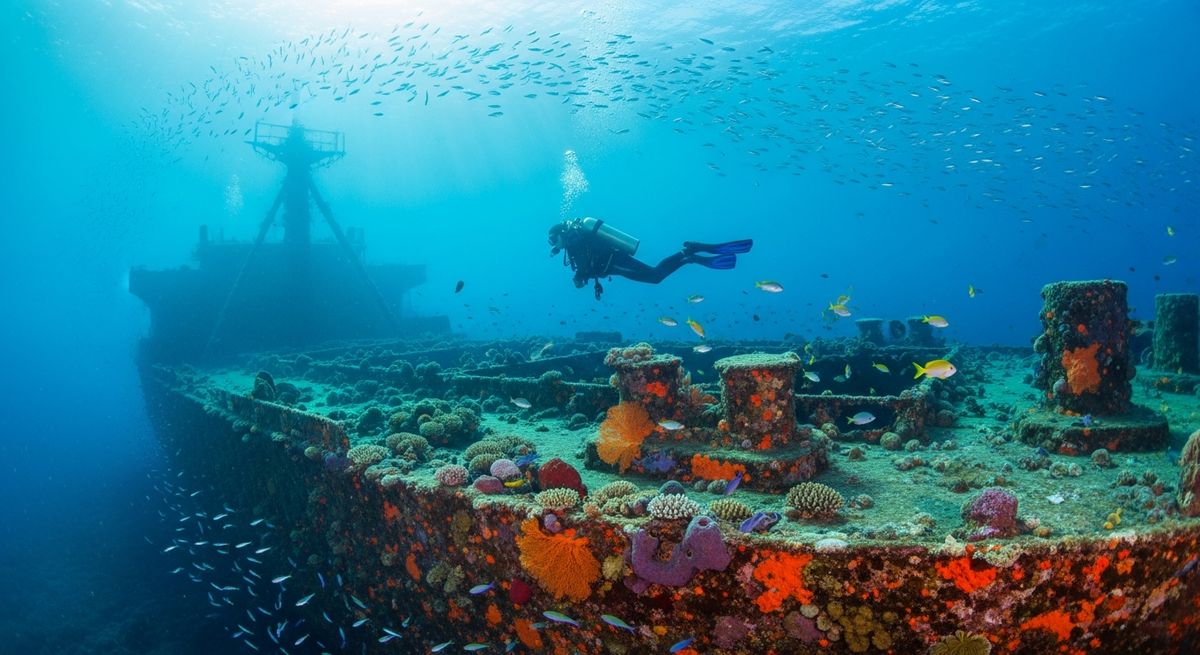
The *Baltic Rescuer* sits bolt upright in just 7m of water off Tobago, making it a fantastic second dive or a long, leisurely exploration. We love how accessible she is, even for newer divers, but don’t mistake "easy" for "boring." This old tug, purposefully sunk, has become a proper home for marine life. You can swim right into the wheelhouse and engine room, feeling the cool water as you penetrate the structure. Light streams in through various openings, illuminating schools of snapper that dart through the corridors. Look closely in the darker corners for nurse sharks often tucked away, or moray eels peering out from pipes. The deck is carpeted in soft corals, swaying gently with the surge, and we always find something interesting, whether it’s a tiny nudibranch or a camouflaged scorpionfish. The shallow depth means you get incredible bottom time, so take it slow and really poke around.
Typical BALTIC RESCUER Dive Profile
Illustrative profile based on site depth and type. Actual dive profiles vary - always follow your dive computer and training.
Safety Notes
Wreck site - avoid penetration without wreck diving certification. Watch for sharp metal and entanglement hazards.
BALTIC RESCUER Wreck History
Year Sunk
1993
Vessel Type
tugboat
Cause
scuttled
Tonnage
1,438 GRT
The Baltic Rescuer was a powerful ocean-going tugboat built in 1970. For over two decades, this 71-meter vessel served in the demanding world of marine salvage and long-distance towing. Its final documented voyage was in May 1993, when it departed Port Arthur, Texas, with the formidable task of towing two Victory ships, the SS Drake Victory and the Citadel Victory, all the way to China for scrapping.
After its working life, the Baltic Rescuer was acquired for a new purpose. Instead of being scrapped itself, it was prepared and intentionally sunk off the coast of Tobago to create an artificial reef. This practice gives old ships a new life, providing a solid structure for corals and sponges to colonize, which in turn attracts a diverse array of fish and other marine creatures, boosting the local underwater ecosystem.
Today, the Baltic Rescuer is one of Tobago's premier shallow-water wreck dives. Lying upright in just 7 meters of water, its deck is so shallow it's almost a snorkeler's paradise. The entire vessel is accessible to divers of all levels, from beginners on their first wreck dive to experienced photographers seeking vibrant marine life. The tug's large structure is now completely encrusted in colorful sponges and corals, and its open wheelhouse and deck spaces are home to schools of snapper, grunts, and the occasional moray eel.
Reviews for BALTIC RESCUER
Conditions
Ocean conditions, forecast and tides for BALTIC RESCUER
BALTIC RESCUER Ocean Conditions
Monthly averages for BALTIC RESCUER, sourced from Open-Meteo marine data - nearest station: Open-Meteo marine grid (10.64, -61.51) (19km away)
October Averages
Sea Temperature
30°C
86°F · Range: 29.2–31.2°C
Air Temperature
26°C
79°F
Wind Speed
4.75 m/s
9.2 knots
Atmospheric Pressure
1011.7 hPa
Based on 4 years of monitoring data · Data sources: Open-Meteo marine data
Plan & book
Ways to dive Tobago, from day trips to liveaboards.
Day trips & courses
via GetYourGuideGuided dives, courses and snorkel trips with instant booking.
Find dive trips in TobagoPlaces to stay
via Booking.comHotels and dive resorts near Tobago.
Search stays in TobagoDive insurance
Most travel insurance excludes or limits scuba. Check what you need before you go.
Dive insurance explainedPartner links: we may earn a commission if you book, at no extra cost to you. How we make money
Where to Stay near BALTIC RESCUER
Prices from Booking.com. We may earn a commission at no extra cost to you.