BIRD OF PARADISE
Why dive here
With 343+ marine species recorded in the area - including barracuda, dolphins, humpback whales, sea turtles and frogfish - BIRD OF PARADISE offers some of Tobago's richest wreck diving. Water ranges 28-30°C, warmest August, September, October.
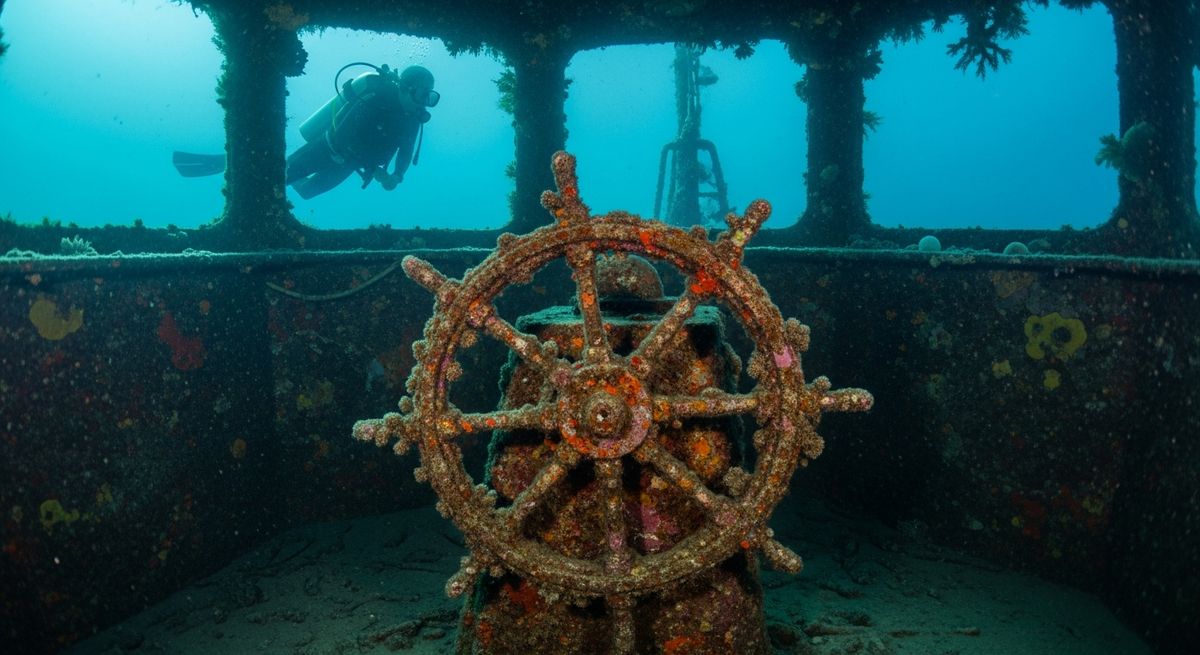
The Bird of Paradise wreck isn’t about depth, it’s about history and how nature reclaims things. This old ferry, built in 1960 and sunk intentionally in 1988, sits upright in just five metres of water. We love that it’s still relatively intact, a proper ghost ship. You can swim right into the car deck, where shafts of light pierce the gloom, illuminating thick encrustations of sponge and colourful soft corals. It’s our favourite kind of wreck dive for a chill afternoon. The shallow depth means endless bottom time, and the visibility here is usually excellent. Look for schools of snapper hanging around the superstructure, and if you peer into the crevices, you'll often spot moray eels. It’s a photographer's dream, especially with that clear, turquoise water. We'd suggest going in the late afternoon; the light plays beautifully through the wreck then. Perfect for anyone who loves easy wreck exploration and wants to see a slice of Tobago’s maritime past.
Typical BIRD OF PARADISE Dive Profile
Illustrative profile based on site depth and type. Actual dive profiles vary - always follow your dive computer and training.
Safety Notes
Wreck site - avoid penetration without wreck diving certification. Watch for sharp metal and entanglement hazards.
BIRD OF PARADISE Wreck History
Year Sunk
1988
Vessel Type
ferry
Cause
unknown
The M.V. BIRD OF PARADISE began its life far from the warm Caribbean waters where it now rests. Built in 1960 by Ferguson Bros. in Port Glasgow, Scotland, this 60-meter ferry served its purpose for decades before finding its way to Tobago. Its end was not in a dramatic storm or collision, but with a quiet surrender. On January 4, 1988, while at anchor, the vessel sank and was simply left 'as is', beginning its second life as an artificial reef.
Lying in just 5 meters of water, the BIRD OF PARADISE is a spectacular and accessible dive site, perfect for novice divers, photographers, and even snorkelers. The shallow depth allows sunlight to penetrate freely, fueling a vibrant explosion of marine life. The ferry's large, open structure has become a playground for schools of sergeant majors, grunts, and parrotfish, while its shaded corners provide refuge for moray eels and lobsters. Though its sinking was unintentional, it has become a perfect example of how a man-made structure can be reclaimed by nature, creating a thriving underwater ecosystem for all to enjoy.
Reviews for BIRD OF PARADISE
Conditions
Ocean conditions, forecast and tides for BIRD OF PARADISE
BIRD OF PARADISE Ocean Conditions
Monthly averages for BIRD OF PARADISE, sourced from Open-Meteo marine data - nearest station: Open-Meteo marine grid (10.64, -61.51) (19km away)
October Averages
Sea Temperature
30°C
86°F · Range: 29.2–31.2°C
Air Temperature
26°C
79°F
Wind Speed
4.75 m/s
9.2 knots
Atmospheric Pressure
1011.7 hPa
Based on 4 years of monitoring data · Data sources: Open-Meteo marine data
Plan & book
Ways to dive Tobago, from day trips to liveaboards.
Day trips & courses
via GetYourGuideGuided dives, courses and snorkel trips with instant booking.
Find dive trips in TobagoPlaces to stay
via Booking.comHotels and dive resorts near Tobago.
Search stays in TobagoDive insurance
Most travel insurance excludes or limits scuba. Check what you need before you go.
Dive insurance explainedPartner links: we may earn a commission if you book, at no extra cost to you. How we make money
Where to Stay near BIRD OF PARADISE
Prices from Booking.com. We may earn a commission at no extra cost to you.