CAPTAIN HOWARD
Why dive here
With 343+ marine species recorded in the area - including barracuda, dolphins, humpback whales, sea turtles and frogfish - CAPTAIN HOWARD offers some of Tobago's richest wreck diving. Water ranges 28-30°C, warmest August, September, October.
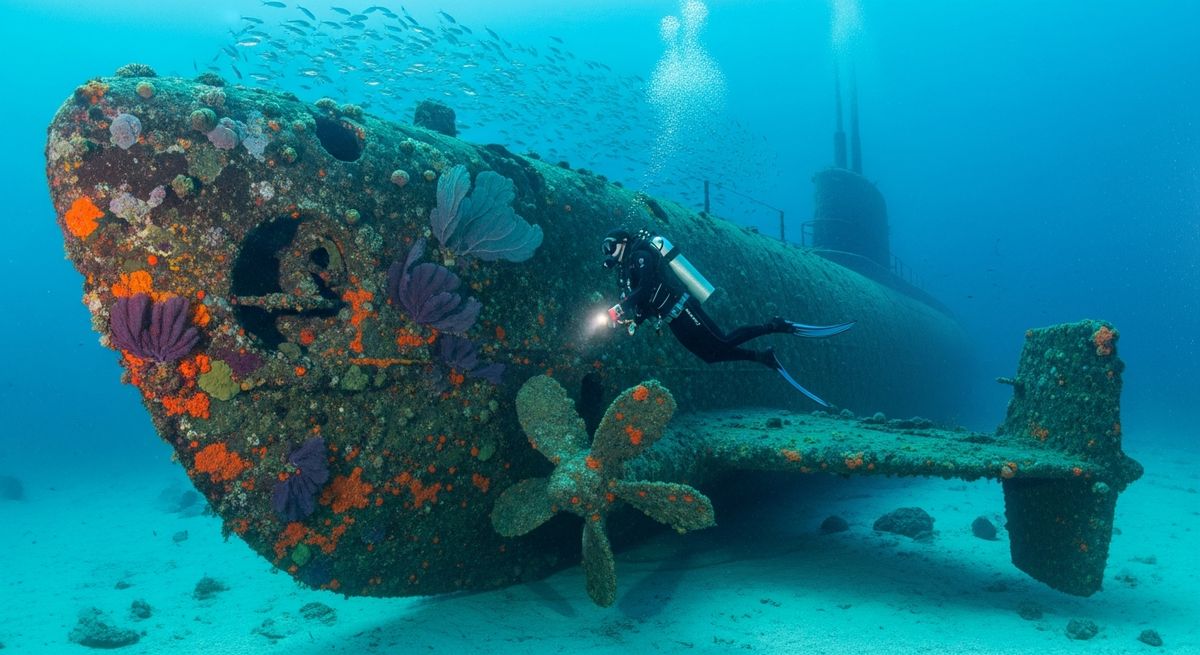
The Captain Howard, a fishing vessel built in ’64, went down in rough seas back in 1980. Now she rests upright at a comfortable 22 meters, just off Tobago’s coast. We love a good wreck, and this one has settled into its new role beautifully. The ship’s superstructure is still largely intact, allowing for some straightforward penetration if you’re comfortable with it – think wheelhouse, engine room access. Even if you prefer to stay outside, there’s plenty to explore. The deck is a riot of colour now, encrusted with sponges and hard corals. Look closely for moray eels tucked into the shadowed compartments, and keep an eye out for schools of snapper swirling around the bow. The fish are curious here, often swimming quite close. We’d suggest diving this one in the late morning, after any overnight surface chop has died down, for the best light on the deck. It’s a great site for photographers keen on capturing that classic wreck shot, and suitable for advanced open water divers looking for a mellow but interesting dive.
Typical CAPTAIN HOWARD Dive Profile
Illustrative profile based on site depth and type. Actual dive profiles vary - always follow your dive computer and training.
Safety Notes
Depth of 22m - Advanced Open Water certification recommended.
Wreck site - avoid penetration without wreck diving certification. Watch for sharp metal and entanglement hazards.
Always perform a 3-minute safety stop at 5m before surfacing.
CAPTAIN HOWARD Wreck History
Year Sunk
1980
Vessel Type
fishing vessel
Cause
storm
The Captain Howard served as a working fishing vessel for 16 years after its construction in 1964. Its career came to an abrupt end on December 3, 1980, while navigating the waters off Tobago. Caught in very rough seas, the vessel began taking on water and eventually succumbed to the storm, sinking to the seabed.
Resting at a depth of 22 meters, the Captain Howard is now an intriguing dive site accessible to intermediate divers. The wreck is classified as a 'dangerous wreck,' suggesting divers should exercise caution due to potential entanglement hazards from old fishing nets or jagged, deteriorating metal. Despite this, it serves as an excellent artificial reef, attracting a wide variety of Caribbean marine life. Divers can expect to see schools of colorful reef fish, moray eels, and crustaceans making their home in the remains of this once-active fishing boat.
Reviews for CAPTAIN HOWARD
Conditions
Ocean conditions, forecast and tides for CAPTAIN HOWARD
CAPTAIN HOWARD Ocean Conditions
Monthly averages for CAPTAIN HOWARD, sourced from Open-Meteo marine data - nearest station: Open-Meteo marine grid (10.64, -61.51) (19km away)
October Averages
Sea Temperature
30°C
86°F · Range: 29.2–31.2°C
Air Temperature
26°C
79°F
Wind Speed
4.75 m/s
9.2 knots
Atmospheric Pressure
1011.7 hPa
Based on 4 years of monitoring data · Data sources: Open-Meteo marine data
Plan & book
Ways to dive Tobago, from day trips to liveaboards.
Day trips & courses
via GetYourGuideGuided dives, courses and snorkel trips with instant booking.
Find dive trips in TobagoPlaces to stay
via Booking.comHotels and dive resorts near Tobago.
Search stays in TobagoDive insurance
Most travel insurance excludes or limits scuba. Check what you need before you go.
Dive insurance explainedPartner links: we may earn a commission if you book, at no extra cost to you. How we make money
Where to Stay near CAPTAIN HOWARD
Prices from Booking.com. We may earn a commission at no extra cost to you.