West Caicos - Providenciales

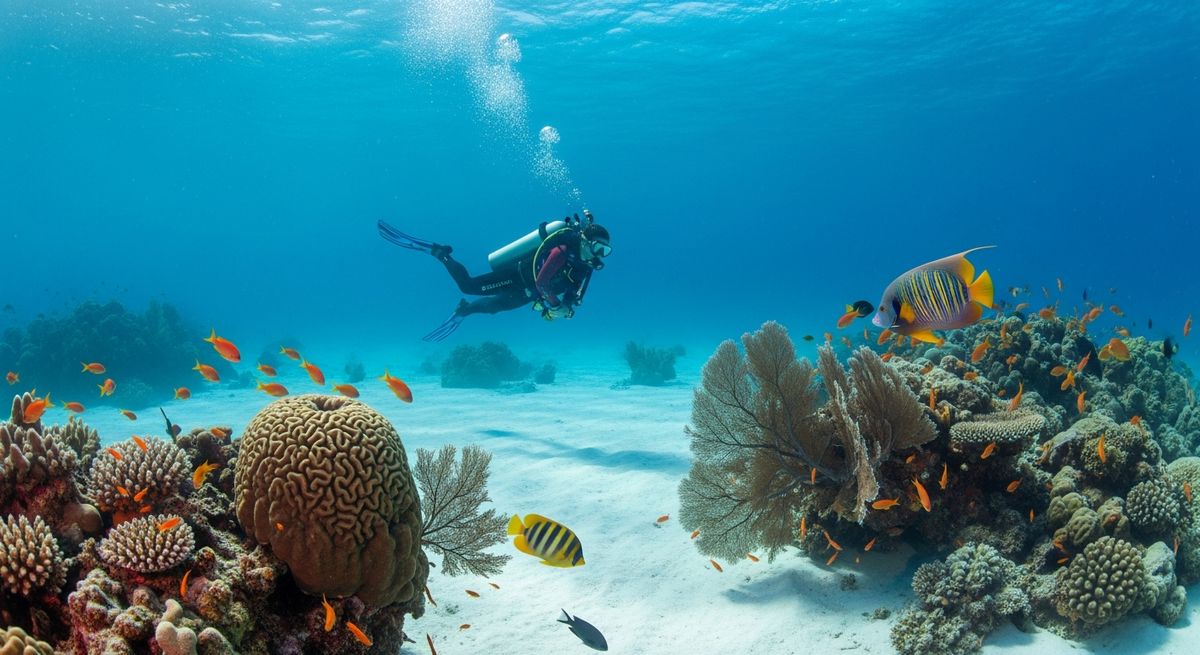
West Caicos delivers on the classic Provo wall dive, just with more space to spread out. We’re talking a two-mile stretch of vertical reef here, so your dive operator has plenty of options to pick a quiet spot. Drop in, and you’ll find the wall draped in some seriously impressive sponges – think huge purple tubes, long ropes, and big antler sponges. Keep an eye out into the blue for bigger pelagic stuff cruising past. It’s a great pick if you like that feeling of a sheer drop-off, with plenty of places for macro critters to hide in the cracks.

Location
Providenciales, Turks & Caicos, Caribbean
Coordinates
21.660000, -72.470000

Marine Protected Area: West Caicos Marine

Best Time to Dive in Providenciales

The warmest water temperatures in Providenciales occur in January, averaging 26.4°C. The coolest conditions are in December at 26.4°C.

Monthly Water Temperatures

  • January: 26.4°C (air: 25.1°C)
  • February: 26.4°C (air: 24.8°C)
  • March: 26.4°C (air: 24.9°C)
  • April: 26.4°C (air: 25.5°C)
  • May: 26.4°C (air: 26.8°C)
  • June: 26.4°C (air: 28.0°C)
  • July: 26.4°C (air: 28.4°C)
  • August: 26.4°C (air: 28.6°C)
  • September: 26.4°C (air: 28.7°C)
  • October: 26.4°C (air: 28.3°C)
  • November: 26.4°C (air: 27.1°C)
  • December: 26.4°C (air: 25.8°C)

Nearby Dive Sites in Providenciales

Nearest Dive Centres to West Caicos

Marine Life in Providenciales

Home to 127 recorded species including 105 reef fish, 16 hard corals, 2 sea snails & nudibranchs, 2 whales & dolphins, 1 other, 1 octopus & squid.

Notable Species

Recommended Packing List for West Caicos

Based on average water temperature of 26.4°C.

  • Shorty or Rashguard - warm 26°C water needs minimal exposure protection
  • Mask - essential for every dive
  • Fins
  • BCD - buoyancy compensator
  • Regulator - your most safety-critical piece of gear
  • Dive Computer - tracks depth, time, and NDL
  • Surface Marker Buoy (SMB) - essential for boat pickups
  • Dive Torch - useful for crevices and colour at depth
  • Underwater Camera - capture your diving memories

Frequently Asked Questions

What are the typical depths for diving at West Caicos dive sites?
While West Caicos is renowned for its impressive 2-mile-long wall, the typical depths for diving at its various sites are not specified in the available data. Divers can expect to explore a diverse reef environment, but specific depth ranges are currently unknown.
What kind of marine life and underwater topography can divers expect to see when diving in West Caicos?
Divers exploring West Caicos can expect to encounter a spectacular 2-mile-long wall, which is the focal point of its underwater topography. This mega wall is vibrantly adorned with a variety of sponges, including antler sponges, rope sponges, and purple tube sponges, with sites like Elephant Ear Canyon hinting at specific sponge formations. Beyond the wall, a diverse array of pelagic life can be observed in the blue, complemented by a rich diversity of topography across its 12 or so dive sites.
How challenging is the diving at West Caicos, and is it suitable for beginner or advanced divers?
Diving at West Caicos is rated as intermediate difficulty. This suggests that while it may not be ideal for absolute beginners, divers with some experience and appropriate certifications will find the sites enjoyable and manageable. The diverse topography and extensive wall offer rewarding experiences for those comfortable with intermediate conditions.
What is the best time of year to go diving in West Caicos for optimal conditions and marine encounters?
Information regarding the best time of year for optimal diving conditions and specific marine encounters at West Caicos is not provided in the current data. For general guidance on seasonal diving in the region, you might consult our When to Dive resource.
What scuba diving certifications are required to dive at West Caicos?
The specific scuba diving certifications required to dive at West Caicos are not detailed in the provided data. However, as diving here is rated as intermediate difficulty, divers should typically have foundational certifications and sufficient experience for such conditions.
What are the typical water conditions, currents, and visibility like for diving around West Caicos?
Details regarding the typical water conditions, currents, and visibility for diving around West Caicos are not specified in the current data. Divers planning a trip should consult local dive operators for the most up-to-date information on these environmental factors.