Aroa Rā’ui
Why dive here
With 134+ marine species recorded in the area - including humpback whales and pufferfish - Aroa Rā’ui offers some of Rarotonga's richest reef diving. Water ranges 24-28°C, warmest February, March, April.
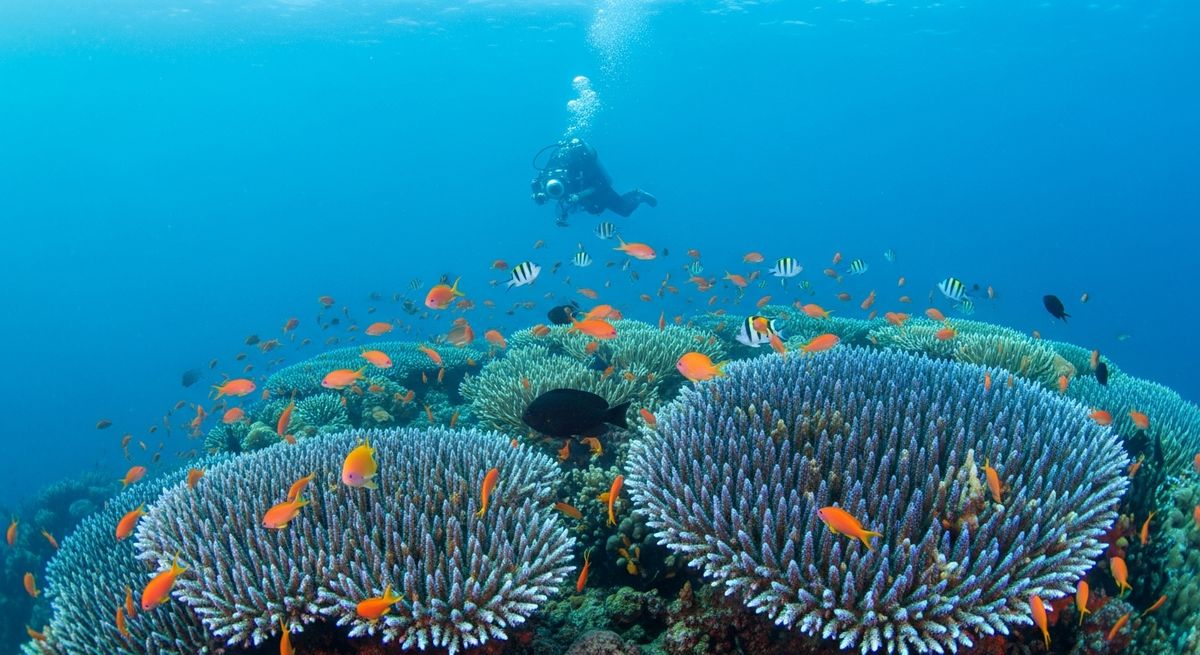
Aroa Rā’ui is one of those spots we always point people to, especially if they’re just getting their fins wet or want a relaxed afternoon in the shallows. Forget the big boats and deep drops for a moment. Here, you’re straight off the beach, wading into calm, clear water that rarely nudges past 6m. It's a fantastic place to just float and watch. We’ve seen Clown Butterflyfish weaving through the Staghorn coral, their yellows and blacks really popping against the blue. Schools of Gold-lined Seabream drift past, almost hypnotically. Look closely among the sand patches for the Black Sea Cucumbers, or if you’re lucky, a Granular Frog Shell. Our favorite find here has to be the Argus Grouper, often just chilling under a coral head. Visibility usually hovers around 10m, which feels ample when you're this close to the action. It's not a deep, dramatic dive, but a gentle, intimate peek into the lagoon’s smaller inhabitants. Perfect for honing buoyancy or just enjoying an easy, colorful drift.
Nearest Dive Centres to Aroa Rā’ui
Dive shops near Aroa Rā’ui
Adventure Cook Islands
Cook Island Divers
Chantal's Concierge on the Beach
Pacific Divers
Reviews for Aroa Rā’ui
Conditions
Ocean conditions, forecast and tides for Aroa Rā’ui
Aroa Rā’ui Ocean Conditions
Monthly averages for Aroa Rā’ui, sourced from Open-Meteo marine data - nearest station: Open-Meteo marine grid (-21.2, -159.82) (1km away)
October Averages
Sea Temperature
24°C
76°F · Range: 23.3–26°C
Air Temperature
22°C
72°F
Wind Speed
9.54 m/s
18.5 knots
Atmospheric Pressure
1016.5 hPa
Based on 4 years of monitoring data · Data sources: Open-Meteo marine data
Plan & book
Ways to dive Rarotonga, from day trips to liveaboards.
Day trips & courses
via GetYourGuideGuided dives, courses and snorkel trips with instant booking.
Find dive trips in RarotongaPlaces to stay
via Booking.comHotels and dive resorts near Rarotonga.
Search stays in RarotongaDive insurance
Most travel insurance excludes or limits scuba. Check what you need before you go.
Dive insurance explainedPartner links: we may earn a commission if you book, at no extra cost to you. How we make money
Where to Stay near Aroa Rā’ui
Prices from Booking.com. We may earn a commission at no extra cost to you.