Avaavaroa Passage
Why dive here
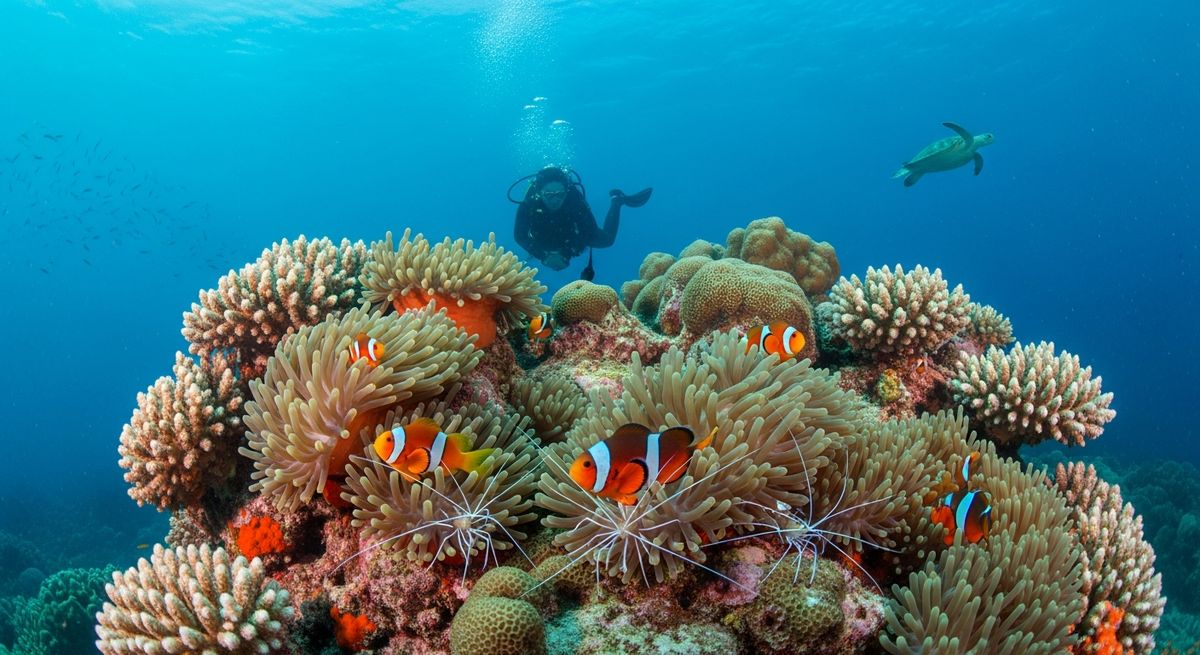
With 134+ marine species recorded in the area - including humpback whales and pufferfish - Avaavaroa Passage offers some of Rarotonga's richest reef diving. Water ranges 24-28°C, warmest February, March, April.
Avaavaroa Passage, for us, is where Rarotonga really flexes its muscles. You drop in and it’s a wide-open blue, feeling more like a channel than a typical passage. The current here can really pick up, pushing you along, so it’s definitely one for advanced divers who are comfortable with drift. We love feeling that effortless glide, watching the reef zip by. What makes Avaavaroa special are the residents. Grey reef sharks are a consistent presence, cruising the deeper sections. We’ve had encounters with groups of them, just circling, assessing. And if you’re lucky, eagle rays often glide through the passage, their distinct profiles unmistakable against the blue. Look closely at the reef walls as you drift; you’ll spot parrotfish chomping away, leaving their characteristic sand trails. We’d suggest a mid-morning dive, when the light penetrates well, illuminating the deeper corals, making the cauliflower coral glow. It’s a sensory experience, the rush of the current, the silent ballet of sharks, and the vibrant reef passing by. This site is our pick for divers seeking that classic South Pacific pelagic encounter without a massive boat trip.
Typical Avaavaroa Passage Dive Profile
Illustrative profile based on site depth and type. Actual dive profiles vary - always follow your dive computer and training.
Safety Notes
Always perform a 3-minute safety stop at 5m before surfacing.
Nearest Dive Centres to Avaavaroa Passage
Dive shops near Avaavaroa Passage
Pacific Divers
Chantal's Concierge on the Beach
Adventure Cook Islands
Cook Island Divers
Reviews for Avaavaroa Passage
Conditions
Ocean conditions, forecast and tides for Avaavaroa Passage
Avaavaroa Passage Ocean Conditions
Monthly averages for Avaavaroa Passage, sourced from Open-Meteo marine data - nearest station: Open-Meteo marine grid (-21.2, -159.82) (1km away)
October Averages
Sea Temperature
24°C
76°F · Range: 23.3–26°C
Air Temperature
22°C
72°F
Wind Speed
9.54 m/s
18.5 knots
Atmospheric Pressure
1016.5 hPa
Based on 4 years of monitoring data · Data sources: Open-Meteo marine data
Plan & book
Ways to dive Rarotonga, from day trips to liveaboards.
Day trips & courses
via GetYourGuideGuided dives, courses and snorkel trips with instant booking.
Find dive trips in RarotongaPlaces to stay
via Booking.comHotels and dive resorts near Rarotonga.
Search stays in RarotongaDive insurance
Most travel insurance excludes or limits scuba. Check what you need before you go.
Dive insurance explainedPartner links: we may earn a commission if you book, at no extra cost to you. How we make money
Where to Stay near Avaavaroa Passage
Prices from Booking.com. We may earn a commission at no extra cost to you.