Diving in Rarotonga
Why dive here
Rarotonga offers some of Cook Islands's richest diving, with 134+ marine species recorded in the area - including humpback whales and pufferfish. Water ranges 24-28°C, warmest February, March, April.
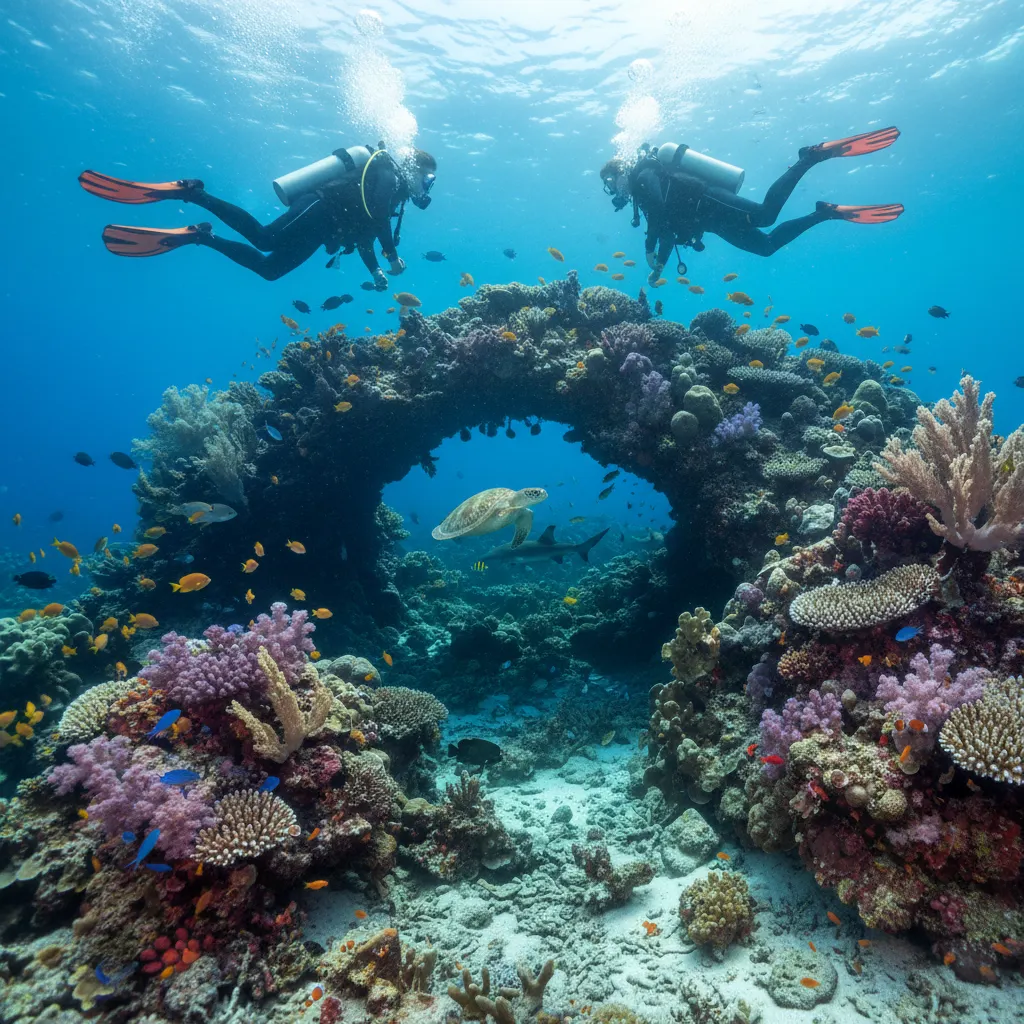
Rarotonga isn't your typical Pacific dive destination, and that’s precisely why we love it. Forget crowded boats and dive sites. Here, you'll often have the reef to yourself, which feels like a real privilege. Diving largely revolves around the reef passages, intricate cave systems, and dramatic drop-offs just outside the main lagoon. We’re not going to lie, the visibility can be a bit variable, depending on the currents and recent rainfall, but when it’s good, it’s spectacular - a vibrant blue that just swallows you whole. Our favourite dives are often the drift through a passage, where you can watch parrotfish grazing on the coral and see schools of blackspot surgeonfish darting by. Keep an eye out for the more unusual residents too, like the ornate Pacific cornetfish or the surprisingly common porous cowries tucked away in crevices. Some of the outer walls hold a nice population of horned bannerfish, their long dorsal fins trailing elegantly in the current. If you're into macro, the caves are fun for spotting Isabel's hermit crabs. The currents can get strong, especially near the passes, so it’s definitely one for the intermediate to advanced diver who enjoys a bit of movement.
Rarotonga Dive Site Map
Dive sites and dive centres in Rarotonga
Rarotonga Dive Sites
44 dive sites in Rarotonga
Aroa Rā’ui
Aroa Rā’ui is one of those spots we always point people to, especially if they’re just getting their fins wet or want a relaxed afternoon in the shallows. Forget the big boats and deep drops for a moment. Here, you’re straight off the beach, wading into calm, clear water that rarely nudges past 6m. It's a fantastic place to just float and watch. We’ve seen Clown Butterflyfish weaving through the Staghorn coral, their yellows and blacks really popping against the blue. Schools of Gold-lined Seabream drift past, almost hypnotically. Look closely among the sand patches for the Black Sea Cucumbers, or if you’re lucky, a Granular Frog Shell. Our favorite find here has to be the Argus Grouper, often just chilling under a coral head. Visibility usually hovers around 10m, which feels ample when you're this close to the action. It's not a deep, dramatic dive, but a gentle, intimate peek into the lagoon’s smaller inhabitants. Perfect for honing buoyancy or just enjoying an easy, colorful drift.
Arorangi Drop Off
The Arorangi Drop Off is one of our favourite spots on Rarotonga's west coast, particularly for those willing to embrace a little current. We love how the reef here transitions from a gently sloping coral garden into a proper wall, carved with overhangs and small caves. It’s a site that feels alive, often with schools of Blackfin Chromis dancing above the coral bommies. We’ve found the currents at Arorangi can be quite playful, which often brings in the bigger pelagics. Keep an eye out for eagle rays gliding past, their silhouettes crisp against the blue. You’ll also frequently spot Trevallys patrolling the edge and, if you’re lucky, a lionfish tucked into a crevice, their fins fanning out dramatically. For macro enthusiasts, the colourful Dot and Dash Butterflyfish are plentiful, and we’ve even found the elusive Flasher Scorpionfish here, perfectly camouflaged. We’d suggest diving Arorangi in the morning; the light hitting the wall at that time is truly something else, illuminating the olive anthias and making the corals pop. It’s a dive that rewards attentive divers, offering both wide-angle drama and intricate details.
Arorangi Drop Off
The Arorangi Drop Off is one of our favourite spots on Rarotonga's west coast, particularly for those willing to embrace a little current. We love how the reef here transitions from a gently sloping coral garden into a proper wall, carved with overhangs and small caves. It’s a site that feels alive, often with schools of Blackfin Chromis dancing above the coral bommies. We’ve found the currents at Arorangi can be quite playful, which often brings in the bigger pelagics. Keep an eye out for eagle rays gliding past, their silhouettes crisp against the blue. You’ll also frequently spot Trevallys patrolling the edge and, if you’re lucky, a lionfish tucked into a crevice, their fins fanning out dramatically. For macro enthusiasts, the colourful Dot and Dash Butterflyfish are plentiful, and we’ve even found the elusive Flasher Scorpionfish here, perfectly camouflaged. We’d suggest diving Arorangi in the morning; the light hitting the wall at that time is truly something else, illuminating the olive anthias and making the corals pop. It’s a dive that rewards attentive divers, offering both wide-angle drama and intricate details.
Arorangi Passage
Arorangi Passage on Rarotonga is one of those dives we return to time and again, despite its reputation for serious currents. We’ve had dives here where you practically fly through the passage, which is exhilarating but not for the faint of heart. It’s the smallest and shallowest of Rarotonga’s passages, dredged out recently for smaller boats, but don't let that fool you. The action here can be immense. Our favourite way to dive Arorangi is on an incoming tide. You can drift over the sandy bottom, spotting Ambon pufferfish poking out from crevices and the occasional snakehead cowrie clinging to the reef. The real magic, though, is on the outer reef walls. Here, the current often lessens, letting you explore the canyons and swim-throughs. We’ve found lionfish lurking in the shadows and small reef sharks patrolling the drop-off. Keep an eye out for humphead unicornfish schooling in the bluer water, their iridescent scales flashing as they navigate the flow. The coral here, particularly some robust staghorn, has really bounced back. This dive is definitely for those who enjoy a bit of drift and don't mind a strong workout. Expect to cover ground quickly and see a lot of fish activity, especially triggerfish and parrotfish, adapting to the surge.
Arorangi Passage
Arorangi Passage on Rarotonga is one of those dives we return to time and again, despite its reputation for serious currents. We’ve had dives here where you practically fly through the passage, which is exhilarating but not for the faint of heart. It’s the smallest and shallowest of Rarotonga’s passages, dredged out recently for smaller boats, but don't let that fool you. The action here can be immense. Our favourite way to dive Arorangi is on an incoming tide. You can drift over the sandy bottom, spotting Ambon pufferfish poking out from crevices and the occasional snakehead cowrie clinging to the reef. The real magic, though, is on the outer reef walls. Here, the current often lessens, letting you explore the canyons and swim-throughs. We’ve found lionfish lurking in the shadows and small reef sharks patrolling the drop-off. Keep an eye out for humphead unicornfish schooling in the bluer water, their iridescent scales flashing as they navigate the flow. The coral here, particularly some robust staghorn, has really bounced back. This dive is definitely for those who enjoy a bit of drift and don't mind a strong workout. Expect to cover ground quickly and see a lot of fish activity, especially triggerfish and parrotfish, adapting to the surge.
Avaavaroa Drop Off
Avaavaroa Drop Off is one of those sites we always recommend. You start by finning through sand channels, the kind that feel almost manicured, coral walls rising up on either side, then it just… drops. Not a gradual slope, but a proper edge into the blue. We love hovering right on that precipice, watching the reef fish like four-spot butterflies and orange-axil wrasse dart in and out of the staghorn coral, then just tilting your head to scan the open water. That’s where the real magic happens. This is our pick for pelagic sightings. We’ve seen everything from schooling tuna flashing past in the current to eagle rays gliding by with that effortless grace. There’s always a chance for something bigger, too. If you’re lucky, you might even spot a tiger or hammerhead, though we think the real treat here is the sheer drop-off itself, the way the light changes as you look out into the deep. Visibility here is often well over 20 metres, so you get that incredible sense of scale. It’s a site that rewards patience, perfect for those who enjoy scanning the horizon as much as poking around the reef.
Avaavaroa Drop Off
Avaavaroa Drop Off is one of those sites we always recommend. You start by finning through sand channels, the kind that feel almost manicured, coral walls rising up on either side, then it just… drops. Not a gradual slope, but a proper edge into the blue. We love hovering right on that precipice, watching the reef fish like four-spot butterflies and orange-axil wrasse dart in and out of the staghorn coral, then just tilting your head to scan the open water. That’s where the real magic happens. This is our pick for pelagic sightings. We’ve seen everything from schooling tuna flashing past in the current to eagle rays gliding by with that effortless grace. There’s always a chance for something bigger, too. If you’re lucky, you might even spot a tiger or hammerhead, though we think the real treat here is the sheer drop-off itself, the way the light changes as you look out into the deep. Visibility here is often well over 20 metres, so you get that incredible sense of scale. It’s a site that rewards patience, perfect for those who enjoy scanning the horizon as much as poking around the reef.
Avaavaroa Passage
Avaavaroa Passage in Rarotonga gives you that genuine sense of adventure. We love dropping in on the outer reef, letting the surge push you gently into the channel. It’s like being ushered through a secret door. The real magic starts as you drift into those tight canyons – think Indiana Jones meets Jacques Cousteau. Sunlight shafts through cracks in the coral, illuminating schools of Achilles tang and bannerfish holding their position against the flow. You’ll definitely feel the current here; it's a dynamic dive, not one for dawdlers or heavy breathers. Keep an eye out for reef sharks cruising the deeper sections and don’t be surprised if an eagle ray glides past overhead. Our favourite trick is to find a spot to tuck in and just watch the show of fish life brought in by the water movement. This is a dive for those who enjoy a bit of pace and geological drama, offering an exciting drift through a labyrinth of coral. You’ll be treated to consistent reef shark sightings and the chance to spot turtles and eagle rays, all while navigating dramatic underwater topography. It suits divers comfortable with stronger currents and who appreciate a lively, ever-changing environment.
Avaavaroa Passage
Avaavaroa Passage, for us, is where Rarotonga really flexes its muscles. You drop in and it’s a wide-open blue, feeling more like a channel than a typical passage. The current here can really pick up, pushing you along, so it’s definitely one for advanced divers who are comfortable with drift. We love feeling that effortless glide, watching the reef zip by. What makes Avaavaroa special are the residents. Grey reef sharks are a consistent presence, cruising the deeper sections. We’ve had encounters with groups of them, just circling, assessing. And if you’re lucky, eagle rays often glide through the passage, their distinct profiles unmistakable against the blue. Look closely at the reef walls as you drift; you’ll spot parrotfish chomping away, leaving their characteristic sand trails. We’d suggest a mid-morning dive, when the light penetrates well, illuminating the deeper corals, making the cauliflower coral glow. It’s a sensory experience, the rush of the current, the silent ballet of sharks, and the vibrant reef passing by. This site is our pick for divers seeking that classic South Pacific pelagic encounter without a massive boat trip.
Avaavaroa Passage
Avaavaroa Passage in Rarotonga gives you that genuine sense of adventure. We love dropping in on the outer reef, letting the surge push you gently into the channel. It’s like being ushered through a secret door. The real magic starts as you drift into those tight canyons – think Indiana Jones meets Jacques Cousteau. Sunlight shafts through cracks in the coral, illuminating schools of Achilles tang and bannerfish holding their position against the flow. You’ll definitely feel the current here; it's a dynamic dive, not one for dawdlers or heavy breathers. Keep an eye out for reef sharks cruising the deeper sections and don’t be surprised if an eagle ray glides past overhead. Our favourite trick is to find a spot to tuck in and just watch the show of fish life brought in by the water movement. This is a dive for those who enjoy a bit of pace and geological drama, offering an exciting drift through a labyrinth of coral. You’ll be treated to consistent reef shark sightings and the chance to spot turtles and eagle rays, all while navigating dramatic underwater topography. It suits divers comfortable with stronger currents and who appreciate a lively, ever-changing environment.
Avana Passage
Avana Passage on Rarotonga’s east coast is one of our favourite easy dives. We love the feeling of drifting through the mouth of Ngatangiia Harbour, like exploring a sunken pathway. It’s mostly sand underfoot, but keep an eye out for Desjardin's Sailfin Tangs darting around the rocky edges. The highlight for us is always the rock formations just outside the passage; they really do feel like ancient ruins, carved by the ocean over millennia. We’ve spotted plenty of morays tucked into crevices here, and if you’re lucky, a Humphead wrasse might cruise past. For those who prefer a relaxed dive with consistent visibility, Avana Passage is a solid choice. You can drift gently in with the incoming tide, spotting butterflyfish and various wrasse species in the calmer waters. It’s a shallower dive, maxing out around 17 metres, making it perfect for a long bottom time and a gentle introduction to Rarotonga’s reef life.
Avana Passage
Avana Passage on Rarotonga’s east coast is one of our favourite easy dives. We love the feeling of drifting through the mouth of Ngatangiia Harbour, like exploring a sunken pathway. It’s mostly sand underfoot, but keep an eye out for Desjardin's Sailfin Tangs darting around the rocky edges. The highlight for us is always the rock formations just outside the passage; they really do feel like ancient ruins, carved by the ocean over millennia. We’ve spotted plenty of morays tucked into crevices here, and if you’re lucky, a Humphead wrasse might cruise past. For those who prefer a relaxed dive with consistent visibility, Avana Passage is a solid choice. You can drift gently in with the incoming tide, spotting butterflyfish and various wrasse species in the calmer waters. It’s a shallower dive, maxing out around 17 metres, making it perfect for a long bottom time and a gentle introduction to Rarotonga’s reef life.
Show all 44 dive sites in Rarotonga
- Avarua Passage
- Avarua Passage
- Avatiu Drop Off
- Avatiu Drop Off
- Blackrock
- Blackrock
- Dive Rarotonga
- Edna’s Anchor
- FV Maritime Reefer
- Goldmine
- Labyrinth
- Matavera Point
- Matavera Reef
- Matavera Wall
- M.V. Mataora
- Ngatangiia School
- Ngatipa Reef
- Panama
- Papua Drop Off
- Papua Passage
- Papua Passage
- Pinnacles
- Pue Coral Gardens
- Queens Reef
- R.M.S. Maitai
- Runway
- Rutaki Drop Off
- Rutaki Passage
- Sunset Lava Tubes
- Tupapa Sandriver
- Winslow Reef
- YANKEE
Rarotonga Dive Centres
4 dive shops and operators in Rarotonga
Ocean Wildlife in Rarotonga
134 species recorded in Rarotonga
Rarotonga Daylight & Sunrise/Sunset
Sunrise and sunset times for Rarotonga, calculated from coordinates
Today - Sunday 11 October
Sunrise
05:13
Sunset
17:41
Daylight
12h 28m
Golden Hour
17:11
First light (dawn) at 04:50 · Last light (dusk) at 18:03
Monthly Averages
| Month | Sunrise | Sunset | Daylight |
|---|---|---|---|
| Jan | 05:10 | 18:28 | 13h 17m |
| Feb | 05:30 | 18:18 | 12h 48m |
| Mar | 05:42 | 17:57 | 12h 15m |
| Apr | 05:51 | 17:29 | 11h 37m |
| May | 06:03 | 17:10 | 11h 7m |
| JunShortest | 06:15 | 17:06 | 10h 51m |
| Jul | 06:17 | 17:14 | 10h 57m |
| Aug | 06:04 | 17:26 | 11h 22m |
| Sep | 05:37 | 17:34 | 11h 57m |
| OctNow | 05:09 | 17:42 | 12h 33m |
| Nov | 04:51 | 17:58 | 13h 7m |
| DecLongest | 04:53 | 18:17 | 13h 25m |
Times are approximate local times based on longitude. Actual times may vary slightly depending on the exact timezone observed in Rarotonga.
Where to Stay near Rarotonga
Prices from Booking.com. We may earn a commission at no extra cost to you.
Marine Protected Areas near Rarotonga
3 protected areas near Rarotonga - please respect local regulations when diving
Marae Moana
Suwarrow National Park
Takutea Wildlife Sanctuary
Getting to Rarotonga
Avarua
Plan & book
Ways to dive Rarotonga, from day trips to liveaboards.
Day trips & courses
via GetYourGuideGuided dives, courses and snorkel trips with instant booking.
Find dive trips in RarotongaPlaces to stay
via Booking.comHotels and dive resorts near Rarotonga.
Search stays in RarotongaDive insurance
Most travel insurance excludes or limits scuba. Check what you need before you go.
Dive insurance explainedPartner links: we may earn a commission if you book, at no extra cost to you. How we make money