Hydravion et Goelett
Protected Area
Pointe Vénus
Why dive here
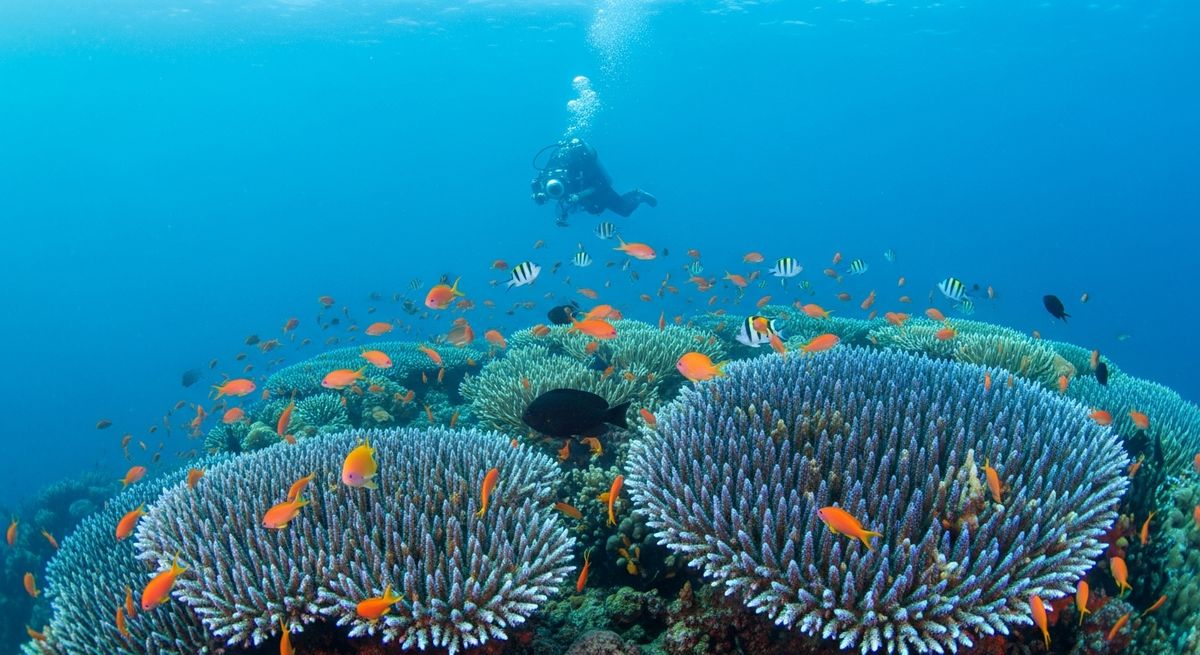
With 135+ marine species recorded in the area - including humpback whales, sperm whales, spinner dolphins and pufferfish - Hydravion et Goelett offers some of Moorea & Tahiti's richest reef diving. Water ranges 27-29°C, warmest February, March, April.
Hydravion et Goelett, or 'The Catalina,' is our pick for a unique wreck dive in French Polynesia. You won't find many like it here. We love dropping onto the Catalina PBY-5A, a former US Navy seaplane that once flew the Polynesian skies in the 1950s. It sits upright, broken but surprisingly intact, at a maximum depth of 19m. The visibility usually hovers around 16m, which is decent enough to appreciate the scale. We always head straight for the cockpit, imagining the pilots. Then, we spend time exploring the fuselage, noting how the metal has softened with time and coral growth. Keep an eye out for the resident moray eels that peek from crevices, and the small schools of blue-lined tangs and blue-green chromis that dart around the wreckage. We've seen some impressive parrotfish here, casually munching on the encrusted surfaces. It’s a site for divers who appreciate history and a bit of mechanical intrigue, perfect for a relaxed dive.
Nearest Dive Centres to Hydravion et Goelett
Dive shops near Hydravion et Goelett
Activiseas
Fluid Plongée
Eleuthera Plongée
Dive and Sea
Tahiti nui diving center
Tahiti Plongee Passion
Reviews for Hydravion et Goelett
Conditions
Ocean conditions, forecast and tides for Hydravion et Goelett
Hydravion et Goelett Ocean Conditions
Monthly averages for Hydravion et Goelett, sourced from Open-Meteo marine data + Copernicus Marine (EU) - nearest station: Open-Meteo marine grid (-17.58, -149.62) (1km away)
October Averages
Sea Temperature
27°C
81°F · Range: 26.2–28.2°C
Current Speed
15 cm/s
Direction: SW (233.1°)
Chlorophyll-a
0.048 mg/m³
Very clear (oligotrophic)
Salinity
36.14 PSU
Based on 4 years of monitoring data · Data sources: Open-Meteo marine data + Copernicus Marine (EU)
Plan & book
Ways to dive Moorea & Tahiti, from day trips to liveaboards.
Day trips & courses
via GetYourGuideGuided dives, courses and snorkel trips with instant booking.
Find dive trips in Moorea & TahitiPlaces to stay
via Booking.comHotels and dive resorts near Moorea & Tahiti.
Search stays in Moorea & TahitiDive insurance
Most travel insurance excludes or limits scuba. Check what you need before you go.
Dive insurance explainedPartner links: we may earn a commission if you book, at no extra cost to you. How we make money
Where to Stay near Hydravion et Goelett
Prices from Booking.com. We may earn a commission at no extra cost to you.