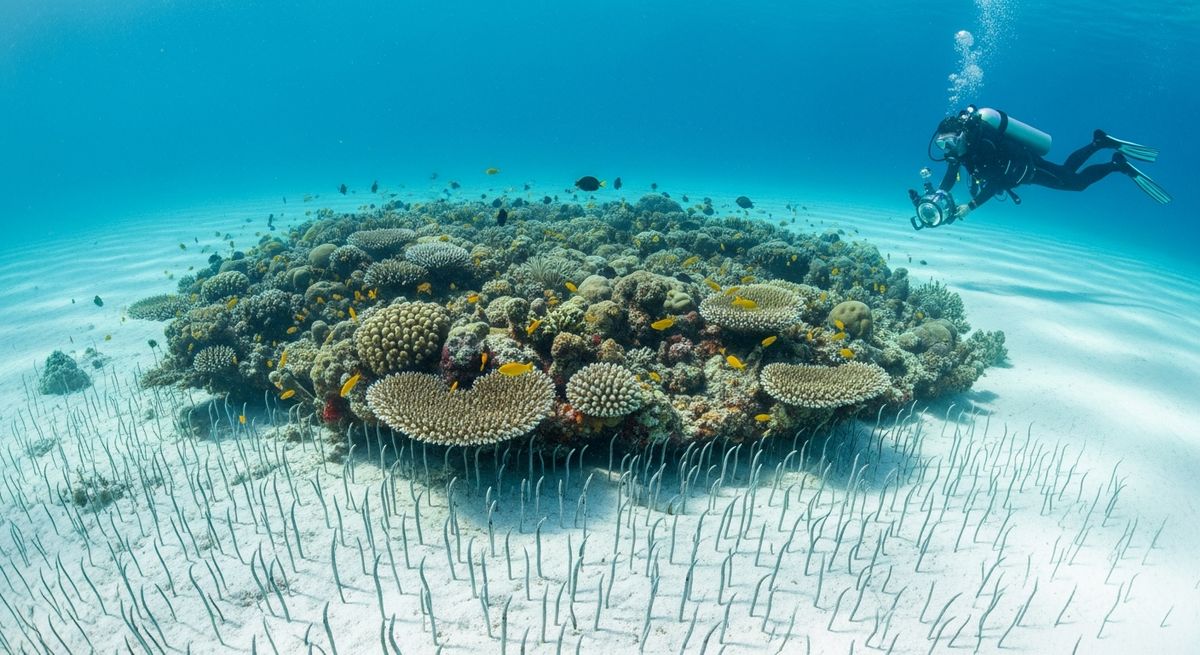
Fausse Passe de Paea
Protected Area
Grottes de Maraa
Why dive here
With 135+ marine species recorded in the area - including humpback whales, sperm whales, spinner dolphins and pufferfish - Fausse Passe de Paea offers some of Moorea & Tahiti's richest reef diving. Water ranges 27-29°C, warmest February, March, April.
Fausse Passe de Paea consistently delivers, a deep channel dive that always leaves us smiling. The real draw here is the sheer number of green sea turtles. We’re not talking about one or two; it’s a constant parade, often so focused on grazing the channel walls they barely seem to notice you. We find them nestled in crevices or casually swimming past, sometimes in groups. Drop in and let the current carry you gently along a stunning wall, riddled with fissures and small overhangs. Keep an eye out for Napoleon wrasse cruising by, their distinct profiles unmistakable, and leopard rays often glide through the deeper sections of the pass. It’s a comfortable drift for most experience levels, especially when the current isn't ripping. We’d suggest an early morning dive if you can, before any boat traffic picks up; it just adds to the serenity. Visibility usually hovers around 19m, sometimes more, giving you plenty of lead time to spot what’s coming.
Nearest Dive Centres to Fausse Passe de Paea
Dive shops near Fausse Passe de Paea
Mobydick Tahiti
Tahiti nui diving center
Dive and Sea
Eleuthera Plongée
Fluid Plongée
Activiseas
Reviews for Fausse Passe de Paea
Conditions
Ocean conditions, forecast and tides for Fausse Passe de Paea
Fausse Passe de Paea Ocean Conditions
Monthly averages for Fausse Passe de Paea, sourced from Open-Meteo marine data + Copernicus Marine (EU) - nearest station: Open-Meteo marine grid (-17.58, -149.62) (1km away)
October Averages
Sea Temperature
27°C
81°F · Range: 26.2–28.2°C
Current Speed
15 cm/s
Direction: SW (233.1°)
Chlorophyll-a
0.048 mg/m³
Very clear (oligotrophic)
Salinity
36.14 PSU
Based on 4 years of monitoring data · Data sources: Open-Meteo marine data + Copernicus Marine (EU)
Plan & book
Ways to dive Moorea & Tahiti, from day trips to liveaboards.
Day trips & courses
via GetYourGuideGuided dives, courses and snorkel trips with instant booking.
Find dive trips in Moorea & TahitiPlaces to stay
via Booking.comHotels and dive resorts near Moorea & Tahiti.
Search stays in Moorea & TahitiDive insurance
Most travel insurance excludes or limits scuba. Check what you need before you go.
Dive insurance explainedPartner links: we may earn a commission if you book, at no extra cost to you. How we make money
Where to Stay near Fausse Passe de Paea
Prices from Booking.com. We may earn a commission at no extra cost to you.