QING CHUAN 1
Protected Area
Cžl mna絵 Jֻint i
Why dive here
With 113+ marine species recorded in the area - including great white sharks, hammerhead sharks, mobula rays (devil rays), octopuses and sea turtles - QING CHUAN 1 offers some of Jeju Island's richest wreck diving.
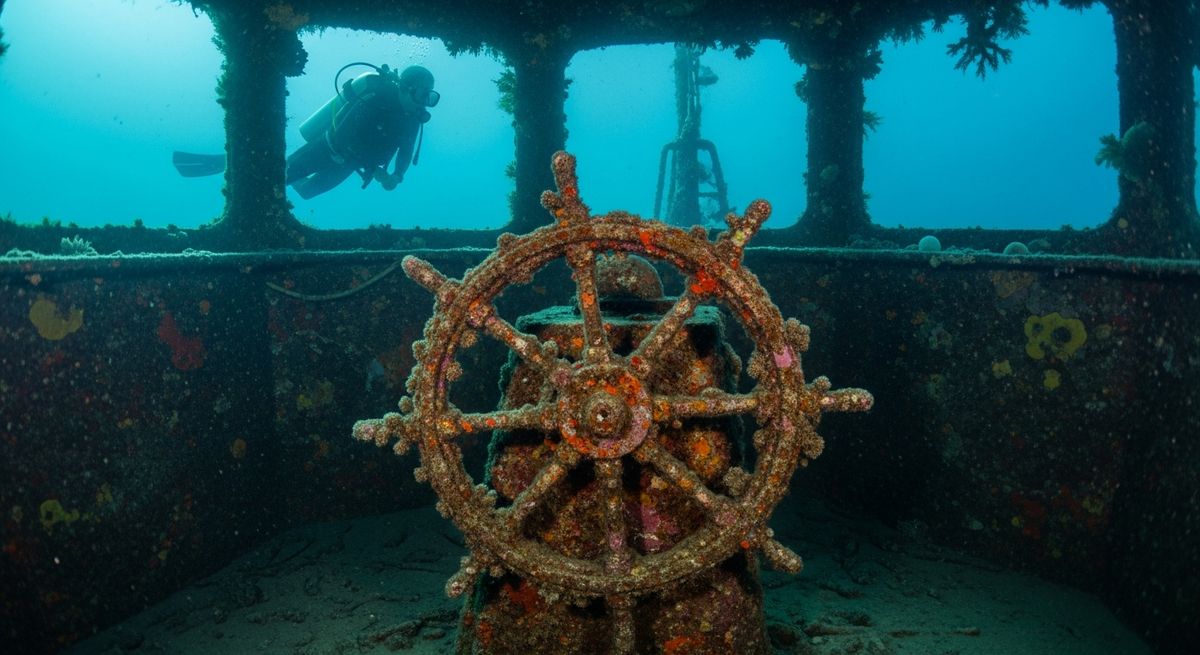
Qing Chuan 1 isn't your average wreck dive. This is deep, serious stuff, pushing down to 55m, so it’s one for the experienced tech divers among us. We love the sheer scale of her: 107 metres of steel, resting upright, exactly where she sank in 1989 after a collision. You really feel the history when you descend onto her deck. The visibility here can be temperamental, but on a good day, the outline of the stern, with its impressive propeller, comes into view first. Then, as you follow the deck forward, you start to see the life that's colonised her – huge schools of barracuda often hover over the bridge, and we've spotted some impressively large groupers tucked into crevices. The currents can be tricky, so good dive planning is essential. Our favourite part has to be exploring the cavernous cargo holds; they offer incredible overhead environments, but obviously, penetration here requires advanced training and proper gear. It's a challenging dive, no doubt, but the reward is a truly magnificent wreck that feels like a journey back in time.
Typical QING CHUAN 1 Dive Profile
Illustrative profile based on site depth and type. Actual dive profiles vary - always follow your dive computer and training.
Safety Notes
Maximum depth 55m exceeds recreational limits (40m). Technical diving certification and equipment required.
Wreck site - avoid penetration without wreck diving certification. Watch for sharp metal and entanglement hazards.
Always perform a 3-minute safety stop at 5m before surfacing.
Reviews for QING CHUAN 1
Conditions
Ocean conditions, forecast and tides for QING CHUAN 1
Plan & book
Ways to dive Jeju Island, from day trips to liveaboards.
Day trips & courses
via GetYourGuideGuided dives, courses and snorkel trips with instant booking.
Find dive trips in Jeju IslandPlaces to stay
via Booking.comHotels and dive resorts near Jeju Island.
Search stays in Jeju IslandDive insurance
Most travel insurance excludes or limits scuba. Check what you need before you go.
Dive insurance explainedPartner links: we may earn a commission if you book, at no extra cost to you. How we make money
Where to Stay near QING CHUAN 1
Prices from Booking.com. We may earn a commission at no extra cost to you.