LUNG HAO
Why dive here
LUNG HAO is a wreck dive in Northeast Coast, Taiwan. Water ranges 18-30°C, warmest July, August, September.
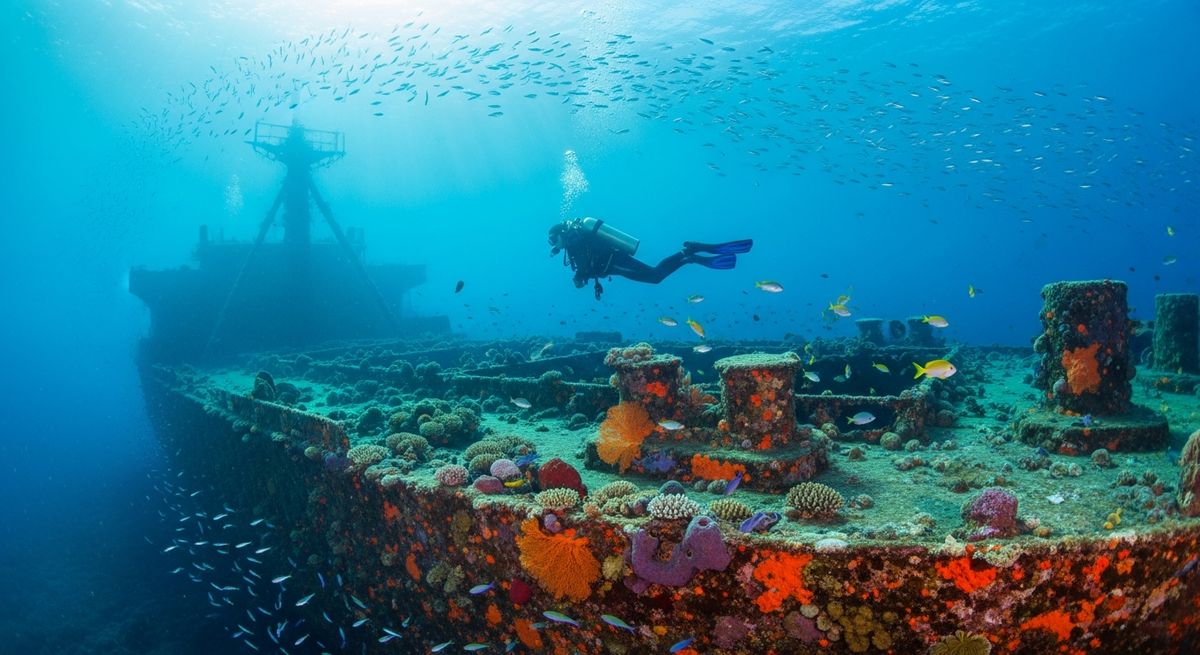
Lung Hao isn't your typical deep wreck dive. It's barely submerged, in fact, which is precisely why we love it. This isn't about penetration or chasing pelagics; it’s about a unique, historical interaction with a massive piece of maritime history. The bulk carrier, once named TRAKYA 1, met its end in 1989, and now its substantial remains sit shallow enough for even snorkelers to appreciate. We often find ourselves exploring the bow section, the metal plates thick with a surprising diversity of nudibranchs and small crabs. Look closely in the crevices – we’ve spotted moray eels peeking out from behind rust-eaten beams. The sunlight dapples through the water, illuminating the barnacle-encrusted hull, making the scale of the ship feel immense despite the shallow depth. It’s a photographer's playground, especially on a calm day when the surface creates minimal distortion. Our advice? Go early morning; the light is softer, and you’ll often have the wreck almost to yourself, giving you space to really absorb the eerie, beautiful stillness of it all. It’s perfect for those who appreciate history and macro life without the pressure of a deep dive.
Typical LUNG HAO Dive Profile
Illustrative profile based on site depth and type. Actual dive profiles vary - always follow your dive computer and training.
Safety Notes
Wreck site - avoid penetration without wreck diving certification. Watch for sharp metal and entanglement hazards.
Reviews for LUNG HAO
Conditions
Ocean conditions, forecast and tides for LUNG HAO
LUNG HAO Ocean Conditions
Monthly averages for LUNG HAO, sourced from Open-Meteo marine data - nearest station: Open-Meteo marine grid (25.02, 121.51) (24km away)
October Averages
Sea Temperature
27°C
81°F · Range: 25.1–30°C
Based on 4 years of monitoring data · Data sources: Open-Meteo marine data
Plan & book
Ways to dive Northeast Coast, from day trips to liveaboards.
Day trips & courses
via GetYourGuideGuided dives, courses and snorkel trips with instant booking.
Find dive trips in Northeast CoastPlaces to stay
via Booking.comHotels and dive resorts near Northeast Coast.
Search stays in Northeast CoastDive insurance
Most travel insurance excludes or limits scuba. Check what you need before you go.
Dive insurance explainedPartner links: we may earn a commission if you book, at no extra cost to you. How we make money
Where to Stay near LUNG HAO
Prices from Booking.com. We may earn a commission at no extra cost to you.