NISSHO
Protected Area
大肚溪口野生動物重要棲息環境
Why dive here
NISSHO is a wreck dive in Northeast Coast, Taiwan. Water ranges 18-30°C, warmest July, August, September.
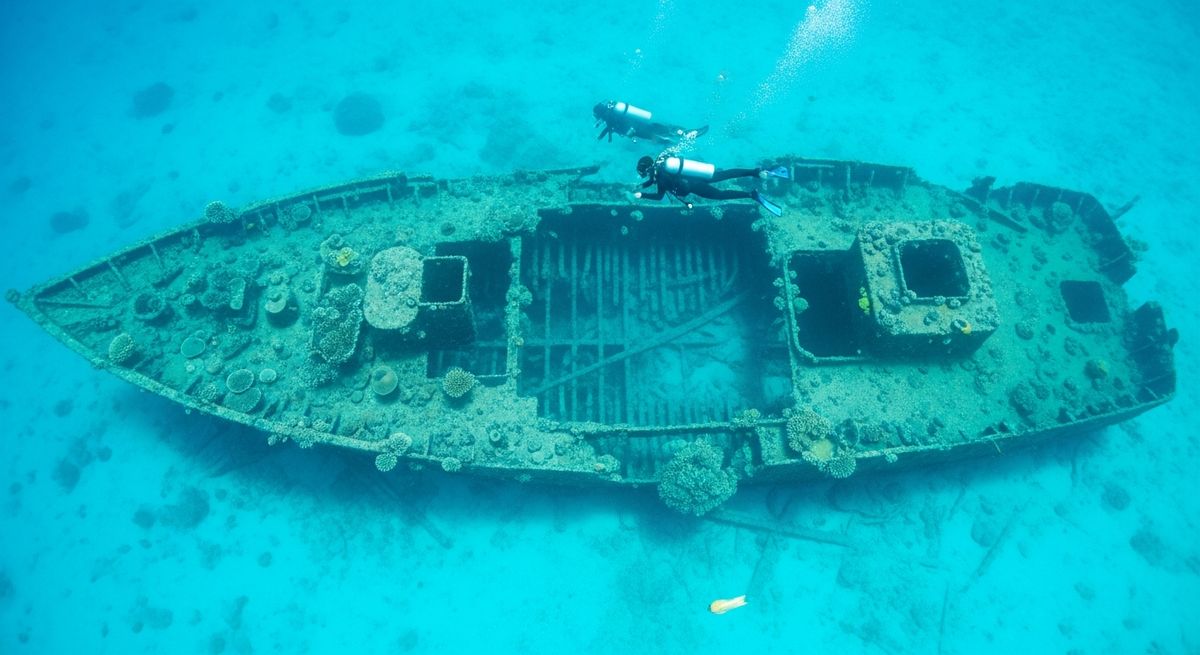
We love the Nissho for its raw, exposed character. This isn't some perfectly preserved time capsule; it’s a skeleton, battered by typhoons and time since it ran aground in 1988. You’ll find the hull broken into several large sections, scattered across the shallow sandy bottom. It’s an easy, interesting dive, mostly in less than 10 meters, making it ideal for longer bottom times and less experienced wreck divers. What we really enjoy is how light filters through the gaps and holes, illuminating schools of tiny sweepers that dart in and out of the rusted metal. Look for moray eels tucked deep within the plating, and occasionally a curious octopus peering out from behind a bulkhead. We've seen some impressive schools of jacks here, too, circling the larger sections of the hull. The shallow depth means you get decent light penetration even on overcast days, highlighting the corals and anemones that have started to colonise the wreck. It’s a site that changes with every strong weather system, always offering something a little different.
Safety Notes
Wreck site - avoid penetration without wreck diving certification. Watch for sharp metal and entanglement hazards.
Nearest Dive Centres to NISSHO
Dive shops near NISSHO
DIVE CUBE City Diving & Hotel
FREEPILOT
SHARK RESORT ALOHA WATERWIDE
Reviews for NISSHO
Conditions
Ocean conditions, forecast and tides for NISSHO
NISSHO Ocean Conditions
Monthly averages for NISSHO, sourced from Open-Meteo marine data - nearest station: Open-Meteo marine grid (25.02, 121.51) (24km away)
October Averages
Sea Temperature
27°C
81°F · Range: 25.1–30°C
Based on 4 years of monitoring data · Data sources: Open-Meteo marine data
Plan & book
Ways to dive Northeast Coast, from day trips to liveaboards.
Day trips & courses
via GetYourGuideGuided dives, courses and snorkel trips with instant booking.
Find dive trips in Northeast CoastPlaces to stay
via Booking.comHotels and dive resorts near Northeast Coast.
Search stays in Northeast CoastDive insurance
Most travel insurance excludes or limits scuba. Check what you need before you go.
Dive insurance explainedPartner links: we may earn a commission if you book, at no extra cost to you. How we make money
Where to Stay near NISSHO
Prices from Booking.com. We may earn a commission at no extra cost to you.