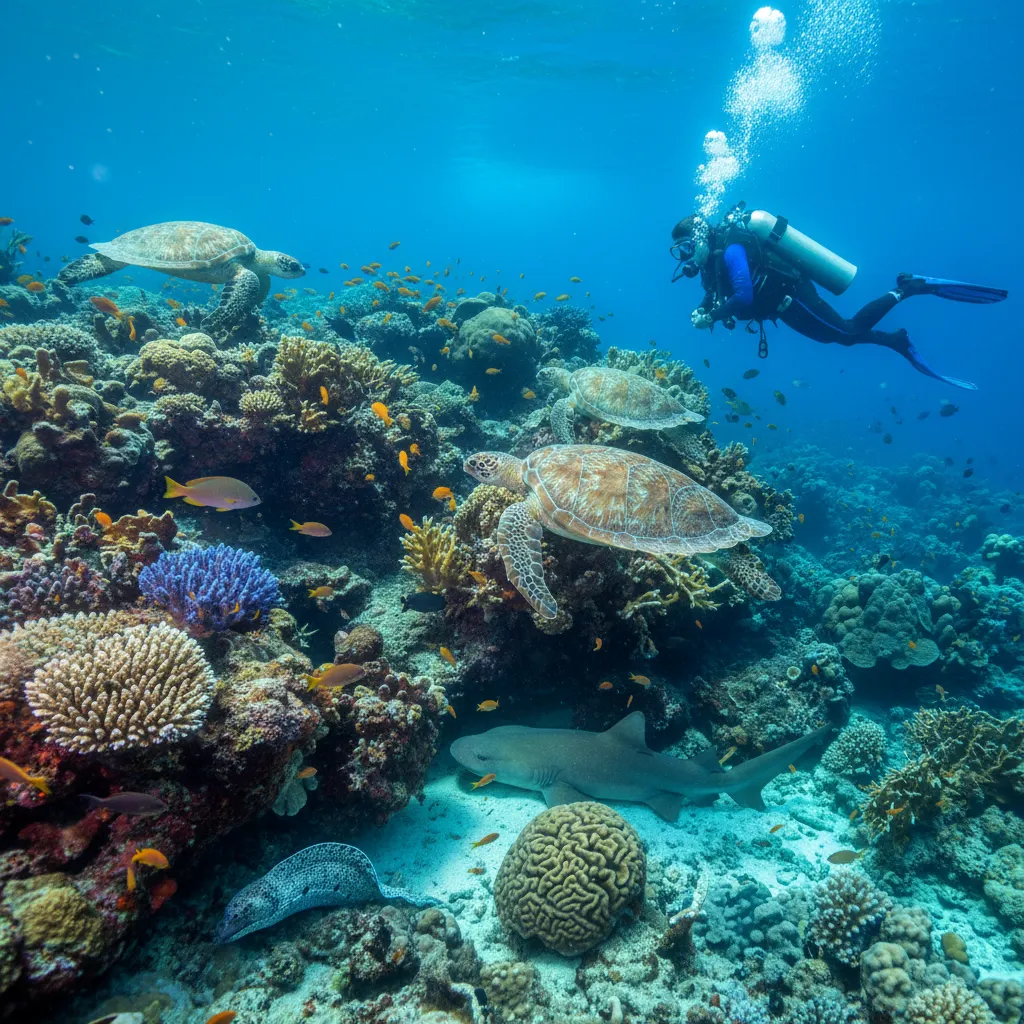
Diving in Santiago
Why dive here
Santiago offers some of Cape Verde's richest diving, with 43+ marine species recorded in the area - including dolphins, humpback whales, orcas, sea turtles and sperm whales. Water ranges 24-29°C, warmest August, September, October.
Santiago is a bit different from the other Cape Verde islands, certainly worth a few days if you’re looking for something beyond just the resort scene. We found the diving here to be more about the geology and the pelagics that cruise by than a riot of colour. You’ll spend time exploring volcanic rock formations, with deep crevices and swim-throughs, which makes for some dramatic topography. Our favourite dives were definitely the wrecks - they’re fairly accessible for beginners, and the resident schools of white seabream and butterfish give them a lively feel. We’ve also had incredible encounters with oceanic mantas here, especially in late summer, which is always a treat. Visibility can vary, particularly after a strong current, but when it’s good, the sheer scale of the underwater landscape is impressive. Keep an eye out for loggerhead turtles - they’re regulars here. You might also spot an African forktail snapper or a bigeye tuna darting past in the blue. The currents can be noticeable, so it’s worth checking conditions with the local dive centre before you head out. This isn’t a place for macro enthusiasts, but if you appreciate robust underwater architecture and the chance of big animal encounters, Santiago delivers.
Santiago Dive Site Map
Dive sites and dive centres in Santiago
Santiago Dive Sites
11 dive sites in Santiago
Atlanticus Diving - House Reef
The Atlanticus House Reef is a handy spot for a quick dip or a check dive, just off the shop. It’s shallow, hitting a maximum of 13 metres, making it ideal for beginners or those needing to refresh their skills. Expect to see some of the usual reef suspects, like small wrasse and gobies, poking around the rocky patches. It’s certainly not a destination dive, but it serves its purpose well.
COUNTY OF CARMARTHEN
The County of Carmarthen, what a glorious mess she is. This old steamship, sunk way back in 1922, isn’t about dramatic depths – she’s practically a snorkel site at a maximum of two metres. But don’t let that fool you. We love this wreck precisely *because* she’s so shallow and so thoroughly broken up. It's like an archaeological dig in real-time. You’re not penetrating cabins here, you’re swimming over, through, and around the skeletal remains of a substantial vessel. The sheer size of her, 105 metres long, means you could spend an hour just meandering through the twisted metal plates and enormous beams. Sunlight penetrates everywhere, illuminating schools of tiny baitfish that shimmer like liquid silver between the corroded ribs. Look closely and you’ll find plenty of cleaner shrimp busying themselves, and often a moray eel peeking out from under a particularly hefty piece of steel. Our favourite spot is near the stern, where the engine block is clearly visible, now completely overgrown with soft corals. It’s a photographer’s dream, particularly on a calm morning when the surface is like glass. Ideal for anyone who loves history and doesn’t need deep water to feel immersed.
Divecenter Santiago & King Bay
Divecenter Santiago & King Bay offers a straightforward shore dive, often used for training and easy entry. The sandy bottom gradually slopes, making it a good spot for buoyancy practice or a relaxed bimble. You'll likely encounter wide-eyed flounders expertly camouflaged, along with the usual reef fish patrolling the scattered rocks. It's a reliable option for beginners or those looking for a calm afternoon dive.
EUGENIO TAVARES
The Eugenio Tavares wreck isn't deep, topping out at 5m, but don’t let that fool you. This isn’t a quick swim-over. We love it for its story, a carrier vessel built in 1950, sunk in ’77 after a mishap while loading. She was eventually beached, leaving her bones splayed out in the shallows. What you get here is a proper shallow-water playground. Sunlight streaks through the hull sections, catching clouds of silversides that dart in and out of the rusted metal. We’ve spent whole dives just poking around the ribs and collapsed decks, noticing how the ocean has really taken over. Look closely and you’ll find moray eels tucked into crevices, their heads peeking out, and we often spot octopus camouflaged against the encrusted plating. It’s ideal for photographers who want to play with light and shadow, or divers who just enjoy a relaxed, exploratory dive without the pressure of depth. Our favourite time to visit is early morning, before any wind picks up, when the water is often glassy and the light is soft.
Franciscus
Franciscus, off Santiago, provides a straightforward dive. Expect a sandy bottom with scattered rocks, good for spotting the elusive Wide-eyed Flounder if you have a keen eye. It’s generally a calm site, making it suitable for newer divers or those looking for a relaxed exploration rather than a high-octane drift.
Leuchtturm
Leuchtturm, off Santiago, provides a straightforward reef dive. You'll likely encounter smaller reef fish darting amongst the rocky outcrops. The site is a decent option for a relaxed morning dive, particularly if you're looking for something calm without strong currents. It's a good choice for newer divers or those who prefer a less challenging profile.
MIRA-TERRA
Mira-Terra isn’t a deep dive, peaking at about ten metres, but it’s one of our favourite wreck dives around Santiago. This old motor vessel, built in Lisbon back in '57, ran aground doing inter-island service in 1970. She sits upright, pretty much intact, giving you a real sense of her scale as you approach. We love swimming through the old cargo holds, where the light filters down in shafts, illuminating schools of grunts and snappers that have made it home. What really gets us about Mira-Terra is the way the wreck has become a living reef. Moray eels peek out from every crevice, and the deck is carpeted in colourful sponges and soft corals. Keep an eye out for scorpionfish, they blend in perfectly against the rusty metal. It’s a superb site for photographers, especially with the sun high overhead, bringing out the wreck’s details and the vibrant colours of the marine life. Perfect for a long, relaxed dive, even if you’re newer to wreck diving.
Plateau
The Plateau dive site off Santiago offers a good drift dive experience. We often see stingrays resting on the sandy bottom and schools of barracuda cruising past. It's a fairly straightforward dive, ideal for those comfortable with moderate current and keen to cover some ground. Visibility here can be excellent, making it a relaxing dive.
Tuna Point
Tuna Point, off Santiago, provides a solid dive for those exploring Cape Verde's underwater scene. The site features a mix of rocky formations and sand patches where we’ve spotted the occasional wide-eyed flounder. It's a decent spot for a relaxed dive, offering a good chance to see some of the common Atlantic species without any strong currents to contend with. We'd suggest it for divers looking for an easy-going afternoon in the water.
Velha
Velha in Santiago offers a straightforward reef dive, good for shaking off the rust or for newer divers. The main draw here is the chance to spot the smaller reef residents like nudibranchs and blennies tucked into the rock crevices. We’ve found the currents generally mild, making it a relaxed way to spend an afternoon underwater. It’s a solid option if you’re looking for a comfortable dive without strong currents.
Vogelwand
Vogelwand, off Santiago, offers a straightforward reef dive. We usually see a good mix of smaller reef fish here, along with moray eels tucked into the crevices. The topography is interesting enough, with some nice swim-throughs to explore. It’s a solid choice for a relaxing dive, especially if you’re looking to get a couple of tanks in without too much fuss.
Santiago Dive Centres
2 dive shops and operators in Santiago
Ocean Wildlife in Santiago
43 species recorded in Santiago
Santiago Daylight & Sunrise/Sunset
Sunrise and sunset times for Santiago, calculated from coordinates
Today - Sunday 11 October
Sunrise
05:26
Sunset
17:19
Daylight
11h 53m
Golden Hour
16:50
First light (dawn) at 05:05 · Last light (dusk) at 17:40
Monthly Averages
| Month | Sunrise | Sunset | Daylight |
|---|---|---|---|
| Jan | 06:05 | 17:24 | 11h 19m |
| Feb | 06:01 | 17:39 | 11h 38m |
| Mar | 05:44 | 17:46 | 12h 1m |
| Apr | 05:22 | 17:49 | 12h 27m |
| May | 05:07 | 17:57 | 12h 49m |
| JunLongest | 05:05 | 18:06 | 13h 1m |
| Jul | 05:13 | 18:10 | 12h 57m |
| Aug | 05:21 | 18:00 | 12h 39m |
| Sep | 05:24 | 17:39 | 12h 14m |
| OctNow | 05:27 | 17:16 | 11h 49m |
| Nov | 05:37 | 17:03 | 11h 26m |
| DecShortest | 05:53 | 17:07 | 11h 14m |
Times are approximate local times based on longitude. Actual times may vary slightly depending on the exact timezone observed in Santiago.
Where to Stay near Santiago
Prices from Booking.com. We may earn a commission at no extra cost to you.
Marine Protected Areas near Santiago
20 protected areas near Santiago - please respect local regulations when diving
Parque Natural Norte da Ilha do Maio
Reserva Natural Tartaruga
Parque Natural do Norte
Reserva Natural Baía da Murdeira
Reserva Natural Casas Velhas
Reserva Natural Ponta de Sinó
Reserva Natural Serra Negra
Reserva Natural Costa da Fragata
RNI Ilhéus do Rombo
Reserva Natural Integral Ilhéus Branco e Raso
Reserva Natural Praia de Morro
Reserva Natural Lagoa Cimidor
Showing 12 largest of 20
Getting to Santiago
Praia
Rabil
Espargos
Plan & book
Ways to dive Santiago, from day trips to liveaboards.
Day trips & courses
via GetYourGuideGuided dives, courses and snorkel trips with instant booking.
Find dive trips in SantiagoPlaces to stay
via Booking.comHotels and dive resorts near Santiago.
Search stays in SantiagoDive insurance
Most travel insurance excludes or limits scuba. Check what you need before you go.
Dive insurance explainedPartner links: we may earn a commission if you book, at no extra cost to you. How we make money