MIRA-TERRA
Protected Area
Parque Natural Norte da Ilha do Maio
Why dive here
With 43+ marine species recorded in the area - including dolphins, humpback whales, orcas, sea turtles and sperm whales - MIRA-TERRA offers some of Santiago's richest wreck diving. Water ranges 24-29°C, warmest August, September, October.
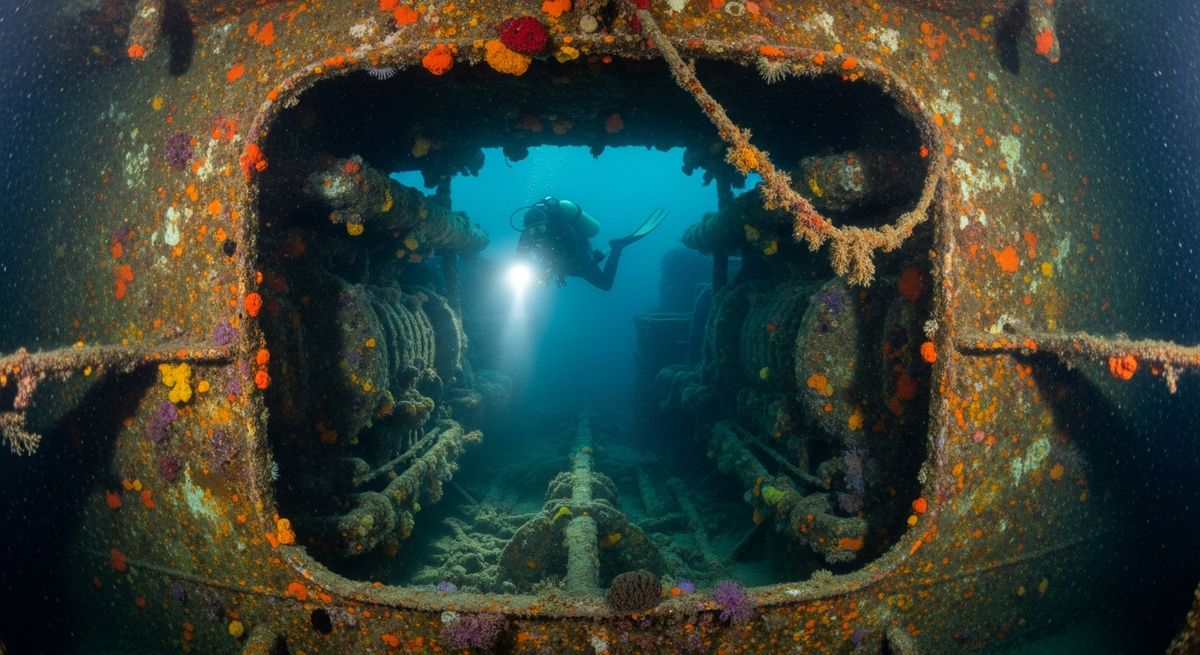
Mira-Terra isn’t a deep dive, peaking at about ten metres, but it’s one of our favourite wreck dives around Santiago. This old motor vessel, built in Lisbon back in '57, ran aground doing inter-island service in 1970. She sits upright, pretty much intact, giving you a real sense of her scale as you approach. We love swimming through the old cargo holds, where the light filters down in shafts, illuminating schools of grunts and snappers that have made it home. What really gets us about Mira-Terra is the way the wreck has become a living reef. Moray eels peek out from every crevice, and the deck is carpeted in colourful sponges and soft corals. Keep an eye out for scorpionfish, they blend in perfectly against the rusty metal. It’s a superb site for photographers, especially with the sun high overhead, bringing out the wreck’s details and the vibrant colours of the marine life. Perfect for a long, relaxed dive, even if you’re newer to wreck diving.
Typical MIRA-TERRA Dive Profile
Illustrative profile based on site depth and type. Actual dive profiles vary - always follow your dive computer and training.
Safety Notes
Wreck site - avoid penetration without wreck diving certification. Watch for sharp metal and entanglement hazards.
Reviews for MIRA-TERRA
Conditions
Ocean conditions, forecast and tides for MIRA-TERRA
MIRA-TERRA Ocean Conditions
Monthly averages for MIRA-TERRA, sourced from Open-Meteo marine data - nearest station: Open-Meteo marine grid (15.08, -23.79) (14km away)
October Averages
Sea Temperature
29°C
83°F · Range: 27.2–29.7°C
Air Temperature
27°C
80°F
Wind Speed
5.38 m/s
10.5 knots
Atmospheric Pressure
1013.6 hPa
Based on 4 years of monitoring data · Data sources: Open-Meteo marine data
Plan & book
Ways to dive Santiago, from day trips to liveaboards.
Day trips & courses
via GetYourGuideGuided dives, courses and snorkel trips with instant booking.
Find dive trips in SantiagoPlaces to stay
via Booking.comHotels and dive resorts near Santiago.
Search stays in SantiagoDive insurance
Most travel insurance excludes or limits scuba. Check what you need before you go.
Dive insurance explainedPartner links: we may earn a commission if you book, at no extra cost to you. How we make money
Where to Stay near MIRA-TERRA
Prices from Booking.com. We may earn a commission at no extra cost to you.