Jadini - Diani Beach & South Coast

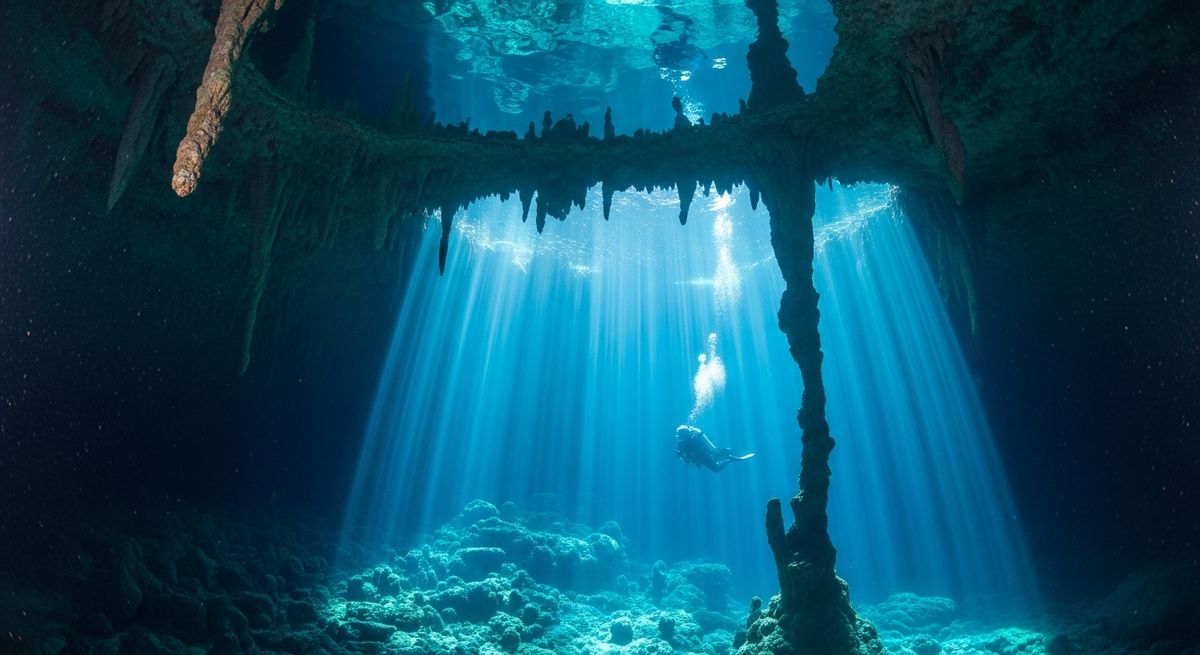
Maomao Arch, for us, is one of the Poor Knights’ signature dives. It’s not about huge pelagics here, although a striped marlin has been known to cruise past the deeper exit. This site is about the journey, the feeling of moving from one side of the island to the other, all underwater. You drop in on the western side, usually around 10-12 metres, and immediately the light changes as you head into the arch. Inside, the walls pulse with colour – sponges in brilliant oranges and purples, and an unbelievable density of crimson cleaner fish, all flitting amongst the anemones. The arch ceiling is shallow, maybe 5 metres in places, and we love drifting slowly, just taking in the patterns on the rock. It’s here you’ll often find those huge, shimmering schools of pink and blue maomao, so thick they almost block the light from the eastern exit. They’re mesmerising. Coming out the other side, the light explodes back into view, and you’re faced with a jumble of massive boulders. If you head right and down to about 20 metres, there’s a small, open cave, a nice spot to pause and check for a curious short-tail stingray. Visibility averages a solid 16 metres, making the whole experience feel expansive without being overwhelming. This site is perfect for anyone who appreciates the intimate details of a reef and loves a unique underwater transit. It’s a gentle drift, often with little current, suitable for most comfort levels.

Location
Diani Beach & South Coast, Kenya, Indian Ocean & East Africa
Coordinates
-4.322500, 39.585700
Type
cave

Marine Protected Area: Diani Chale Marine

Best Time to Dive in Diani Beach & South Coast

The warmest water temperatures in Diani Beach & South Coast occur in January, averaging 28.1°C. The coolest conditions are in December at 28.1°C.

Monthly Water Temperatures

  • January: 28.1°C (air: 27.7°C)
  • February: 28.1°C (air: 28.2°C)
  • March: 28.1°C (air: 28.1°C)
  • April: 28.1°C (air: 26.7°C)
  • May: 28.1°C (air: 26.2°C)
  • June: 28.1°C (air: 25.3°C)
  • July: 28.1°C (air: 24.4°C)
  • August: 28.1°C (air: 24.5°C)
  • September: 28.1°C (air: 25.2°C)
  • October: 28.1°C (air: 26.2°C)
  • November: 28.1°C (air: 26.7°C)
  • December: 28.1°C (air: 27.2°C)

Nearby Dive Sites in Diani Beach & South Coast

Nearest Dive Centres to Jadini

Marine Life in Diani Beach & South Coast

Home to 446 recorded species including 284 reef fish, 96 hard corals, 27 seagrass & algae, 7 sea snails & nudibranchs, 7 sea cucumbers, 5 crabs & lobsters.

Notable Species

Recommended Packing List for Jadini

Based on average water temperature of 28.1°C.

  • Shorty or Rashguard - warm 28°C water needs minimal exposure protection
  • Mask - essential for every dive
  • Fins
  • BCD - buoyancy compensator
  • Regulator - your most safety-critical piece of gear
  • Dive Computer - tracks depth, time, and NDL
  • Surface Marker Buoy (SMB) - essential for boat pickups
  • Dive Torch - useful for crevices and colour at depth
  • Underwater Camera - capture your diving memories

Frequently Asked Questions

What is the typical depth range for diving at Jadini?
The Jadini dive site features a gently sloping reef that typically starts at approximately 7 meters. Divers can explore this vibrant reef down to a maximum depth of 15 meters, making it suitable for a range of experience levels.
What kind of marine life and coral can I expect to see when diving at Jadini?
When diving at Jadini, you can expect to encounter vibrant coral formations. Common marine life sightings include green and hawksbill turtles, moray eels, nudibranchs, clownfish, surgeonfish, and Moorish idols. During the months of October to March, there is also a possibility of spotting majestic whale sharks.
How challenging is the Jadini dive site for different experience levels, and is it suitable for beginners?
The Jadini dive site is generally rated as intermediate in difficulty. However, its gently sloping reef, starting at approximately 7 meters, provides an accessible environment that is suitable for both novice and experienced divers to explore. Beginners can comfortably enjoy the shallower sections of the reef.
What is the best time of year to dive at Jadini for optimal conditions and marine life sightings?
For optimal marine life sightings at Jadini, the best time to dive is during the months from October to March, when there is a possibility of encountering whale sharks. The average visibility at the site is around 12 meters, offering good viewing conditions throughout the year. For more information on seasonal conditions, visit our When to Dive guide.
What scuba diving certifications are required to dive at Jadini?
While the Jadini dive site is rated as intermediate, its gentle slope makes it accessible for novice divers. Therefore, a standard Open Water Diver certification is generally sufficient to explore this site. For those wishing to explore the full depth range, an Advanced Open Water certification is always beneficial.
What are the typical currents and underwater conditions like at the Jadini dive site?
The Jadini dive site features a gently sloping reef with an average visibility of 12 meters, providing clear conditions for exploration. Specific information regarding typical currents at this site is not provided in the available data. Divers should always consult with local dive operators for real-time conditions.