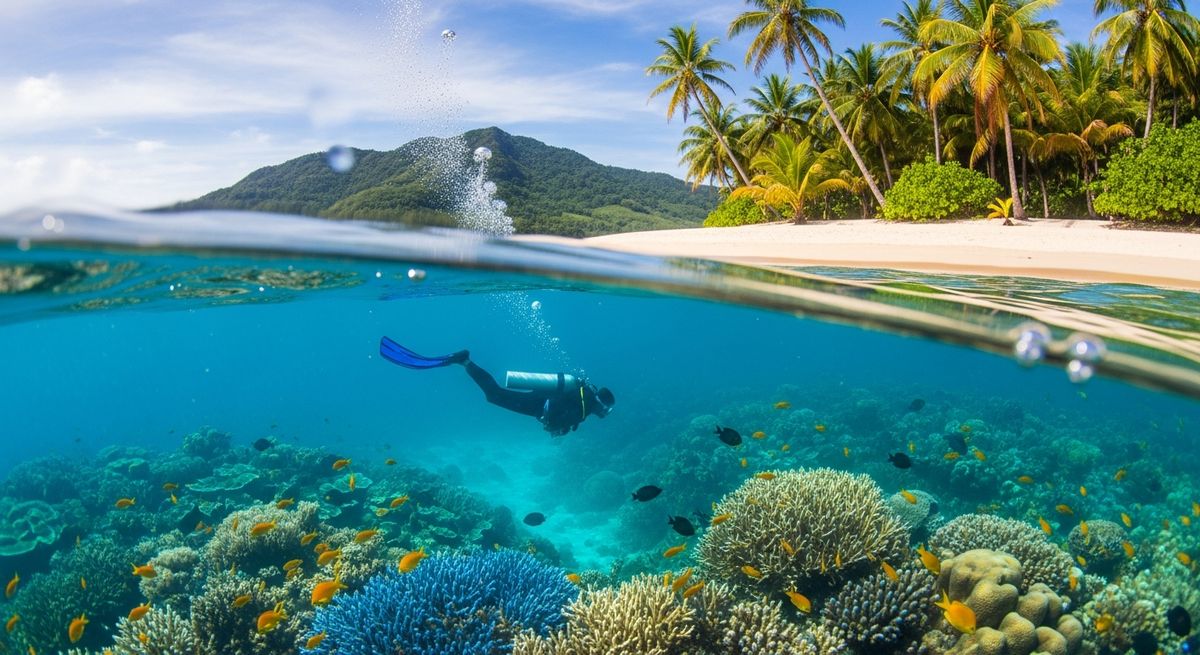
Aliwal Shoal
Protected Area
Aliwal Shoal Marine Protected Area
Why dive here
With 490+ marine species recorded in the area - including barracuda, blue sharks, bull sharks, eagle rays and great white sharks - Aliwal Shoal offers some of KwaZulu-Natal's richest reef diving. Water ranges 21-26°C, warmest January, February, March.
Aliwal Shoal is one of those places that genuinely feels alive, even before you hit the water. The surf launch itself is part of the fun, a proper rush in an 8.5m rubber duck – definitely not for the faint of heart, but it sets the tone for a real adventure. Once you’re down, it’s a fossilised sand dune turned reef, which gives it this unique, almost mountainous structure, full of swim-throughs and gullies. We love just drifting along the reef's contours, poking into crevices. Visibility averages around 13m, so it’s not always gin-clear, but that often adds to the drama. What you will see are sharks; ragged-tooth sharks in their season (June to November) are a big draw, often just chilling in the gutters. But even outside of that, we often spot great hammerheads cruising by, along with blackfin barracuda schooling. The smaller stuff is there too: frogfish hiding in plain sight, brightly coloured rainbow wrasse, and plenty of butterflyfish flitting about. It’s a site that really suits divers looking for those larger pelagic encounters combined with interesting topography, and who don’t mind a bit of an adrenaline kick getting out there.
Nearest Dive Centres to Aliwal Shoal
Dive shops near Aliwal Shoal
Aliwal Shoal Adventures - Ocean Warriors
Blue Ocean Dive Resort
ScubaXcursion
MISS BEHAVIN’S MERMAIDS
Umhlanga Scuba
Reviews for Aliwal Shoal
Conditions
Ocean conditions, forecast and tides for Aliwal Shoal
Aliwal Shoal Ocean Conditions
Monthly averages for Aliwal Shoal, sourced from Open-Meteo marine data - nearest station: Open-Meteo marine grid (-30.31, 30.76) (42km away)
October Averages
Sea Temperature
22°C
71°F · Range: 21–22.7°C
Air Temperature
20°C
68°F
Wind Speed
7.64 m/s
14.9 knots
Atmospheric Pressure
1017.9 hPa
Based on 4 years of monitoring data · Data sources: Open-Meteo marine data
Plan & book
Ways to dive KwaZulu-Natal, from day trips to liveaboards.
Day trips & courses
via GetYourGuideGuided dives, courses and snorkel trips with instant booking.
Find dive trips in KwaZulu-NatalPlaces to stay
via Booking.comHotels and dive resorts near KwaZulu-Natal.
Search stays in KwaZulu-NatalDive insurance
Most travel insurance excludes or limits scuba. Check what you need before you go.
Dive insurance explainedPartner links: we may earn a commission if you book, at no extra cost to you. How we make money
Where to Stay near Aliwal Shoal
Prices from Booking.com. We may earn a commission at no extra cost to you.