Castle
Protected Area
Aliwal Shoal Marine Protected Area
Why dive here
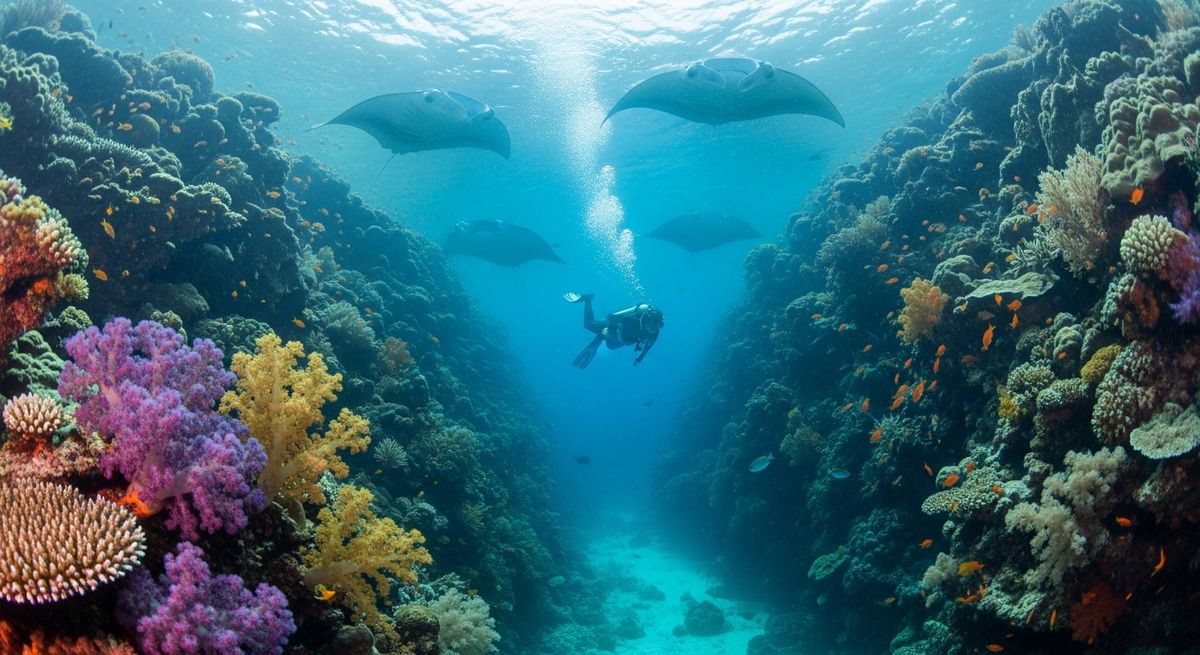
With 490+ marine species recorded in the area - including barracuda, blue sharks, bull sharks, eagle rays and great white sharks - Castle offers some of KwaZulu-Natal's richest reef diving. Water ranges 21-26°C, warmest January, February, March.
Castle really delivers on its name; we think it’s one of the most fun topographical dives in KZN. Dropping down, you’ll find yourself in a maze of pinnacles and buttresses that make you feel like you’re exploring ancient ruins. The swim-throughs here are excellent, narrow enough to be exciting without feeling claustrophobic, and we’ve often seen big Potato Bass lurking in the shadows of the overhangs. Keep an eye out for the smaller stuff too; the nudibranchs are always a treat, and we've spotted some brilliant Flameback Angelfish darting between the corals. It’s a site that rewards multiple dives. Each time you go, you find a new gully or a different corner where a Spotted Grouper might be hanging out. The currents can pick up, so it's best for divers comfortable navigating a drift, but the structure offers plenty of places to duck in and shelter. Our favourite time to dive it is mid-morning, when the light streams through the gaps in the reef, illuminating the schools of Indian Mackerel and Springer. We've even been lucky enough to see Grey Nurse Sharks cruising through during their season.
Typical Castle Dive Profile
Illustrative profile based on site depth and type. Actual dive profiles vary - always follow your dive computer and training.
Nearest Dive Centres to Castle
Dive shops near Castle
ScubaXcursion
MISS BEHAVIN’S MERMAIDS
Aliwal Shoal Adventures - Ocean Warriors
Blue Ocean Dive Resort
Reviews for Castle
Conditions
Ocean conditions, forecast and tides for Castle
Castle Ocean Conditions
Monthly averages for Castle, sourced from Open-Meteo marine data - nearest station: Open-Meteo marine grid (-30.31, 30.76) (42km away)
October Averages
Sea Temperature
22°C
71°F · Range: 21–22.7°C
Air Temperature
20°C
68°F
Wind Speed
7.64 m/s
14.9 knots
Atmospheric Pressure
1017.9 hPa
Based on 4 years of monitoring data · Data sources: Open-Meteo marine data
Plan & book
Ways to dive KwaZulu-Natal, from day trips to liveaboards.
Day trips & courses
via GetYourGuideGuided dives, courses and snorkel trips with instant booking.
Find dive trips in KwaZulu-NatalPlaces to stay
via Booking.comHotels and dive resorts near KwaZulu-Natal.
Search stays in KwaZulu-NatalDive insurance
Most travel insurance excludes or limits scuba. Check what you need before you go.
Dive insurance explainedPartner links: we may earn a commission if you book, at no extra cost to you. How we make money
Where to Stay near Castle
Prices from Booking.com. We may earn a commission at no extra cost to you.