Amanzi Rock Face
Why dive here
With 490+ marine species recorded in the area - including barracuda, blue sharks, bull sharks, eagle rays and great white sharks - Amanzi Rock Face offers some of KwaZulu-Natal's richest wreck diving. Water ranges 21-26°C, warmest January, February, March.
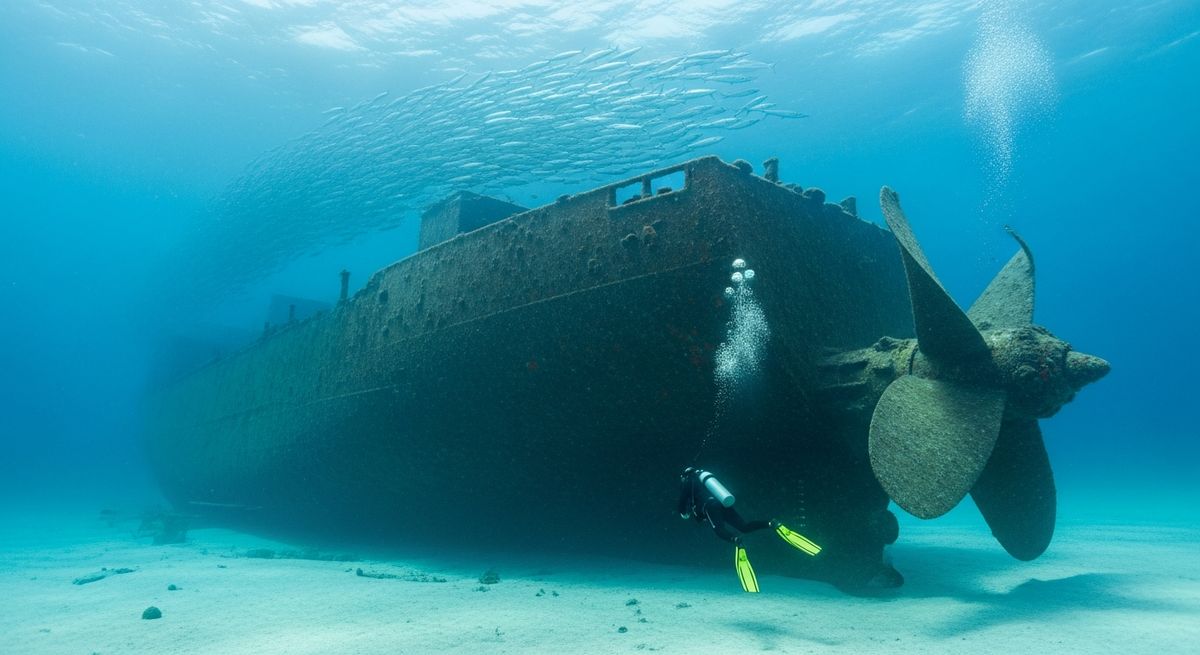
Amanzi Rock Face might not be the poster child for KwaZulu-Natal diving, but we’re here to tell you it’s a site with a quiet charm, especially if you’re into something a little different. Forget your usual reef dive; here, it’s all about the freshwater magic. We love it as a shallow, easy exploration, particularly after sundown. The main draw is a small, deliberately scuttled fishing boat, resting gently at a maximum of 8 metres. It's a nice little wreck, small enough to navigate leisurely, and it’s become a real magnet for the local freshwater species. You’ll weave through sunken trees, their branches creating eerie silhouettes against the limited visibility, which averages around 3 metres. That’s not a lot, we know, but it lends a wonderfully intimate feel to the dive. You’ll spot schools of small mouth and big mouth yellows darting around the structure, their scales catching what little light penetrates. Barbel often lurk in the shadows, and you’re almost guaranteed to see common carp grubbing about. Keep an eye out for an occasional bass or trout, too; they’re a pleasant surprise. This really is a site for divers who appreciate the subtle beauty of freshwater ecosystems and the unique character of a small wreck transformed into a living habitat. It’s not about vibrant colours or huge pelagics; it’s about discovery in the quiet depths.
Typical Amanzi Rock Face Dive Profile
Illustrative profile based on site depth and type. Actual dive profiles vary - always follow your dive computer and training.
Safety Notes
Wreck site - avoid penetration without wreck diving certification. Watch for sharp metal and entanglement hazards.
Amanzi Rock Face Wreck History
Vessel Type
fishing vessel
Cause
unknown
Amanzi Rock Face is a popular and versatile dive site in KwaZulu-Natal, perfect for divers of all levels. The site's main draw is its easy accessibility and vibrant ecosystem, making it a fantastic spot for training dives, night dives, and underwater photography. The maximum depth is a shallow 8 meters, with a fascinating underwater landscape that includes several submerged trees that create a unique habitat for countless fish.
While exploring the rock face, divers will also come across the wreck of a small, unnamed fishing boat. Though its history is unknown, the boat adds another point of interest to the dive, providing shelter for smaller critters and a great photo opportunity. With its calm conditions and abundant life, Amanzi Rock Face provides a relaxing and enjoyable experience for anyone looking to get in the water.
Reviews for Amanzi Rock Face
Conditions
Ocean conditions, forecast and tides for Amanzi Rock Face
Amanzi Rock Face Ocean Conditions
Monthly averages for Amanzi Rock Face, sourced from Open-Meteo marine data - nearest station: Open-Meteo marine grid (-30.31, 30.76) (42km away)
October Averages
Sea Temperature
22°C
71°F · Range: 21–22.7°C
Air Temperature
20°C
68°F
Wind Speed
7.64 m/s
14.9 knots
Atmospheric Pressure
1017.9 hPa
Based on 4 years of monitoring data · Data sources: Open-Meteo marine data
Plan & book
Ways to dive KwaZulu-Natal, from day trips to liveaboards.
Day trips & courses
via GetYourGuideGuided dives, courses and snorkel trips with instant booking.
Find dive trips in KwaZulu-NatalPlaces to stay
via Booking.comHotels and dive resorts near KwaZulu-Natal.
Search stays in KwaZulu-NatalDive insurance
Most travel insurance excludes or limits scuba. Check what you need before you go.
Dive insurance explainedPartner links: we may earn a commission if you book, at no extra cost to you. How we make money
Where to Stay near Amanzi Rock Face
Prices from Booking.com. We may earn a commission at no extra cost to you.