North Sands
Protected Area
Aliwal Shoal Marine Protected Area
Why dive here
With 490+ marine species recorded in the area - including barracuda, blue sharks, bull sharks, eagle rays and great white sharks - North Sands offers some of KwaZulu-Natal's richest reef diving. Water ranges 21-26°C, warmest January, February, March.
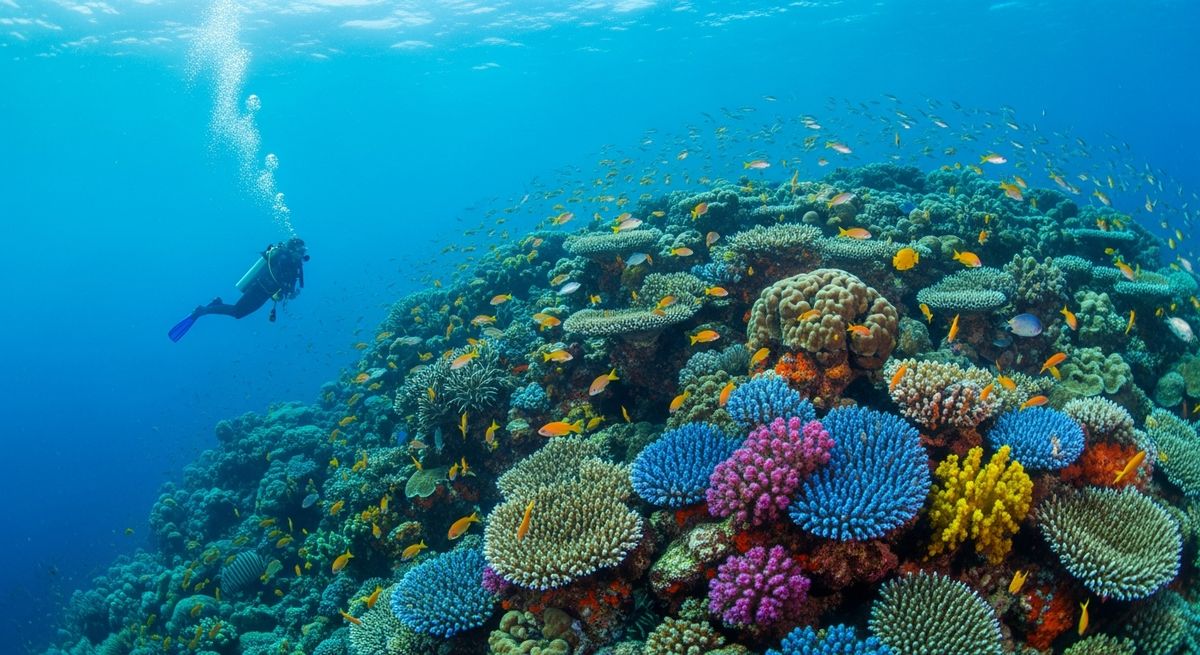
North Sands is one of those places that just works, especially when the winter migration kicks in. It’s essentially a big, open sandy area, but bordered by enough rocky bits to give things a bit of structure. We love coming here between April and October; that’s when the big sand sharks and various rays really show up, gliding over the bottom, often just out of the current. The real magic happens on the edges where the sand meets the rock. Keep an eye out for the smaller stuff – we’ve seen more than a few Big-spot Anglerfish blending right into the rubble, and those Eroded Cowries are always a treat to spot. Visibility averages around 14 metres, which is usually plenty to take in the movement of a school of bludger or Yellow Spotted Trevally passing through. It’s a pretty chill dive, maxing out at 16 metres, making it suitable for divers who prefer a relaxed pace but still want to see some impressive marine life. You’ll spend most of your time slowly finning across the sand, keeping an eye on the horizon for those bigger animals, then poking around the rocks for the smaller, more camouflaged critters.
Typical North Sands Dive Profile
Illustrative profile based on site depth and type. Actual dive profiles vary - always follow your dive computer and training.
Nearest Dive Centres to North Sands
Dive shops near North Sands
Aliwal Shoal Adventures - Ocean Warriors
Blue Ocean Dive Resort
ScubaXcursion
MISS BEHAVIN’S MERMAIDS
Umhlanga Scuba
Reviews for North Sands
Conditions
Ocean conditions, forecast and tides for North Sands
North Sands Ocean Conditions
Monthly averages for North Sands, sourced from Open-Meteo marine data - nearest station: Open-Meteo marine grid (-30.31, 30.76) (42km away)
October Averages
Sea Temperature
22°C
71°F · Range: 21–22.7°C
Air Temperature
20°C
68°F
Wind Speed
7.64 m/s
14.9 knots
Atmospheric Pressure
1017.9 hPa
Based on 4 years of monitoring data · Data sources: Open-Meteo marine data
Plan & book
Ways to dive KwaZulu-Natal, from day trips to liveaboards.
Day trips & courses
via GetYourGuideGuided dives, courses and snorkel trips with instant booking.
Find dive trips in KwaZulu-NatalPlaces to stay
via Booking.comHotels and dive resorts near KwaZulu-Natal.
Search stays in KwaZulu-NatalDive insurance
Most travel insurance excludes or limits scuba. Check what you need before you go.
Dive insurance explainedPartner links: we may earn a commission if you book, at no extra cost to you. How we make money
Where to Stay near North Sands
Prices from Booking.com. We may earn a commission at no extra cost to you.