Raggies Cave
Protected Area
Aliwal Shoal Marine Protected Area
Why dive here
With 490+ marine species recorded in the area - including barracuda, blue sharks, bull sharks, eagle rays and great white sharks - Raggies Cave offers some of KwaZulu-Natal's richest reef diving. Water ranges 21-26°C, warmest January, February, March.
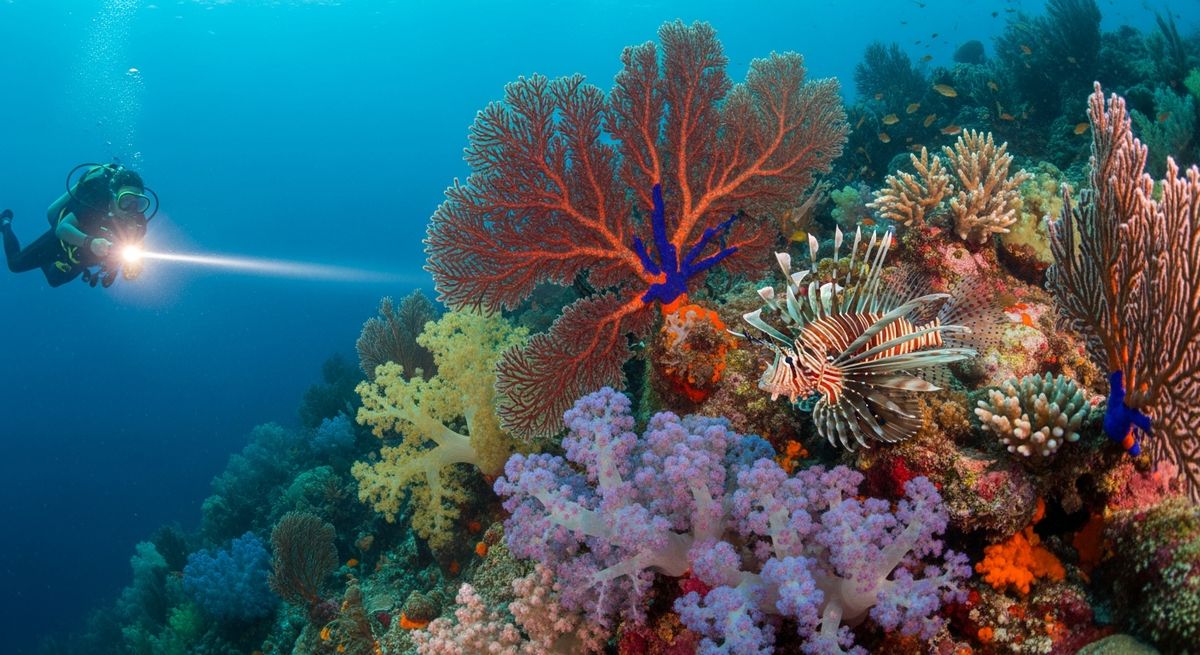
Raggies Cave isn't a true cave, but more of a massive overhang that creates an incredible, cathedral-like space. We love slipping into the cooler water here in winter and spring, knowing we're about to be surrounded. And by surrounded, we mean *really* surrounded. Picture yourself finning gently along at 12 metres, and then the dark shapes start to materialise out of the blue, gliding by, silent and utterly captivating. These aren't your typical reef sharks; these are the ragged-tooth sharks, or sand tigers, with their snaggletooth grins and surprisingly docile demeanour. They congregate here by the dozens during their breeding season, often just hovering, seemingly oblivious to our presence. Sometimes they’re so thick you have to pause, letting them part around you. Beyond the main event, the usual Indian Ocean suspects are all here – we've spotted everything from the goofy New Guinean anglerfish to curious lyretail angelfish darting among the cracks. Keep an eye out for potato bass lurking in the deeper shadows too; they’re enormous. Visibility can be a bit variable, but even on an average 10-metre day, seeing those sharks emerge from the gloom is pure magic. This dive is definitely for those who appreciate a dramatic, high-impact encounter with big animals, and it’s generally an easy drift, suitable for most comfort levels.
Nearest Dive Centres to Raggies Cave
Dive shops near Raggies Cave
Aliwal Shoal Adventures - Ocean Warriors
Blue Ocean Dive Resort
ScubaXcursion
MISS BEHAVIN’S MERMAIDS
Umhlanga Scuba
Reviews for Raggies Cave
Conditions
Ocean conditions, forecast and tides for Raggies Cave
Raggies Cave Ocean Conditions
Monthly averages for Raggies Cave, sourced from Open-Meteo marine data - nearest station: Open-Meteo marine grid (-30.31, 30.76) (42km away)
October Averages
Sea Temperature
22°C
71°F · Range: 21–22.7°C
Air Temperature
20°C
68°F
Wind Speed
7.64 m/s
14.9 knots
Atmospheric Pressure
1017.9 hPa
Based on 4 years of monitoring data · Data sources: Open-Meteo marine data
Plan & book
Ways to dive KwaZulu-Natal, from day trips to liveaboards.
Day trips & courses
via GetYourGuideGuided dives, courses and snorkel trips with instant booking.
Find dive trips in KwaZulu-NatalPlaces to stay
via Booking.comHotels and dive resorts near KwaZulu-Natal.
Search stays in KwaZulu-NatalDive insurance
Most travel insurance excludes or limits scuba. Check what you need before you go.
Dive insurance explainedPartner links: we may earn a commission if you book, at no extra cost to you. How we make money
Where to Stay near Raggies Cave
Prices from Booking.com. We may earn a commission at no extra cost to you.