BRITISH SERGEANT
Protected Area
Kayankerny MSAN
Why dive here
With 254+ marine species recorded in the area - including barracuda, dolphins, sea turtles, sperm whales and spinner dolphins - BRITISH SERGEANT offers some of Trincomalee & East Coast's richest wreck diving. Water ranges 27-30°C, warmest April, May, October.
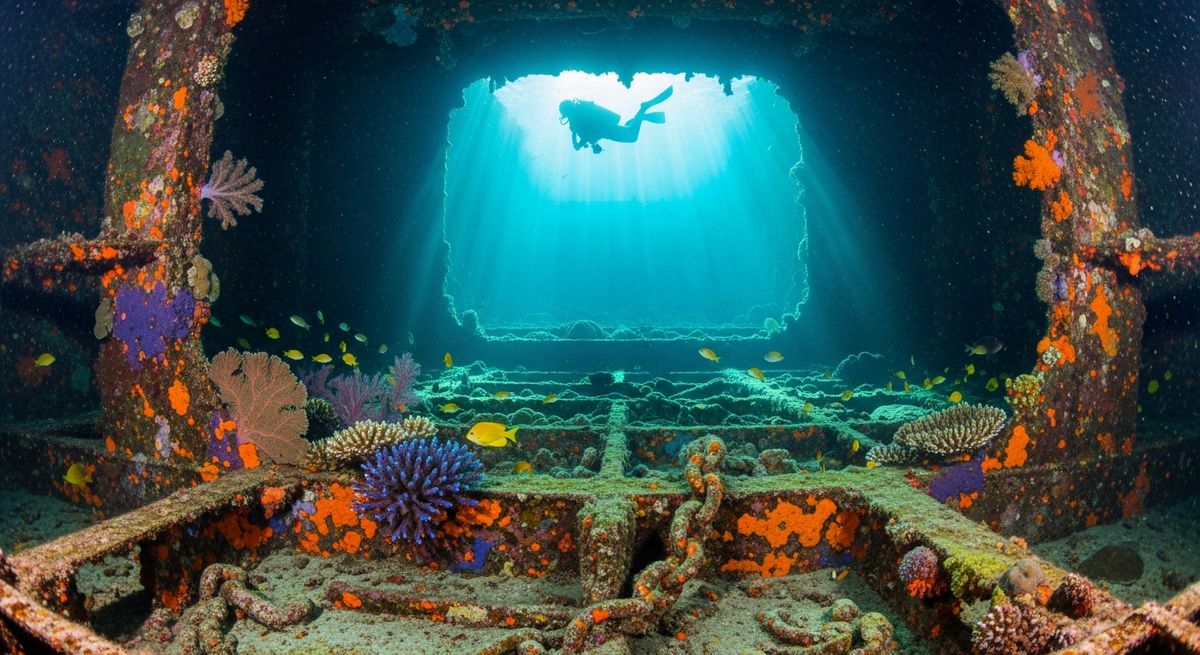
The British Sergeant, a tanker sunk in 1942, sits upright at 20 metres, making it a truly approachable wreck dive for most recreational divers. We love the feeling of swimming into its vast cargo holds, the light filtering in through bomb holes, illuminating huge schools of glassfish that shimmer like liquid silver. It's an imposing structure, remarkably intact, with the stern section still clearly defined, and the bow pointing out into the blue. What makes it a standout for us isn't just the history, though imagining those wartime moments adds a layer of depth; it’s the sheer volume of life that has claimed it. Look out for enormous groupers lurking in the shadows and giant moray eels peeking from every crevice. We’d suggest getting there early to avoid any potential surface chop and to have the wreck largely to yourself. The visibility here can be superb, giving you long sight lines down the deck, past the corroded davits, and towards the impressive propeller. It's a proper wreck experience, full of atmosphere and fish.
Typical BRITISH SERGEANT Dive Profile
Illustrative profile based on site depth and type. Actual dive profiles vary - always follow your dive computer and training.
Safety Notes
Depth of 20m - Advanced Open Water certification recommended.
Wreck site - avoid penetration without wreck diving certification. Watch for sharp metal and entanglement hazards.
Always perform a 3-minute safety stop at 5m before surfacing.
BRITISH SERGEANT Wreck History
Year Sunk
1942
Vessel Type
tanker
Cause
bombed
Tonnage
5,868 GRT
SS British Sergeant, a tanker built in 1922, met her end during one of the most intense naval operations in the Indian Ocean theatre of WWII. On April 9, 1942, the Imperial Japanese Navy launched a massive air raid on the British naval base at Trincomalee. The British Sergeant had just left the port when she was spotted and targeted by Japanese aircraft.
The ship was bombed and sunk approximately five miles off Elephant Point. Fortunately, there were no casualties among her crew. Today, the British Sergeant is one of Sri Lanka's premier wreck dives. Lying upright at a depth of around 24 metres, she is remarkably intact. Divers can explore her decks, superstructure, and large cargo holds, which are now home to vast schools of fish. The wreck is a spectacular artificial reef, attracting both history buffs and underwater photographers.
Reviews for BRITISH SERGEANT
Conditions
Ocean conditions, forecast and tides for BRITISH SERGEANT
BRITISH SERGEANT Ocean Conditions
Monthly averages for BRITISH SERGEANT, sourced from Open-Meteo marine data - nearest station: Open-Meteo marine grid (8.53, 81.23) (31km away)
October Averages
Sea Temperature
30°C
85°F · Range: 27.5–30.3°C
Air Temperature
27°C
81°F
Wind Speed
4.73 m/s
9.2 knots
Atmospheric Pressure
1009 hPa
Based on 4 years of monitoring data · Data sources: Open-Meteo marine data
Plan & book
Ways to dive Trincomalee & East Coast, from day trips to liveaboards.
Day trips & courses
via GetYourGuideGuided dives, courses and snorkel trips with instant booking.
Find dive trips in Trincomalee & East CoastPlaces to stay
via Booking.comHotels and dive resorts near Trincomalee & East Coast.
Search stays in Trincomalee & East CoastDive insurance
Most travel insurance excludes or limits scuba. Check what you need before you go.
Dive insurance explainedPartner links: we may earn a commission if you book, at no extra cost to you. How we make money
Where to Stay near BRITISH SERGEANT
Prices from Booking.com. We may earn a commission at no extra cost to you.