Diving in Trincomalee & East Coast
Why dive here
Trincomalee & East Coast offers some of Sri Lanka's richest diving, with 254+ marine species recorded in the area - including barracuda, dolphins, sea turtles, sperm whales and spinner dolphins. Water sits around 27°C.
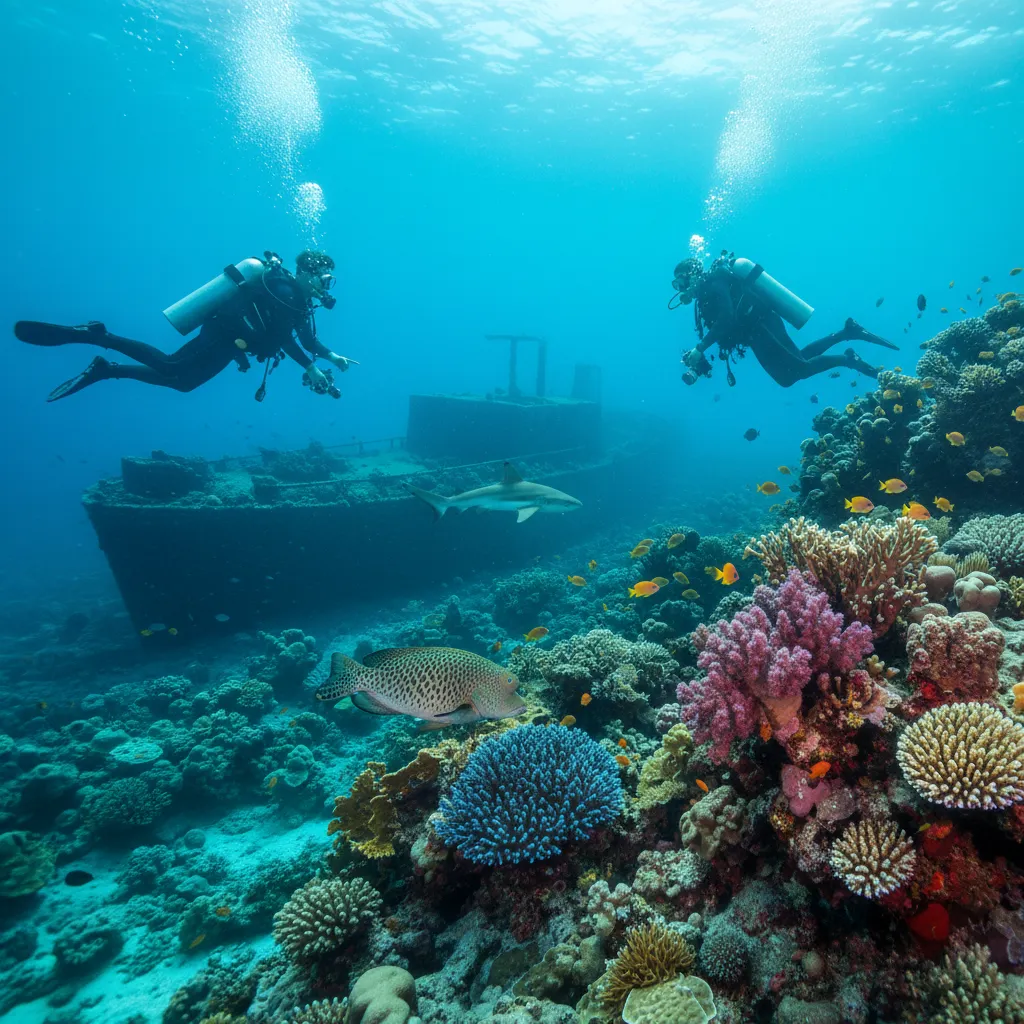
Trincomalee on Sri Lanka’s east coast is our favourite summer escape. While the west coast bathes in monsoon, Trinco offers calm seas and fantastic visibility from May to October. We often find ourselves drifting over healthy reefs, punctuated by historic wrecks, all while keeping an eye out for larger pelagics moving through. It’s a completely different vibe than the south, less developed, more laid-back. The diving here really comes alive with its blend of natural reefs and fascinating wrecks. We particularly love the WWII British aircraft carrier HMS Hermes, sunk in 1942. Dropping down onto that vast, broken superstructure, seeing the flight deck guns still mounted, feels like swimming through history. Visibility on the Hermes can be excellent, sometimes pushing 25 metres, letting you appreciate the sheer scale. It's home to some impressive resident barracuda and giant trevally, and we've spotted bluespotted stingrays resting on the sandy bottom nearby. For something completely different, a shallow dive at Pigeon Island National Park brings you face to face with blacktip reef sharks patrolling the coral gardens - a real treat for beginners. Keep an eye out for the jumping blennies along the rocky edges, they’re a delight. Currents are generally mild here, making it accessible for most divers, though some wreck penetrations are definitely for the more experienced. If you're lucky, you might even catch a glimpse of a whale from the surface during your safety stop.
Trincomalee & East Coast Dive Site Map
Dive sites and dive centres in Trincomalee & East Coast
Trincomalee & East Coast Dive Sites
39 dive sites in Trincomalee & East Coast
Bar Reef
Bar Reef off Trincomalee is a sprawling coral system, a nice change of pace from some of the smaller, shallower sites along the coast. We've often found good numbers of larger reef fish here, like Red Emperors and Spotted Groupers, patrolling among the Staghorn coral. Look closely for Blue-dash Butterflyfish darting through the branches. The currents can pick up sometimes, so it's best for divers comfortable drifting a little, especially in the later part of the season. It’s a solid dive for getting a feel for Sri Lanka’s wider reef ecosystems.
Bar Reef
Bar Reef is a solid choice when diving Trincomalee. We usually find the best conditions here in the morning, before the afternoon breeze picks up, making for a smoother ride out. The reef itself offers a good mix of coral structures, plenty of staghorn, with schools of fusiliers often hanging above the bommies. Keep an eye out for the butterflyfish, we've seen a few different types here – Black Pyramid and Racoon often make an appearance. It's a comfortable dive, good for getting your fins wet and shaking off any travel rust.
BRITISH SERGEANT
The British Sergeant, a tanker sunk in 1942, sits upright at 20 metres, making it a truly approachable wreck dive for most recreational divers. We love the feeling of swimming into its vast cargo holds, the light filtering in through bomb holes, illuminating huge schools of glassfish that shimmer like liquid silver. It's an imposing structure, remarkably intact, with the stern section still clearly defined, and the bow pointing out into the blue. What makes it a standout for us isn't just the history, though imagining those wartime moments adds a layer of depth; it’s the sheer volume of life that has claimed it. Look out for enormous groupers lurking in the shadows and giant moray eels peeking from every crevice. We’d suggest getting there early to avoid any potential surface chop and to have the wreck largely to yourself. The visibility here can be superb, giving you long sight lines down the deck, past the corroded davits, and towards the impressive propeller. It's a proper wreck experience, full of atmosphere and fish.
CITY OF MARSEILLES (POSSIBLY)
The City of Marseilles, off the Trincomalee coast, is a proper history lesson you can dive. We love this site for its sheer accessibility – it’s only 6 meters deep, so it’s perfect for open water divers, or even a long, relaxed snorkel. You’re swimming over the remains of an armed merchant ship sunk during World War II, and while it’s mostly broken up, you can still trace the outline of its stern and bow. What we really enjoy here is the way the wreck has become a home. Parrotfish crunch away at the encrusted metal, and schools of snapper drift through the darker recesses. Look closely for moray eels tucked into crevices, or a feathertail stingray resting on the sand nearby. Our favourite time to dive it is early morning, before any surface chop picks up, when the sunlight filters down, making the metal glow and illuminating every fish. It’s a gentle, reflective dive, more about the atmosphere and the small details than grand structures.
CITY OF MYSORE
The City of Mysore offers something a bit different for Trinco. This isn't a deep dive, sitting in a mere 5 metres, making it accessible for pretty much everyone. We love that it’s such a substantial wreck for such shallow water. We’re talking about a 122-metre steamship, sunk way back in 1915, and much of it is still identifiable despite the years. You'll fin over huge sections of hull, with beams and plates scattered across the sandy bottom. Sunlight punches through the water, illuminating the metalwork, and you’ll often find schools of rabbitfish grazing on the algae that coats the steel. Look closely and you’ll spot moray eels tucked into crevices, their heads poking out with that classic wary expression. For photographers, the sheer size in such shallow, bright conditions makes for some dramatic wide-angle shots, especially when a small school of fusiliers decides to swim over a section of the collapsed deck. It’s a gentle exploration, perfect for anyone looking to spend a good hour poking around a piece of history that’s become a thriving artificial reef.
Coffin Ray Point
Coffin Ray Point, off Sri Lanka’s east coast, lives up to its name. We’ve spotted several electric rays here, often partially buried in the sand. It’s a generally calm dive, good for newer divers or those who enjoy slower exploration, particularly on the sandy patches near the reef edge where those rays like to hide. Keep an eye out for other bottom dwellers too, like flounder and maybe a passing cuttlefish.
Condolidated Catalina PBY-5A Aircraft Wreck
Out past Kalkudah, resting at 42 metres, we found the remains of a Consolidated Catalina PBY-5A. It’s a deep dive, making it one for experienced wreck enthusiasts. The parts are spread out, but distinct pieces like the wings, wheels, and a few propellers make identification easy. Over time, the ocean has claimed the metal as its own, so you’ll see plenty of reef fish flitting amongst the wreckage, and sometimes a larger pelagic cruising by. It’s an intriguing exploration, a piece of history returning to the sea.
CORDIALITY
The Cordiality wreck is a big one, a bulk carrier hit by Tamil Tiger RPGs back in 1997. She’s enormous, nearly 200 metres long, and lies on her side in about 14 metres of water. We love a wreck that’s been down a while, and the Cordiality certainly qualifies; it’s thoroughly colonised, a proper metal reef now. Dropping down, the sheer scale of it hits you. You’re not just seeing parts; you’re looking at a huge hull stretching into the blue. Our favourite part is exploring the deck structures, especially around the bridge area. You can poke around cargo holds, swim over the immense props, and trace the lines of her decks. There’s always something new to spot. Look closely and you'll see large schools of fusiliers darting in and out, their scales flashing. Giant groupers eye you suspiciously from shadowy corners, and we’ve often found lionfish perched on railings, their fins fanning out. It’s an easy dive, perfect for photographers wanting to capture both the dramatic structure and the marine life it now shelters. We’d suggest going in the morning; the light filters through the shallower parts beautifully.
Fort Frederic
Fort Frederic makes for a gentle introduction to Trinco diving, especially for those finding their flippers. Down at 18 meters, it’s a simple out-and-back, often with good visibility. We usually find plenty of macro critters here – nudibranchs, small crabs hiding in the crevices, and sometimes a cuttlefish blending into the sand. It’s a comfortable depth, so you can really take your time observing the smaller stuff without worrying about your no-decompression limits.
HMAS VAMPIRE
The HMAS Vampire is a proper dive, no doubt about it. We love a historical wreck, and this one, sunk by Japanese dive bombers in 1942, has a real story behind it. Sitting bolt upright at 50 metres, she's certainly a deep dive, making it one for experienced divers with the right training and gas. Dropping down onto her deck, the sense of history is immediate. You can still make out the gun mounts and parts of the superstructure, now heavily encrusted. Schools of fusiliers often mill above the deck, and we've seen dogtooth tuna cruise by in the blue. Inside, penetration is limited, but we’ve poked our heads into a few of the more accessible compartments, spotting lionfish tucked into shadowy corners. Our favourite part has to be the stern, where the prop is still visible, a dramatic sight against the deep blue. Conditions here can vary, but when the current is mild and the visibility good, it’s an incredible dive, well worth the logistical effort.
HMS DIOMEDE
The HMS Diomede is a classic Trinco dive, one we always return to. She went down in 1795 after striking an uncharted rock near Pigeon Island, and now rests upright in Back Bay. Dropping onto her, you’re met with a real sense of history, the old wooden hull, though largely collapsed, still hinting at her former glory. We love picking through the debris, spotting the occasional cannon or an old pottery shard embedded in the sand. There’s a beautiful soft coral growth across the timbers, bright orange and purple, which attracts a constant stream of glassfish and schools of fusiliers. Keep an eye out for moray eels tucked into the darker crevices – a big fimbriated moray is often seen lurking. For photographers, the ambient light filtering through the clear water creates some dramatic shadows, especially in the late morning. It’s a gentle dive, maxing out at 22 metres, making it perfect for newer wreck divers or those who just want a relaxed exploration. We'd suggest getting there early to beat any potential boat traffic, as it can get a little busy.
HMS Hermes
Diving the HMS Hermes off Trincomalee isn’t just a dive; it's a deep plunge into history. This isn't some small fishing boat; it’s a colossal aircraft carrier, sunk in 1942, lying on its side, remarkably intact. We love how the sheer scale of the wreck hits you – finning past the enormous propeller, then moving up along the hull, it feels like you're exploring an underwater city. The Hermes is just over 50 meters deep at the seabed, with the shallower parts of the wreck around 40 meters. This depth means it's strictly for experienced divers comfortable with advanced decompression protocols, but the rewards are immense. Our favourite part has to be the bridge section. You can still make out the command areas, with schools of batfish circling the structure, almost guarding it. Big groupers often lurk in the hangars, and we’ve seen eagle rays glide over the main deck. It’s a quiet, humbling place, draped in soft corals, where every porthole tells a silent story. To really experience it, we’d suggest multiple dives; you can't absorb it all in just one. Dive early, before the thermocline pushes too high.
Show all 39 dive sites in Trincomalee & East Coast
Trincomalee & East Coast Dive Centres
6 dive shops and operators in Trincomalee & East Coast
Ocean Wildlife in Trincomalee & East Coast
254 species recorded in Trincomalee & East Coast
Trincomalee & East Coast Daylight & Sunrise/Sunset
Sunrise and sunset times for Trincomalee & East Coast, calculated from coordinates
Today - Sunday 11 October
Sunrise
05:23
Sunset
17:22
Daylight
11h 59m
Golden Hour
16:54
First light (dawn) at 05:02 · Last light (dusk) at 17:43
Monthly Averages
| Month | Sunrise | Sunset | Daylight |
|---|---|---|---|
| Jan | 05:54 | 17:35 | 11h 41m |
| Feb | 05:54 | 17:46 | 11h 52m |
| Mar | 05:43 | 17:47 | 12h 4m |
| Apr | 05:26 | 17:44 | 12h 18m |
| May | 05:17 | 17:47 | 12h 30m |
| JunLongest | 05:18 | 17:54 | 12h 36m |
| Jul | 05:24 | 17:58 | 12h 34m |
| Aug | 05:28 | 17:52 | 12h 24m |
| Sep | 05:26 | 17:36 | 12h 10m |
| OctNow | 05:23 | 17:20 | 11h 57m |
| Nov | 05:28 | 17:13 | 11h 45m |
| DecShortest | 05:41 | 17:20 | 11h 39m |
Times are approximate local times based on longitude. Actual times may vary slightly depending on the exact timezone observed in Trincomalee & East Coast.
Where to Stay near Trincomalee & East Coast
Prices from Booking.com. We may earn a commission at no extra cost to you.
Marine Protected Areas near Trincomalee & East Coast
9 protected areas near Trincomalee & East Coast - please respect local regulations when diving
Bar Reef Marine Sanctuary
WedithalathiveNR
Chundikulam NP
Kokkilai
Vankalai
Kayankerny MSAN
Nayaru NR
Paravi Dupatha National Park
Little Sober Island
Getting to Trincomalee & East Coast
Trincomalee
Colombo
Jaffna
Plan & book
Ways to dive Trincomalee & East Coast, from day trips to liveaboards.
Day trips & courses
via GetYourGuideGuided dives, courses and snorkel trips with instant booking.
Find dive trips in Trincomalee & East CoastPlaces to stay
via Booking.comHotels and dive resorts near Trincomalee & East Coast.
Search stays in Trincomalee & East CoastDive insurance
Most travel insurance excludes or limits scuba. Check what you need before you go.
Dive insurance explainedPartner links: we may earn a commission if you book, at no extra cost to you. How we make money