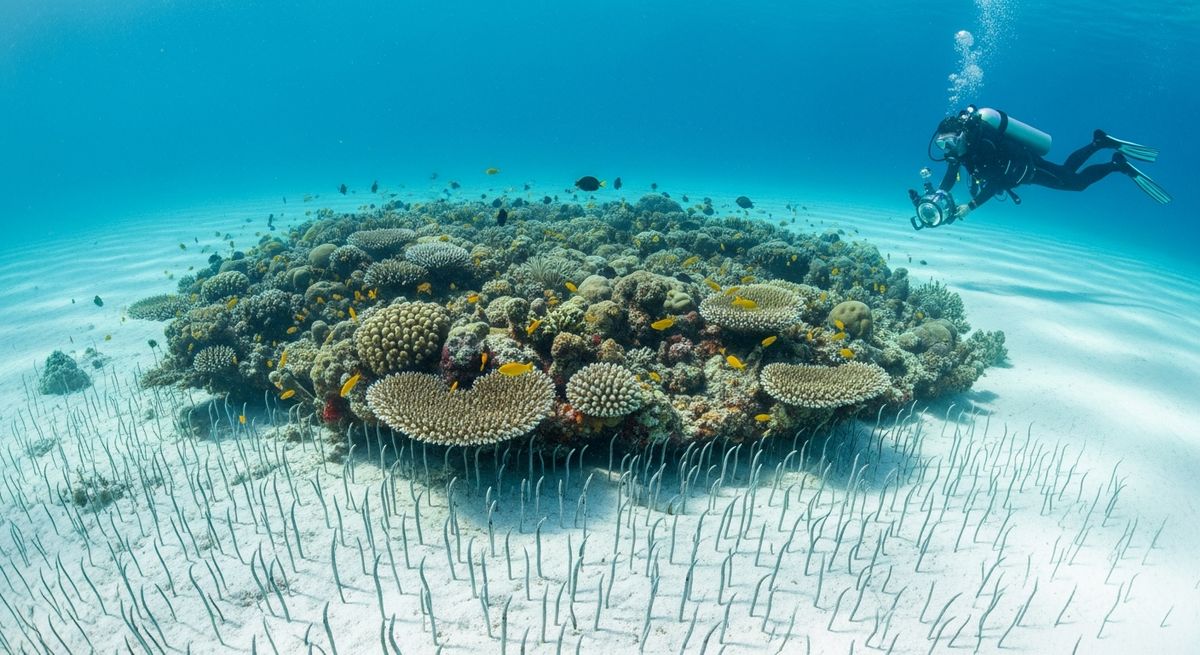
Mikadini - Mafia Island

Playpen is one of our favourites on the Caribbean side, especially if you’re into the smaller stuff. It’s got these cool rock formations that create plenty of nooks and crannies, perfect for spotting all sorts of creatures. We love drifting through the shallower sections, maybe 5-8 metres, where the schools of fusiliers are so thick they practically block out the sun. Keep an eye out for the Lumpy Claw Crabs tucked into crevices, and we’ve often found octopus hiding in plain sight. For those who enjoy a slower pace, this site is brilliant for macro photography. We've had fantastic luck finding Phallic Blennies poking their heads out, and the Delicate Triplefins are always a treat. Deeper down, around 12-15 metres, the reef structure shifts a bit, and that's where we've seen Longtail Stingrays gliding over the sand patches. Visibility averages around 12 metres, which is decent for the area, but if you hit it right after a calm spell, it can push closer to 15. The gentle currents here make it a relaxing dive, suitable for newer divers looking to build confidence or experienced eyes hunting for the unique.

Location
Mafia Island, Tanzania, Indian Ocean & East Africa
Coordinates
-7.939500, 39.818400
Type
reef

Marine Protected Area: Mangrove

Best Time to Dive in Mafia Island

The warmest water temperatures in Mafia Island occur in January, averaging 28.8°C. The coolest conditions are in December at 28.8°C.

Monthly Water Temperatures

  • January: 28.8°C (air: 27.8°C)
  • February: 28.8°C (air: 28.0°C)
  • March: 28.8°C (air: 27.8°C)
  • April: 28.8°C (air: 27.0°C)
  • May: 28.8°C (air: 26.9°C)
  • June: 28.8°C (air: 26.0°C)
  • July: 28.8°C (air: 25.2°C)
  • August: 28.8°C (air: 25.0°C)
  • September: 28.8°C (air: 25.3°C)
  • October: 28.8°C (air: 26.1°C)
  • November: 28.8°C (air: 27.0°C)
  • December: 28.8°C (air: 27.7°C)

Nearby Dive Sites in Mafia Island

Nearest Dive Centres to Mikadini

Marine Life in Mafia Island

Home to 165 recorded species including 94 hard corals, 63 reef fish, 3 sharks & rays, 2 jellyfish, 1 other, 1 whales & dolphins.

Notable Species

Recommended Packing List for Mikadini

Based on average water temperature of 28.8°C.

  • Shorty or Rashguard - warm 29°C water needs minimal exposure protection
  • Mask - essential for every dive
  • Fins
  • BCD - buoyancy compensator
  • Regulator - your most safety-critical piece of gear
  • Dive Computer - tracks depth, time, and NDL
  • Surface Marker Buoy (SMB) - essential for boat pickups
  • Dive Torch - useful for crevices and colour at depth
  • Underwater Camera - capture your diving memories

Frequently Asked Questions

What is the maximum depth for diving at Mikadini dive site?
The maximum depth for diving at Mikadini is 19 metres. While the fringing reef cascades down to 25 metres, divers typically explore the shallower, vibrant sections within the safe diving limits.
What kind of marine life and corals can divers expect to see at Mikadini?
Divers at Mikadini can expect to encounter many brightly colored corals, forming a beautiful fringing reef. The site is home to large schools of fish, sharks, turtles, and large reef rays, with the possibility of seeing passing pelagics and various smaller reef creatures. For more information on marine life, visit our wildlife database.
How challenging is the Mikadini dive site, and is it suitable for beginner divers?
The Mikadini dive site is rated as intermediate in difficulty. Due to the often present nice current, which makes for an exciting drift dive, it is generally not recommended for absolute beginner divers. Divers should have appropriate experience and training for drift diving.
What is the best time of year to dive Mikadini for optimal conditions and marine life sightings?
The provided data does not specify the best time of year to dive Mikadini for optimal conditions and marine life sightings. For general information on seasonal diving conditions in the region, please consult our When to Dive guide.
What scuba diving certifications are required or recommended to dive at Mikadini?
While specific certification requirements are not detailed in the provided data, given that Mikadini is an intermediate difficulty dive site with currents, an Advanced Open Water certification or a Drift Diver specialty would be highly recommended. This ensures divers are comfortable and proficient in varying conditions.
What are the typical current conditions at Mikadini, and how do they affect the dive?
Mikadini often experiences a nice current, which significantly influences the dive experience. These currents transform the dive into a very exciting drift dive, allowing divers to effortlessly glide along the gently sloping fringing reef and observe marine life.