LINK ONE
Protected Area
Waters between Lolland and Falster including Rødsand, Guldborg sound, and Bøtø Nor
Why dive here
With 66+ marine species recorded in the area - including jellyfish lake - LINK ONE offers some of Bornholm's richest wreck diving. Water ranges 3-18°C, warmest July, August, September.
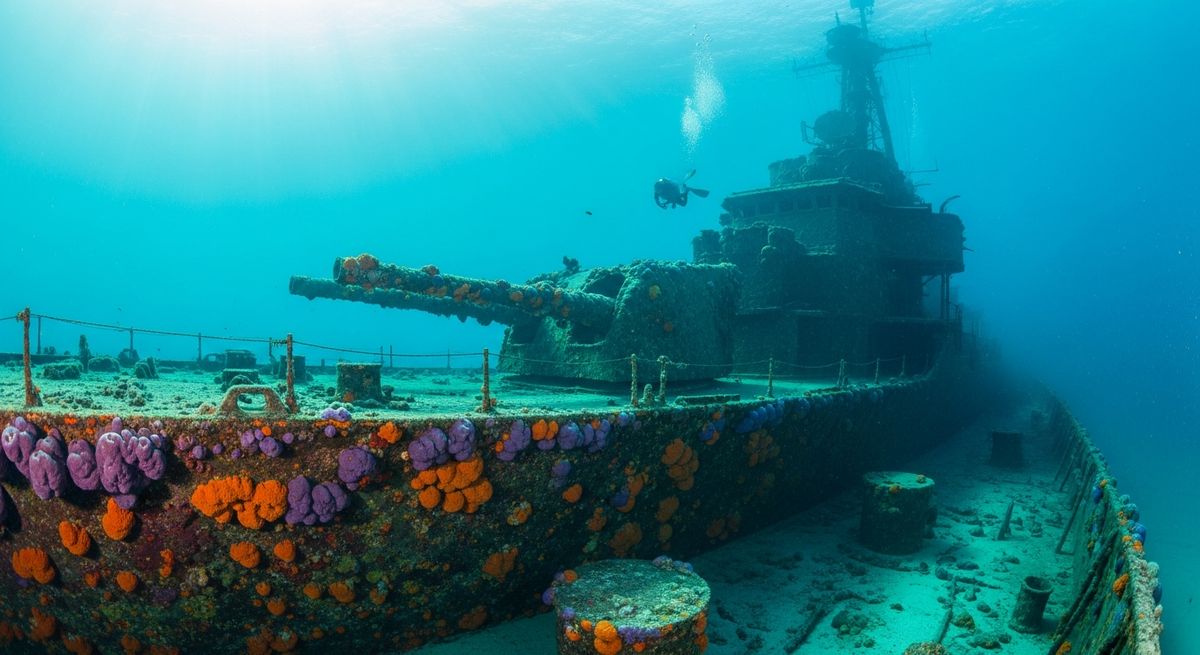
The *Link One* isn't your average Bornholm wreck. This isn't a crumbling fishing boat; she's a proper steamship, 98 metres of steel brought down in a thick fog by a collision back in '62. We love her history, the idea of her sailing between Montselas and Rochester before her final journey here. Drop down and you’re greeted by the sheer scale of the hull, stretching away into the gloom. Visibility can be a bit of a lottery in the Baltic, but when it’s good, the *Link One* really delivers. We’ve found ourselves drifting past enormous sections of machinery, trying to picture the engine room as it once was. There are plenty of swim-throughs if you're comfortable with overhead environments, making it more than just a flyover site. Keep an eye out for the resident cod, often lurking in the shadowed recesses, and the occasional curious seal has been known to make an appearance. Our favourite part? The stern, where the propeller still sits, an imposing silhouette. It’s a site that rewards multiple dives, each one revealing another detail of her past.
Typical LINK ONE Dive Profile
Illustrative profile based on site depth and type. Actual dive profiles vary - always follow your dive computer and training.
Safety Notes
Depth of 28m - Advanced Open Water certification recommended.
Wreck site - avoid penetration without wreck diving certification. Watch for sharp metal and entanglement hazards.
Cold water this month (avg 14°C). Drysuit or thick wetsuit (7mm+) recommended.
Always perform a 3-minute safety stop at 5m before surfacing.
Nearest Dive Centres to LINK ONE
Dive shops near LINK ONE
Tauchschule baltic-diver-circle
Tauchshop-Rostock
Dive connection
Tauchclub BALTIC e.V.
Reviews for LINK ONE
Conditions
Ocean conditions, forecast and tides for LINK ONE
LINK ONE Ocean Conditions
Monthly averages for LINK ONE, sourced from Open-Meteo marine data - nearest station: Open-Meteo marine grid (54.94, 13.85) (7km away)
October Averages
Sea Temperature
14°C
57°F · Range: 11.7–16.3°C
Air Temperature
12°C
53°F
Wind Speed
8.16 m/s
15.9 knots
Atmospheric Pressure
1013.3 hPa
Based on 4 years of monitoring data · Data sources: Open-Meteo marine data
Plan & book
Ways to dive Bornholm, from day trips to liveaboards.
Day trips & courses
via GetYourGuideGuided dives, courses and snorkel trips with instant booking.
Find dive trips in BornholmPlaces to stay
via Booking.comHotels and dive resorts near Bornholm.
Search stays in BornholmDive insurance
Most travel insurance excludes or limits scuba. Check what you need before you go.
Dive insurance explainedPartner links: we may earn a commission if you book, at no extra cost to you. How we make money
Where to Stay near LINK ONE
Prices from Booking.com. We may earn a commission at no extra cost to you.