SAND TRANS
Protected Area
Waters between Lolland and Falster including Rødsand, Guldborg sound, and Bøtø Nor
Why dive here
With 66+ marine species recorded in the area - including jellyfish lake - SAND TRANS offers some of Bornholm's richest wreck diving. Water ranges 3-18°C, warmest July, August, September.
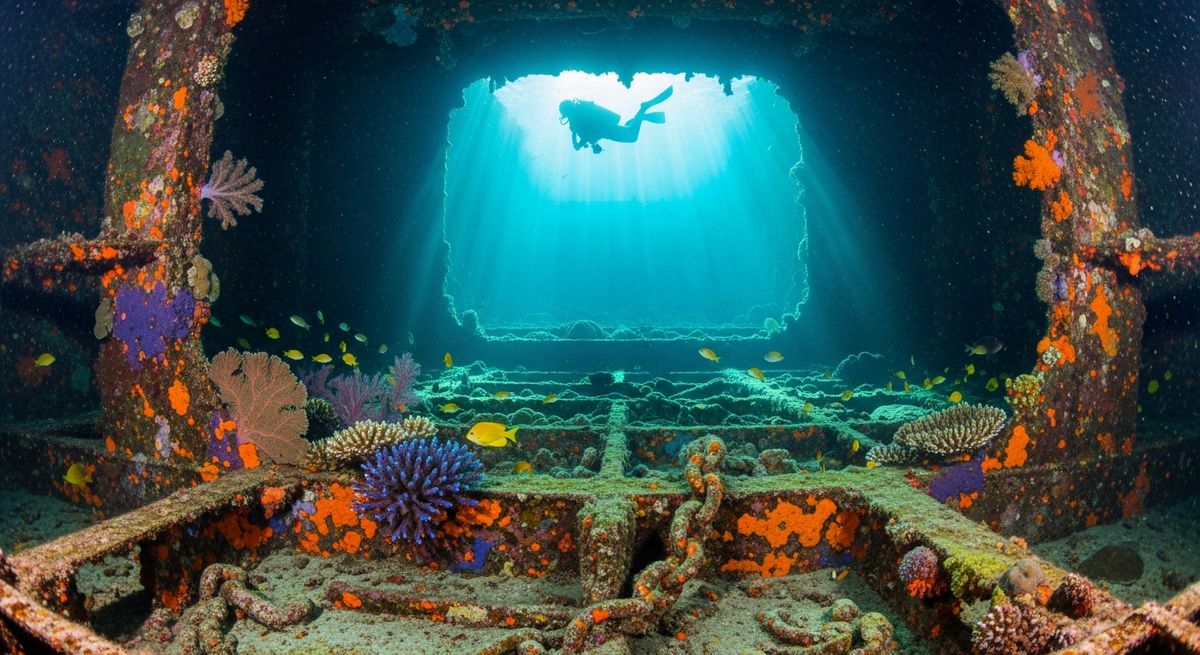
The SAND TRANS, a dredger that went down in 1978 after steering failure in rough seas, lies on a sandy bottom at 11 metres. It’s a good, accessible wreck for divers looking to explore something a bit different in Bornholm. The wreck itself is reasonably intact, with plenty of nooks and crannies to peer into, giving you a real sense of its former life as a working vessel. We often find local cod hanging around the superstructure, and if you're patient, you might spot flatfish camouflaged in the sand nearby. It’s a pretty calm dive most days, perfect for getting a good look around without battling currents.
Typical SAND TRANS Dive Profile
Illustrative profile based on site depth and type. Actual dive profiles vary - always follow your dive computer and training.
Safety Notes
Wreck site - avoid penetration without wreck diving certification. Watch for sharp metal and entanglement hazards.
Cold water this month (avg 14°C). Drysuit or thick wetsuit (7mm+) recommended.
Always perform a 3-minute safety stop at 5m before surfacing.
Nearest Dive Centres to SAND TRANS
Dive shops near SAND TRANS
Tauchschule baltic-diver-circle
Tauchshop-Rostock
Dive connection
Reviews for SAND TRANS
Conditions
Ocean conditions, forecast and tides for SAND TRANS
SAND TRANS Ocean Conditions
Monthly averages for SAND TRANS, sourced from Open-Meteo marine data - nearest station: Open-Meteo marine grid (54.94, 13.85) (7km away)
October Averages
Sea Temperature
14°C
57°F · Range: 11.7–16.3°C
Air Temperature
12°C
53°F
Wind Speed
8.16 m/s
15.9 knots
Atmospheric Pressure
1013.3 hPa
Based on 4 years of monitoring data · Data sources: Open-Meteo marine data
Plan & book
Ways to dive Bornholm, from day trips to liveaboards.
Day trips & courses
via GetYourGuideGuided dives, courses and snorkel trips with instant booking.
Find dive trips in BornholmPlaces to stay
via Booking.comHotels and dive resorts near Bornholm.
Search stays in BornholmDive insurance
Most travel insurance excludes or limits scuba. Check what you need before you go.
Dive insurance explainedPartner links: we may earn a commission if you book, at no extra cost to you. How we make money
Where to Stay near SAND TRANS
Prices from Booking.com. We may earn a commission at no extra cost to you.