HMS YORK
Protected Area
Thodorou Chanion
Why dive here
HMS YORK is a wreck dive where divers can encounter sea turtles. Water ranges 17-27°C, warmest July, August, September.
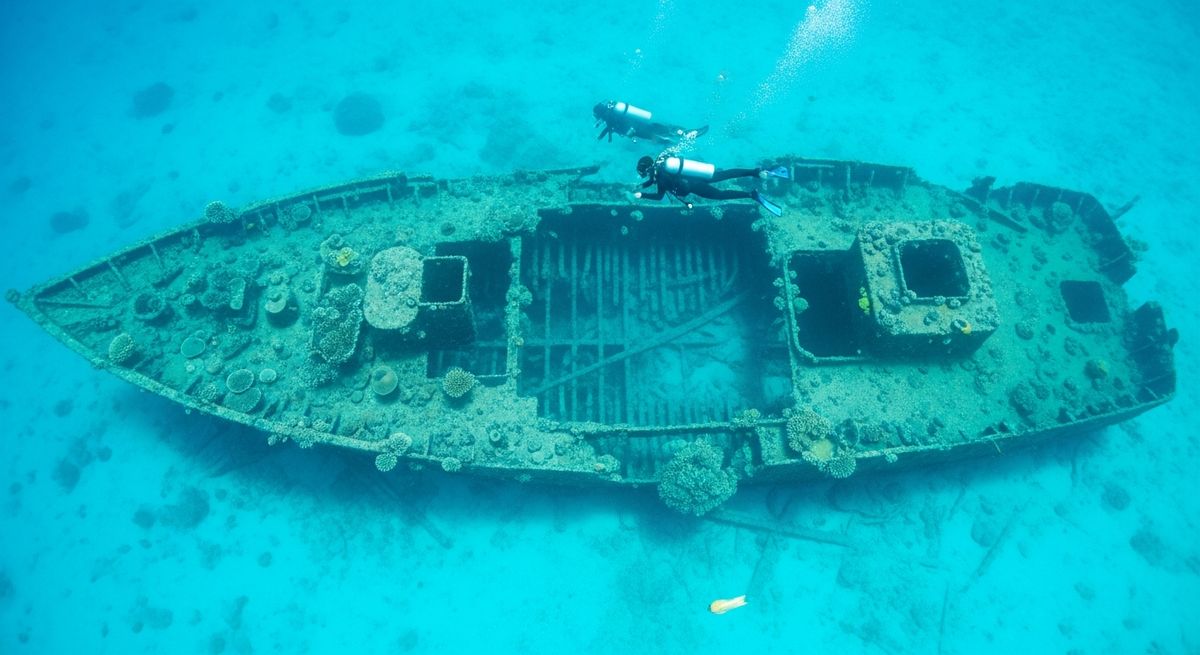
The HMS York off Crete isn’t your typical deep, intact wreck. She’s shallow, spread out, and tells a story of naval history right there in the Mediterranean sun. We love it because it’s a living museum, accessible to pretty much anyone with an Open Water cert. You’re swimming over the remnants of a heavy cruiser, a beast of a ship at 175 metres long, scuttled after taking a beating from dive bombers in 1941. We’d suggest going early, before the thermocline really sets in and the visibility gets hazy. You’ll find yourself finning over a vast debris field. Twisted metal plates, sections of hull, and scattered machinery lie across the sandy bottom at just 11 metres. Look for the big anchors, they’re still mostly whole, and the stern section often has schooling damselfish darting through it. Keep an eye out for octopus tucked into crevices and the occasional moray eel peeking from behind a collapsed bulkhead. It’s not about penetration here, it’s about appreciating the scale of the destruction and the resilience of the marine life that’s made a home of it.
Typical HMS YORK Dive Profile
Illustrative profile based on site depth and type. Actual dive profiles vary - always follow your dive computer and training.
Safety Notes
Wreck site - avoid penetration without wreck diving certification. Watch for sharp metal and entanglement hazards.
Always perform a 3-minute safety stop at 5m before surfacing.
Nearest Dive Centres to HMS YORK
Dive shops near HMS YORK
Chania Diving Center
Chania Diving
Salty Descents
Stalos Dive Center
FUN DIVE DIVING CENTER
Fundive
Reviews for HMS YORK
Conditions
Ocean conditions, forecast and tides for HMS YORK
HMS YORK Ocean Conditions
Monthly averages for HMS YORK, sourced from Open-Meteo marine data + Copernicus Marine (EU) - nearest station: Open-Meteo marine grid (35.42, 24.79) (35km away)
October Averages
Sea Temperature
24°C
75°F · Range: 22.3–25.7°C
Current Speed
4 cm/s
Direction: S (180°)
Chlorophyll-a
0.086 mg/m³
Very clear (oligotrophic)
Salinity
39.3 PSU
Based on 4 years of monitoring data · Data sources: Open-Meteo marine data + Copernicus Marine (EU)
Plan & book
Ways to dive Crete, from day trips to liveaboards.
Day trips & courses
via GetYourGuideGuided dives, courses and snorkel trips with instant booking.
Find dive trips in CretePlaces to stay
via Booking.comHotels and dive resorts near Crete.
Search stays in CreteDive insurance
Most travel insurance excludes or limits scuba. Check what you need before you go.
Dive insurance explainedPartner links: we may earn a commission if you book, at no extra cost to you. How we make money
Where to Stay near HMS YORK
Prices from Booking.com. We may earn a commission at no extra cost to you.