PYTHEAS
Protected Area
Kremastis - Paradeisiou Dimou Petaloudon Nisou Rodou
Why dive here
PYTHEAS is a wreck dive where divers can encounter dolphins, sea turtles and sperm whales. Water ranges 18-27°C, warmest July, August, September.
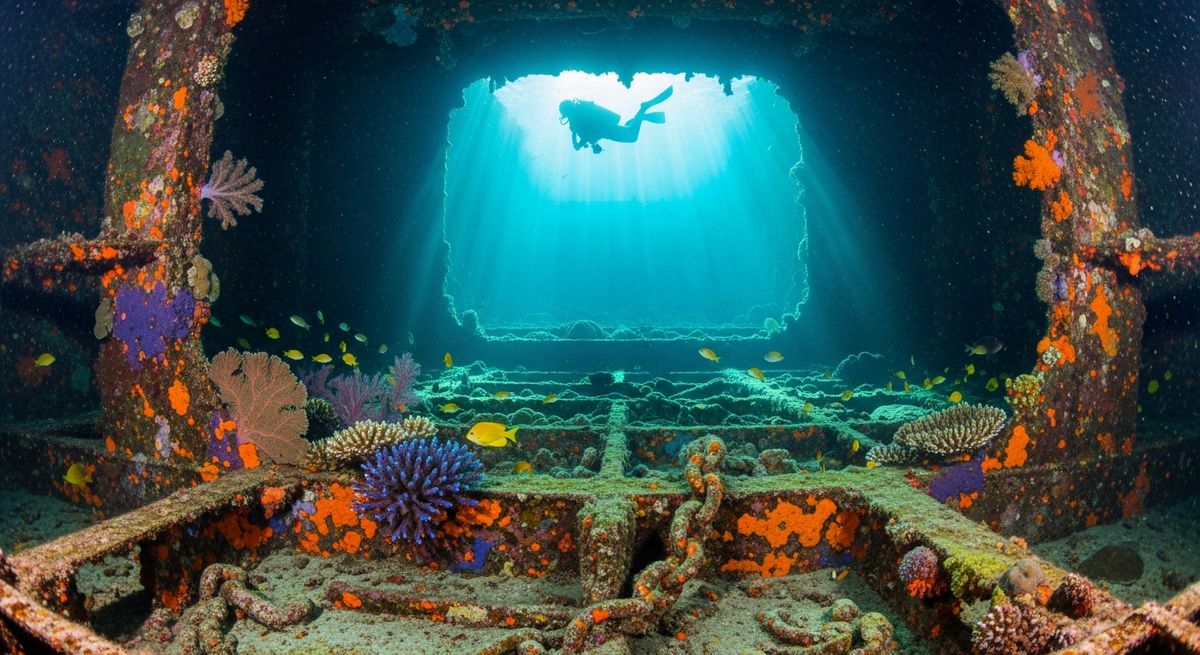
The Pytheas is one of those wrecks we always come back to, a proper piece of history lying just off the Dodecanese. She went down in ‘66 after hitting something submerged, a big steamship at 134 meters long, built for wartime in California. Now, she’s a scattering of metal across the seabed at a consistent 10 meters, so it’s a brilliant site for newer wreck divers or those who just want a long, relaxed bottom time. We love finning over the debris field, trying to imagine her full shape. You can still make out her ribs, the plates long gone in places, creating these fantastic swim-throughs where damselfish flit in and out. The light filters through, bouncing off the sandy patches, and often we’ll spot octopus tucked into crevices, their eyes watching you pass. Our favourite part is the bow section; it’s more intact, and you often find schools of barracuda hanging in the slight current, shimmering silver. It’s not a deep dive, but it feels like you're exploring a real ghost from the past, completely taken over by the sea.
Typical PYTHEAS Dive Profile
Illustrative profile based on site depth and type. Actual dive profiles vary - always follow your dive computer and training.
Safety Notes
Wreck site - avoid penetration without wreck diving certification. Watch for sharp metal and entanglement hazards.
Nearest Dive Centres to PYTHEAS
Dive shops near PYTHEAS
BLUTOPIA MARINE PARK
CRABDIVERS DIVE CENTER
H2O
The Waterhoppers
Rhodes Diving Academy
MANI CRUISES
Reviews for PYTHEAS
Conditions
Ocean conditions, forecast and tides for PYTHEAS
PYTHEAS Ocean Conditions
Monthly averages for PYTHEAS, sourced from Open-Meteo marine data + Copernicus Marine (EU) - nearest station: Open-Meteo marine grid (36.89, 27.33) (33km away)
October Averages
Sea Temperature
25°C
76°F · Range: 22.7–26.4°C
Current Speed
11.18 cm/s
Direction: W (280.3°)
Chlorophyll-a
0.08 mg/m³
Very clear (oligotrophic)
Salinity
39.53 PSU
Based on 4 years of monitoring data · Data sources: Open-Meteo marine data + Copernicus Marine (EU)
Plan & book
Ways to dive Dodecanese, from day trips to liveaboards.
Day trips & courses
via GetYourGuideGuided dives, courses and snorkel trips with instant booking.
Find dive trips in DodecanesePlaces to stay
via Booking.comHotels and dive resorts near Dodecanese.
Search stays in DodecaneseDive insurance
Most travel insurance excludes or limits scuba. Check what you need before you go.
Dive insurance explainedPartner links: we may earn a commission if you book, at no extra cost to you. How we make money
Where to Stay near PYTHEAS
Prices from Booking.com. We may earn a commission at no extra cost to you.