Diving in Dodecanese
Why dive here
Dodecanese is a diving destination where divers can encounter dolphins, sea turtles and sperm whales. Water ranges 18-27°C, warmest July, August, September.
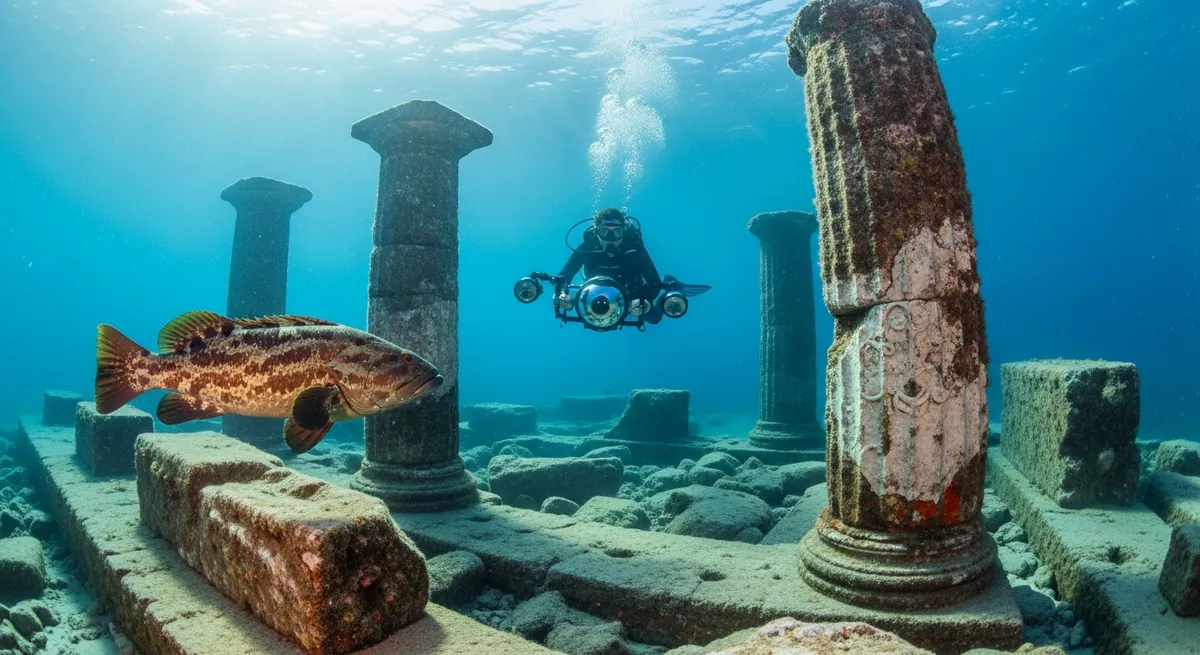
The Dodecanese islands offer a proper Greek island hopping dive trip. We’ve found the diving here is less about pelagics and more about the geology and history. Think dramatic walls dropping into the blue, cool swim-throughs, and plenty of caves with light shafts cutting through the water. We particularly love the WWII wrecks around Rhodes, often encrusted with sponges, a nod to the islands’ past sponge-diving heritage. You’ll see plenty of Mediterranean regulars: marbled spinefoot darting through seagrass meadows, the occasional blue swimming crab scuttling across the sand. Keep an eye out for the common brittlestars clinging to rocks. We’ve even spotted bottlenose dolphins cruising by on longer boat rides, a real treat. Visibility can often hit 25-30 metres in summer, making those deeper wall dives feel endless. Our pick for a unique experience has to be exploring the sea caves around Kalymnos, especially in the morning when the sun’s angle is just right, painting the interiors with incredible light. Current can pick up, especially around exposed points, so it's worth checking conditions with local centres.
Dodecanese Dive Site Map
Dive sites and dive centres in Dodecanese
Dodecanese Dive Sites
51 dive sites in Dodecanese
Achata Arch
The Achata Arch offers a different kind of dive for the Dodecanese, focusing on an underwater archway and the light play within. It's a fairly simple exploration, good for divers who appreciate interesting rock formations over dense coral. You'll likely see smaller reef fish darting in and out of the shadows. We'd suggest it as a second dive, or for those looking for a relaxed photo opportunity.
Achata Cave
Achata Cave offers a straightforward cavern dive on the Dodecanese coast. We found the entry simple, leading into a well-lit chamber with several smaller passages branching off. It’s a good choice for divers wanting an easy introduction to overhead environments without strong currents or deep penetration. Look for resident shrimp and small nudibranchs on the walls.
Amoopi
Amoopi offers a gentle introduction to Dodecanese diving, perfect for those building confidence. You’ll find a sandy bottom sloping gradually into modest rock formations. Keep an eye out for smaller Mediterranean species – blennies tucked into crevices, perhaps a shy octopus. It’s a comfortable spot for a relaxed shallow dive.
ANTHOS
Anthos, a carrier vessel that ran aground in 1974, is one of our favourites in the Dodecanese for a reason. This isn't just a pile of metal; it’s a proper wreck dive, 86 metres long, sitting in the blue and inviting you in. We love dropping down and seeing the sheer scale of it emerge from the gloom, its bow angled slightly upwards, stern settling deeper. You can spend a good chunk of your bottom time exploring the deck and superstructure, poking into cargo holds where schools of damselfish now swirl. Look closely at the metalwork for nudibranchs, and keep an eye out for octopus tucked into crevices. The visibility here can be superb, giving the wreck a ghostly, almost surreal presence. It's a great spot for advanced divers who appreciate a substantial wreck and want to really take their time exploring, rather than just doing a fly-by. We’d suggest going in the morning before any wind picks up, when the light penetrates beautifully into the holds.
Archangelos Cave
Archangelos Cave, tucked away in the Dodecanese, offers a straightforward cave dive that's pretty accessible for most divers comfortable with overhead environments. Inside, the light plays off the walls, revealing resident rhomboid sweepers and the occasional redcoat darting through. We've often spotted long-spined sea urchins clinging to the rock, and a few times, a curious marbled spinefoot has checked us out. It's a solid choice if you're looking for a relaxed exploration rather than a deep, challenging cavern system, and a good way to experience cave diving without feeling overwhelmed.
Cape Gatos
Cape Gatos offers a straightforward dive, popular with local boat trips. You’ll typically find a rocky reef sloping down, with plenty of nooks for octopuses and moray eels. Visibility is generally good here, making it a decent spot for newer divers or those looking for a relaxed afternoon underwater. It's a reliable choice for a simple Mediterranean exploration.
Cape prasso
Cape Prasso, in the Dodecanese, offers a straightforward Mediterranean dive. You’ll find rocky reefs with octopus, moray eels, and typically good visibility. It’s a solid choice for a relaxing afternoon dive, suited to divers who appreciate typical Aegean Sea encounters without anything too challenging. Expect a pleasant, uncrowded dive.
Cave of seal
The Cave of Seal, off the Dodecanese islands, is a straightforward cavern dive. Expect to see some light penetration from the entrance, illuminating the rock formations inside. While we haven't personally spotted seals here recently, it's still a nice, easy entry for divers comfortable in an overhead environment, looking for something beyond a standard reef dive. The real draw is the play of light and shadow, not necessarily abundant marine life.
CONTI MINI (PROBABLY)
Look, if you’re coming to the Dodecanese specifically for the *Conti Mini*, you’re probably going to be a bit disappointed. This isn’t a deep wreck, or even a proper wreck in the traditional sense. It’s a rusted motor vessel, beached in shallow water near Rhodes. We're talking a maximum depth of 1 metre, so you’ll be snorkelling, not diving. But we love it for what it is: an accessible, fascinating piece of recent history. The *Conti Mini* was arrested with illegal immigrants onboard, left in disrepair, and eventually beached. You can see the hull breaking the surface, a stark, rusty skeleton against the blue. It’s a poignant sight, and surprisingly photogenic, especially at golden hour. We’d suggest bringing a good wide-angle lens for surface shots, capturing that dramatic contrast of decay and light. Around the hull, we’ve spotted small shoals of juvenile fish darting amongst the barnacles and algae, and we’ve even seen a few octopus tucked into crevices. It’s perfect for a relaxed afternoon exploring, maybe with kids, offering a different kind of underwater experience that’s more about contemplation than coral.
DHIAS
The Dhia, a cargo vessel that went down in the Dodecanese, offers a solid wreck dive in the Mediterranean. Sitting upright at 28 meters, her decks are open for exploration. We’ve found schools of damselfish often swarming the superstructure and moray eels peeking from the holds, a good sign of healthy colonisation. Visibility here tends to be reliable, making it a great option for newer wreck divers looking to get comfortable penetrating an actual ship, though we always recommend proper training for overhead environments. Just be aware of the "dangerous wreck" classification, meaning some parts are unstable.
Diving boards
Diving Boards, off the Dodecanese, offers a solid Mediterranean dive. We’ve seen quite a few studded pufferfish here, often lurking among the rockier patches, and it’s a good spot to try and find a Sicilian spindle if you take your time. You’ll also likely encounter plenty of long-spined sea urchins and the occasional red lionfish, so watch your buoyancy. It's a relaxed dive, good for getting your bearings in the region, perhaps best suited for those looking for a calm exploration rather than high-octane action.
ELIAS
The Elias, a motor vessel that found its final resting place in 1969, sits in surprisingly shallow water, making it a great spot for an extended exploration. We’ve spent plenty of time poking around her skeletal remains. You’ll find her just off the northwest coast of Rhodes, and while she's quite broken up, the visible portions of her hull and superstructure are fantastic for new divers or those looking for a relaxed dive. Schools of juvenile fish often hover around the metal, and we’ve spotted octopuses tucked into crevices, making homes in what’s left of her. It’s a gentle introduction to wreck diving, with plenty to observe without needing to go deep.
Show all 51 dive sites in Dodecanese
- EVANGELISTRIA
- Faliraki
- GEMAR I (PROBABLY)
- GIANNOULA K
- HMS Hereward
- HMS Juno
- HMS Panther
- Kalithea
- Kallithea Springs
- Kastelia
- Kerveli reef
- KIMOLOS
- Kos reef
- Ladiko Wall
- Panagias wall
- Plimmiri - wreck
- Psarapoula
- PYTHEAS
- Samos beerocks
- Samos Free Fall
- Samos Heart Rock
- Samos Katergo
- Samos Klima bay
- Samos Knife wound Rock
- Samos Limnionas cape
- Samos Limnionas underwater tunel
- Samos Mertziki
- Samos panagias rocks cave
- Samos Plakas reef
- Samos Treasure Cave
- Saria - Palatia Bay
- Stegna islands
- St Paul s Bay
- Swallow Cave
- TENARON (TAINARON) S
- The Waterhoppers
- Thor Star Wreck
- Waterhoppers
- Waterhoppers housereef
Dodecanese Dive Centres
14 dive shops and operators in Dodecanese
Arian Diving Centre
BLUTOPIA MARINE PARK
CRABDIVERS DIVE CENTER
FREEDIVING BODRUM
H2O
KARPATHOS DIVING CENTER
Lepia Dive Centre
MANI CRUISES
Show all 14 dive centres in Dodecanese
Ocean Wildlife in Dodecanese
21 species recorded in Dodecanese
Dodecanese Daylight & Sunrise/Sunset
Sunrise and sunset times for Dodecanese, calculated from coordinates
Today - Sunday 11 October
Sunrise
06:14
Sunset
17:41
Daylight
11h 27m
Golden Hour
17:06
First light (dawn) at 05:48 · Last light (dusk) at 18:07
Monthly Averages
| Month | Sunrise | Sunset | Daylight |
|---|---|---|---|
| Jan | 07:22 | 17:18 | 9h 56m |
| Feb | 07:00 | 17:51 | 10h 51m |
| Mar | 06:22 | 18:18 | 11h 55m |
| Apr | 05:39 | 18:43 | 13h 4m |
| May | 05:05 | 19:10 | 14h 5m |
| JunLongest | 04:52 | 19:30 | 14h 38m |
| Jul | 05:03 | 19:30 | 14h 27m |
| Aug | 05:27 | 19:04 | 13h 37m |
| Sep | 05:52 | 18:21 | 12h 29m |
| OctNow | 06:17 | 17:37 | 11h 20m |
| Nov | 06:48 | 17:03 | 10h 15m |
| DecShortest | 07:16 | 16:56 | 9h 41m |
Times are approximate local times based on longitude. Actual times may vary slightly depending on the exact timezone observed in Dodecanese.
Where to Stay near Dodecanese
Prices from Booking.com. We may earn a commission at no extra cost to you.
Marine Protected Areas near Dodecanese
36 protected areas near Dodecanese - please respect local regulations when diving
MIKRES KYKLADES, VOREIOANATOLIKI AMORGOS, ANATOLIKES AKTES DONOUSAS, GYRO NISIDES KAI THALASSIA PERIOCHI
NISIDES VOREION DODEKANISON KAI THALASSIA PERIOCHI
VOREIOANATOLIKO AKRO KRITIS: DIONYSADES, ELASA KAI CHERSONISOS SIDERO (AKRA MAVRO MOURI – VAI – AKRA PLAKAS) KAI THALASSIA ZONI
NISOS CHALKI KAI NISIDES: KOLOFONA, PANO PRASSOUDA, TRAGOUSA, STRONGYLI, AGIOS THEODOROS, MAELONISI ALIMIA, KREVVATI, NISAKI, MAKRY KAI THALASSIA PERIOCHI
ANATOLIKO TMIMA ASTYPALEAS KAI NISIDES KOUNOUPI, FTENO, CHONDROPOULO, KOYTSOMYTIS, MONI, AGIA KYRIAKI, TIGANI, CHONDRI, LIGNO, FOKIONISIA, KATSAGRELI, PONTIKOYSSA, FIDOYSSA, KTENIA KAI THALASSIA PERIO
NISOS FOURNOI KAI NISIDES THYMAINA ALATONISI, THYMAINAKI, STRONGYLO, PLAKA, MAKRONISI, MIKROS KAI MEGALOS ANTHROPOFAGOS, AGIOS MINAS KAI THALASSIA PERIOCHI
NISIDES KALYMNOU: EPANO NERA, SARI, TELENDOS KAI THALASSIA PERIOCHI
DIONYSADES NISOI KAI THALASSIA ZONI
KASOS KAI KASONISIA – EVRYTERI THALASSIA PERIOCHI
NOTIA NISYROS KAI STRONGYLI, IFAISTIAKO PEDIO KAI PARAKTIA THALASSIA ZONI
NISOS TILOS KAI NISIDES: ANTITILOS, PELEKOUSA, GAIDOURONISI, GIAKOUMIS, AGIOS ANDREAS, PRASOUDA , NISI KAI THALASSIA PERIOCHI
NISOS KASOS KAI SYMPLEGMA KASONISION KAI THALASSIA PERIOCHI
Showing 12 largest of 36
Getting to Dodecanese
Kos Island
Rhodes
Bodrum
Plan & book
Ways to dive Dodecanese, from day trips to liveaboards.
Day trips & courses
via GetYourGuideGuided dives, courses and snorkel trips with instant booking.
Find dive trips in DodecanesePlaces to stay
via Booking.comHotels and dive resorts near Dodecanese.
Search stays in DodecaneseDive insurance
Most travel insurance excludes or limits scuba. Check what you need before you go.
Dive insurance explainedPartner links: we may earn a commission if you book, at no extra cost to you. How we make money