VIKARTINDUR
Why dive here
VIKARTINDUR is a wreck dive where divers can encounter dwarf minke whales, humpback whales, orcas and seals & sea lions. Water ranges 2-13°C, warmest July, August, September.
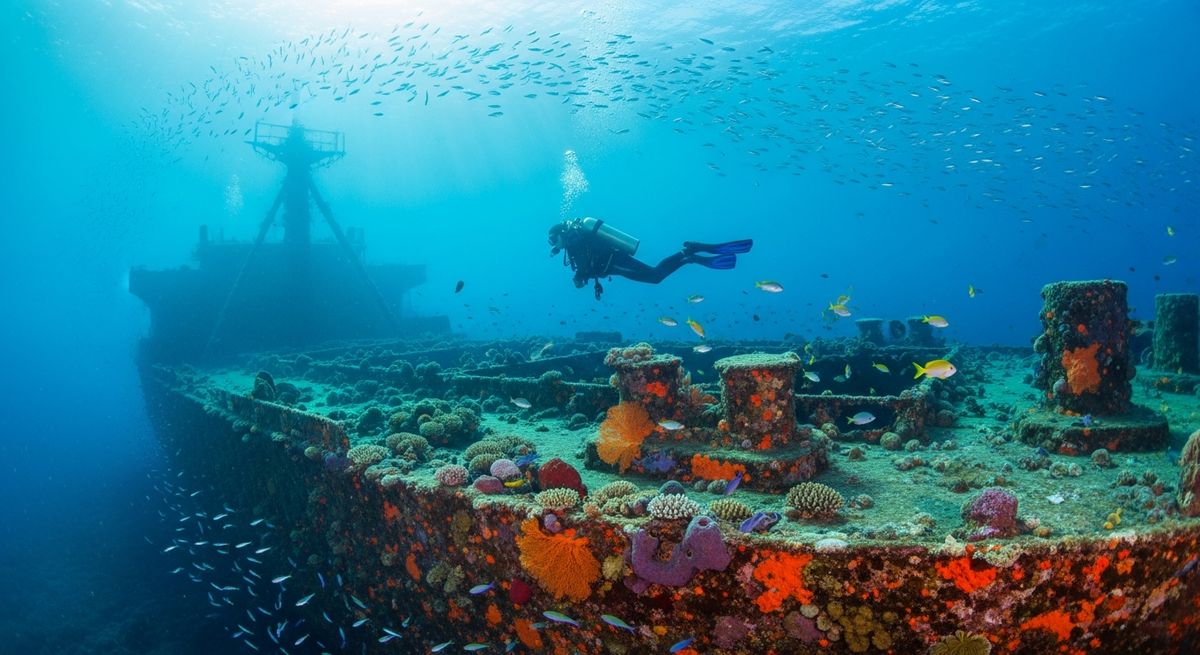
Vikartindur isn't your typical Iceland dive. Forget the clear, cold embrace of Silfra for a moment; this is an unexpected wreck, grounded in a powerful storm back in '97. We love that it’s such a tangible piece of history, a real story of the sea’s raw power. Dropping down, the sheer scale hits you first. A 132-meter container ship, pushed right up against the shore, its hull torn open in places. You’re not just seeing a wreck; you’re seeing the force that put it there. We’ve found the stern section particularly interesting, with its twisted metal and the sense of a machine utterly overwhelmed. Visibility can be a bit variable here, depending on surge, but on a good day, the light plays through the gaps in the superstructure, illuminating the shadowy interior. It's an imposing dive, full of stark beauty, and definitely suits divers who appreciate a wreck with a proper narrative.
Typical VIKARTINDUR Dive Profile
Illustrative profile based on site depth and type. Actual dive profiles vary - always follow your dive computer and training.
Safety Notes
Depth of 20m - Advanced Open Water certification recommended.
Wreck site - avoid penetration without wreck diving certification. Watch for sharp metal and entanglement hazards.
Cold water this month (avg 8°C). Drysuit or thick wetsuit (7mm+) recommended.
Always perform a 3-minute safety stop at 5m before surfacing.
Reviews for VIKARTINDUR
Conditions
Ocean conditions, forecast and tides for VIKARTINDUR
VIKARTINDUR Ocean Conditions
Monthly averages for VIKARTINDUR, sourced from Open-Meteo marine data + Copernicus Marine (EU) - nearest station: Open-Meteo marine grid (64.16, -21.83) (32km away)
October Averages
Sea Temperature
8°C
46°F · Range: 6–10.3°C
Current Speed
5.1 cm/s
Direction: W (281.3°)
Salinity
33.3 PSU
Based on 4 years of monitoring data · Data sources: Open-Meteo marine data + Copernicus Marine (EU)
Plan & book
Ways to dive Silfra & Thingvellir, from day trips to liveaboards.
Day trips & courses
via GetYourGuideGuided dives, courses and snorkel trips with instant booking.
Find dive trips in Silfra & ThingvellirPlaces to stay
via Booking.comHotels and dive resorts near Silfra & Thingvellir.
Search stays in Silfra & ThingvellirDive insurance
Most travel insurance excludes or limits scuba. Check what you need before you go.
Dive insurance explainedPartner links: we may earn a commission if you book, at no extra cost to you. How we make money
Where to Stay near VIKARTINDUR
Prices from Booking.com. We may earn a commission at no extra cost to you.