ALFRED D SNOW
Protected Area
Tramore Backstrand
Why dive here
With 185+ marine species recorded in the area - including blue sharks, dolphins, dwarf minke whales, humpback whales and ocean sunfish (mola mola) - ALFRED D SNOW offers some of South Coast's richest wreck diving. Water ranges 9-15°C, warmest July, August, September.
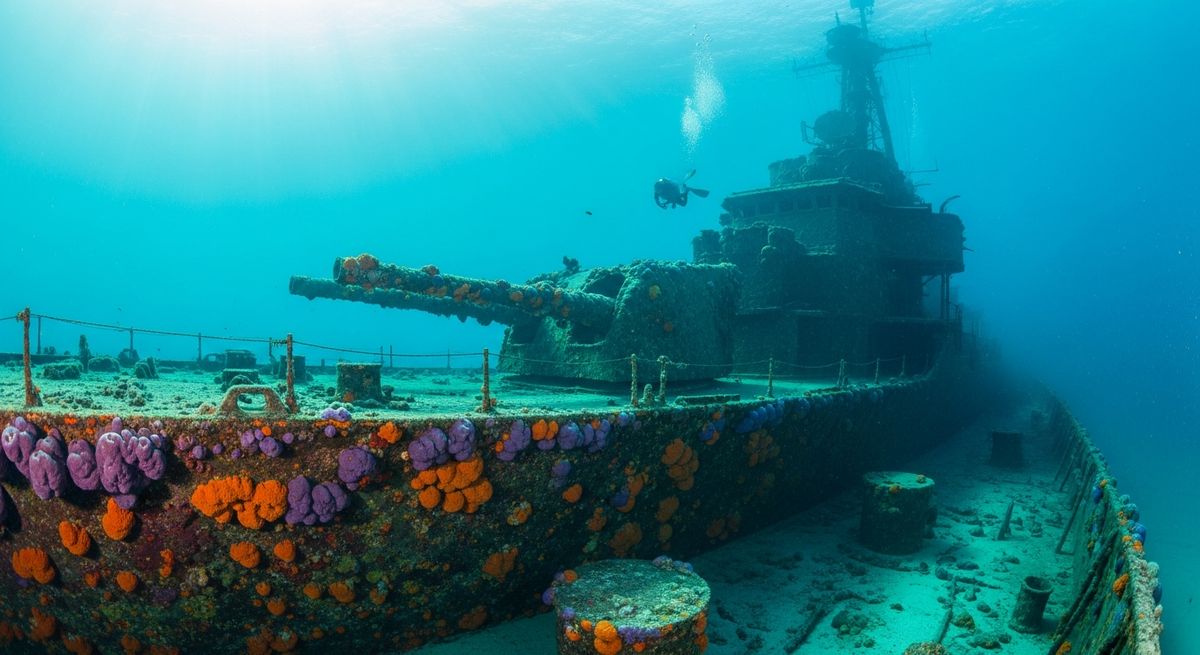
The Alfred D Snow isn't just another lump of metal on the seabed, it’s a proper time capsule, a huge sailing vessel that went down in 1888. We love coming across wrecks that still hold their shape, and this 71-meter leviathan certainly does. Dropping down, you start to see the bow emerging from the gloom, often draped in long strands of kelp that sway in the gentle surge. It’s sitting upright, which is always a bonus, and you can really get a sense of its scale as you glide along the decks. The hold is a favourite spot, wide open and inviting, usually home to a resident conger eel or two, their heads poking out from under rusted plates. We’ve seen everything from spiny dogfish cruising by to thick carpets of jewel anemones clinging to the mast sections. If you hit it on a day with good visibility, perhaps after a spell of settled weather, the light filters down into the structure, picking out details on the hull. It’s a dive that rewards slow exploration. Take your time to really appreciate the history. For divers who enjoy significant wrecks with a strong sense of story, this is definitely one to put on the list.
Typical ALFRED D SNOW Dive Profile
Illustrative profile based on site depth and type. Actual dive profiles vary - always follow your dive computer and training.
Safety Notes
Depth of 30m - Advanced Open Water certification recommended.
Wreck site - avoid penetration without wreck diving certification. Watch for sharp metal and entanglement hazards.
Cold water this month (avg 14°C). Drysuit or thick wetsuit (7mm+) recommended.
Always perform a 3-minute safety stop at 5m before surfacing.
ALFRED D SNOW Wreck History
Year Sunk
1888
Vessel Type
cargo ship
Cause
storm
The Alfred D. Snow was a large, three-masted wooden sailing ship built in Thomaston, Maine, in 1877. A product of the final glory days of sail, this 71-meter vessel was a testament to 19th-century American shipbuilding. Its career was cut tragically short on January 4, 1888, during a voyage from San Francisco to Liverpool with a cargo of wheat. Caught in a vicious storm, the ship was driven ashore and wrecked near Waterford on the south coast of Ireland. The disaster was catastrophic, claiming the lives of 28 of the 30 crew members in the freezing winter waves.
Today, the remains of the Alfred D. Snow lie at a depth of 30 meters, offering a poignant and historic dive for advanced divers. Over 130 years on the seabed has taken its toll on the wooden hull, and the wreck is now scattered, its mighty timbers slowly being reclaimed by the sea. Divers can explore the wreckage, searching for artifacts from the era of sail, such as deadeyes, rigging, and fittings. The site is a somber memorial to the 28 souls who perished, and a dive here is a journey back in time, connecting with a dramatic maritime tragedy off the Irish coast.
Reviews for ALFRED D SNOW
Conditions
Ocean conditions, forecast and tides for ALFRED D SNOW
ALFRED D SNOW Ocean Conditions
Monthly averages for ALFRED D SNOW, sourced from Open-Meteo marine data - nearest station: Open-Meteo marine grid (51.71, -8.38) (9km away)
October Averages
Sea Temperature
14°C
57°F · Range: 12.3–14.8°C
Air Temperature
12°C
54°F
Wind Speed
7.84 m/s
15.2 knots
Atmospheric Pressure
1008.6 hPa
Based on 4 years of monitoring data · Data sources: Open-Meteo marine data
Plan & book
Ways to dive South Coast, from day trips to liveaboards.
Day trips & courses
via GetYourGuideGuided dives, courses and snorkel trips with instant booking.
Find dive trips in South CoastPlaces to stay
via Booking.comHotels and dive resorts near South Coast.
Search stays in South CoastDive insurance
Most travel insurance excludes or limits scuba. Check what you need before you go.
Dive insurance explainedPartner links: we may earn a commission if you book, at no extra cost to you. How we make money
Where to Stay near ALFRED D SNOW
Prices from Booking.com. We may earn a commission at no extra cost to you.