Diving in South Coast
Why dive here
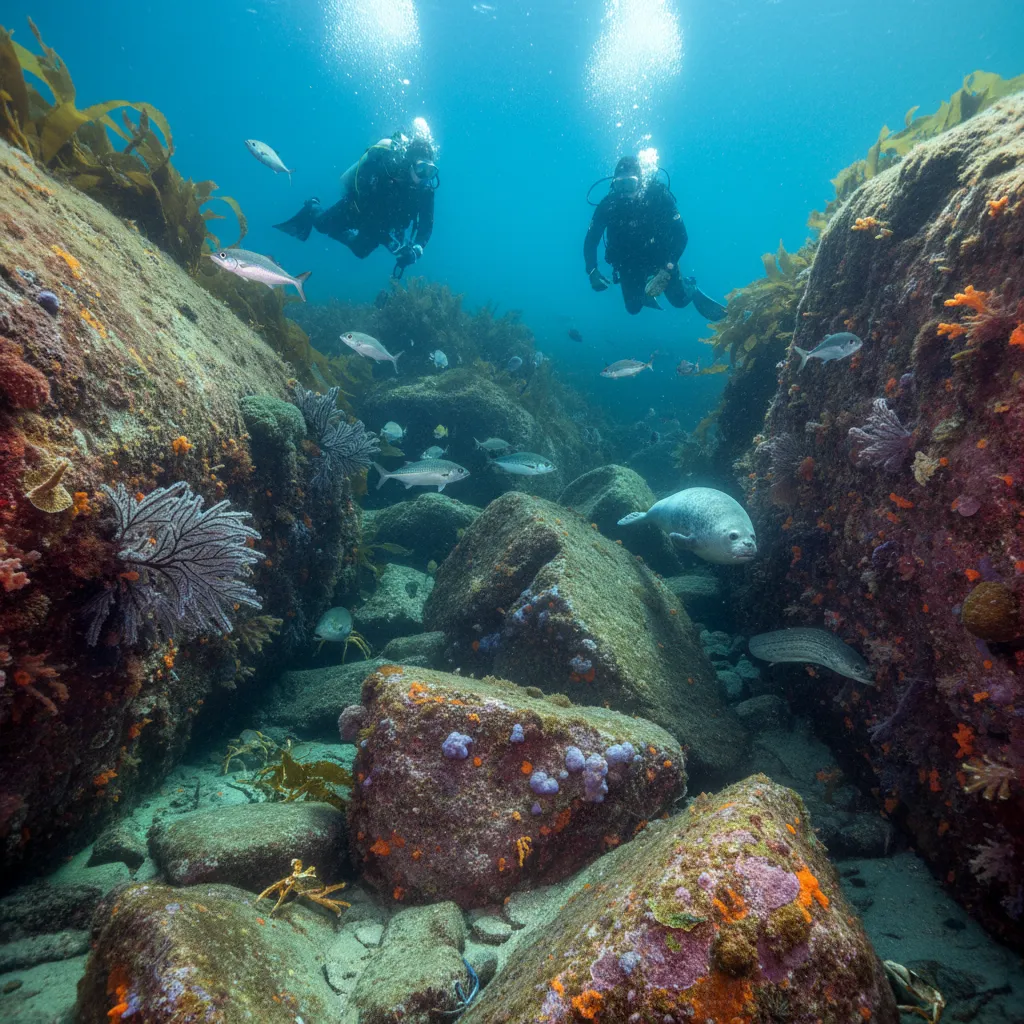
South Coast offers some of Ireland's richest diving, with 185+ marine species recorded in the area - including blue sharks, dolphins, dwarf minke whales, humpback whales and ocean sunfish (mola mola). Water ranges 9-15°C, warmest July, August, September.
South Coast diving in Ireland isn’t what most people picture when they think about the Emerald Isle. Forget chilly Atlantic currents. Here, a whisper of the Gulf Stream means genuinely warmer waters, making it surprisingly pleasant year-round. We’re talking about conditions that let you linger on those fascinating World War wrecks without turning into an icicle, or explore the intricate rock formations and swim-throughs that dot the coast. What we really love about the South Coast is its sheer variety. You’ve got a massive collection of wrecks, from both World Wars, sitting in remarkably clear conditions. We’ve spent dives navigating through their superstructures, spotting everything from cheeky conger eels to the occasional curious triggerfish peeking out. Then there’s the reef diving, which often gives you a very different vibe - think dramatic walls, some cracking caves, and a surprising amount of muck diving opportunities if you know where to look. We've often come across sea mice trundling along the seabed, and once, during a calm surface interval, we even spotted a Grey Phalarope dancing on the water. Visibility here can often push past 15 metres, especially outside of the peak summer months when the algal blooms can kick in a bit. Our favourite time to dive is definitely late spring or early autumn. The water is still comfortable, but you miss the busier periods and often get the best of the light. Be aware, though, that while the currents aren't usually brutal, they can pick up, so always check the local tide charts.
South Coast Dive Site Map
Dive sites and dive centres in South Coast
South Coast Dive Sites
183 dive sites in South Coast
ALFRED D SNOW
The Alfred D Snow isn't just another lump of metal on the seabed, it’s a proper time capsule, a huge sailing vessel that went down in 1888. We love coming across wrecks that still hold their shape, and this 71-meter leviathan certainly does. Dropping down, you start to see the bow emerging from the gloom, often draped in long strands of kelp that sway in the gentle surge. It’s sitting upright, which is always a bonus, and you can really get a sense of its scale as you glide along the decks. The hold is a favourite spot, wide open and inviting, usually home to a resident conger eel or two, their heads poking out from under rusted plates. We’ve seen everything from spiny dogfish cruising by to thick carpets of jewel anemones clinging to the mast sections. If you hit it on a day with good visibility, perhaps after a spell of settled weather, the light filters down into the structure, picking out details on the hull. It’s a dive that rewards slow exploration. Take your time to really appreciate the history. For divers who enjoy significant wrecks with a strong sense of story, this is definitely one to put on the list.
ALISON
The *Alison* is a proper piece of history, and we love diving it. This steamship, which went down back in 1928, sits in a remarkably shallow two metres of water, making it perfect for an extended rummage. You really feel the age of the ship as you explore its remains; the hull, nearly 40 metres long, is still largely intact, giving you a good sense of its original form. We’ve spent hours here just poking around the different sections, imagining life aboard. The exposed nature of the wreck, so close to the surface, means light penetrates everywhere, even on a cloudy day, illuminating the brassy hues of kelp swaying over the metalwork. It’s not just a historical curiosity either. The *Alison* has become an artificial reef, with wrasse darting between the plates and crabs scuttling in the shadows. It’s an easy, relaxed dive, ideal for photographers or anyone keen to spend time really getting to know a wreck without any depth constraints. We’d suggest going at high slack tide for the best visibility and a completely current-free experience.
ALIZE
The Alize, a fishing vessel resting at 50 metres on Ireland’s South Coast, offers a proper deep dive experience for those with the appropriate certs. We typically find the wreck largely intact, though time and currents have certainly left their mark, giving it that classic, encrusted character we love to explore. Keep an eye out for conger eels peering from dark corners and the usual suspects of local fish sheltering in the superstructure. It's a deep, dark dive, making it ideal for technical divers looking for a substantial penetration or simply a challenging profile in cooler waters. Expect low visibility and a strong chance of current on the descent; planning your gas is key here.
ALLIANCE II
The ALLIANCE II, a fishing vessel that grounded and sank back in '95, is an absolute cracker of a shallow wreck. At just 4m, it’s not going to test your depth limits, but what it lacks in meters, it makes up for in character. We love this site for its accessibility and the sheer amount of detail still visible on the wreck itself. You’re exploring an 18m vessel, so it's a proper swim-through playground. Even with its relatively small size, there's plenty to poke around in, from the wheelhouse remains to the exposed engine room. The stern is our favourite spot, often swarming with pollack and wrasse. They've made this wreck their home, darting between the rusty plates. We'd suggest going on a calm day; visibility here can swing, but when it's good, the light plays beautifully through the superstructure, illuminating the sponges and anemones that have colonised every surface. It's a fantastic site for newer divers getting a feel for wrecks, or photographers keen on long bottom times and natural light.
ALONDRA
The Alondra is a proper South Coast Ireland wreck dive, and we rate it highly for a mid-depth exploration. She was a steamship, sunk in 1916, and the years underwater have given her a real character. You’ll find her sitting upright at 15 metres, pretty much intact, which is always a bonus. We love how the two huge boilers dominate the midships, often swarming with pollack and shoals of juvenile coley – the light playing off their scales as they dart in and out is genuinely mesmerising. The stern is our favourite part, with the propeller still clearly visible, usually covered in anemones and dead man’s fingers. You can poke around the superstructure, though penetration is definitely for experienced wreck divers only. For everyone else, just circling the Alondra, taking in the scale and the way she’s become a home for conger eels and lobster, is fantastic. Visibility here can be variable, so pick a calm day with a neap tide for the best experience. It's a dive that rewards slow, deliberate exploration.
AMARYLLIS
The Amaryllis sits upright on the seabed at 45 metres, a proper deep dive that’s well worth the effort. We love this trawler, a proper snapshot of a working vessel caught in time. She’s only 16 metres long, so you can really get a sense of the whole ship in one dive, especially on a good visibility day. Our favourite part is dropping down through the gloom to see her mast rise to meet you, a ghostly finger pointing skyward. The trawler capsized and sank back in 1992 after getting her gear snagged, and you can still see the trawl doors lying out to port. The wreck is slowly becoming part of the reef, draped in dead man’s fingers and home to plump conger eels poking out from every dark corner. Look closely and you’ll find plenty of squat lobsters tucked into crevices. If you’re lucky, you might spot a ling darting into the shadows. We’d suggest hitting this one on a slack tide to really appreciate her, as the currents here can be a bit of a push. It’s a dive for those who appreciate history and enjoy the quiet challenge of deeper wrecks.
ANNE SOPHIE
The *Anne Sophie* isn't your typical deep wreck, and that's precisely why we love it. This 30-meter fishing vessel went aground on the rocks southwest of Mine Head in 1984, the crew airlifted to safety. Now, she lies very shallow, almost entirely exposed to the elements, yet still holds so much character. We’d suggest hitting this site at low tide on a calm day; the visibility can be spectacular then, allowing you to really appreciate how the sea has twisted and torn the metal. What’s left of the hull is completely encrusted in colourful anemones and dead man's fingers. You'll see blennies darting into every crevice and crabs scuttling across the seabed next to the broken superstructure. It's a fantastic site for photographers, especially macro enthusiasts, or anyone who enjoys seeing a wreck slowly reclaimed by nature, right on the shoreline.
ANTONY
The Antony. Now, this is a wreck that really gets us talking. Built in 1907, she went down on St. Patrick’s Day, 1917, a huge steamship sitting upright at 51 metres. We’d classify this as a serious dive, one for experienced wreck heads comfortable with deeper profiles and the often-moody Irish conditions. What you'll find here is a substantial piece of history. Drop down the line and the sheer scale of her starts to emerge through the murk, the bow and stern still largely intact. We love pushing past the collapsed midsection to explore the twin triple-expansion engines and the five massive boilers, a real highlight for anyone who appreciates maritime engineering. The Antony is becoming a home for a decent amount of life too, with conger eels peering from every dark hole and the odd monkfish settled on the deck plating. The visibility can be challenging here, as is typical of the South Coast, but when it’s good, the structure is just phenomenal. We'd suggest aiming for slack water, always, to make the most of your bottom time here. It’s a proper dive, and one that stays with you.
ANTONY
The Antony is one of those deep wrecks off the South Coast that really gets our attention. We’re talking about a proper steamer, 127 metres of history sitting at 53 metres. Dropping down, even on a day with decent visibility, you feel the depth, the slight chill that tells you this isn't a casual drift. We love feeling that scale, the superstructure looming into view, a dark shape becoming something immense. What makes the Antony special for us is its sheer size and how much of it is still identifiable. You can trace the bow, move along the deck, imagine the two triple-expansion engines and five boilers within her guts. We’ve found the stern holds are often buzzing with conger eels – big, inquisitive heads poking out from the shadows. The currents here can be stiff, so pick your slack carefully. Best to get a local skipper who knows the tides inside out. It's a dive for experienced deep divers, no question, but for those who love a serious wreck, the Antony is an absolute classic. The sense of history, the sheer bulk of steel on the seabed, it’s a powerful experience.
ARDENT II
The Ardent II is a proper Irish wreck, and we absolutely love it. Lying upright at 35 metres, this 24-metre trawler went down in 1984 after hitting a submerged rock near the Old Head of Kinsale. You can still feel the drama of that storm when you descend; the low visibility and the way the light struggles to penetrate really make you appreciate the crew’s escape. We always approach from the stern, where the prop is still mostly intact, before working our way forward along the deck. The wheelhouse is a highlight, quite broken but offering a glimpse into the skipper’s last moments. Look inside and imagine the chaos. Conger eels have made themselves very much at home, often peering out from behind crumpled metal plates, and we’ve seen some decent lobster tucked into crevices too. This isn’t a site for the faint of heart or the inexperienced; the currents can be shifty, and the visibility often asks for some good navigation skills. But for those who appreciate a wreck with a story, and aren’t afraid of a bit of an adventure, the Ardent II is a fantastic dive. It’s gritty, real, and a true South Coast experience.
ARY
The ARY, a steamship that went down in 1947, rests upright at 25 metres on Ireland's South Coast. She’s a sturdy old girl, 55 metres long, with her single boiler still prominent and a triple expansion engine tucked within. We often find conger eels making homes in the nooks and crannies of the hull, and crabs scuttling over the plates. Visibility can be a bit of a gamble here, typical for the Atlantic, so we always check conditions before heading out. It’s a good dive for those looking for a solid wreck experience without extreme depths, offering plenty to explore for an hour or so.
ASIAN
The ASIAN wreck, off Ireland’s South Coast, sits shallow at just 10 metres, making it surprisingly accessible given its history. This 128-metre steamship, an ex-COLUMBIAN, went down in 1924 and is now well-broken, but still very much a wreck, not just a debris field. You’ll find two large boilers, an engine, and plenty of plates, all home to the usual suspects: conger eels tucked into crevices, dogfish often resting on the sand nearby, and plenty of crabs scuttling over the metalwork. We’ve found the stern section particularly interesting, with some scattered cargo still evident if you look closely. It's a solid dive for those who enjoy exploring a piece of maritime history without the need for deep technical skills.
Show all 183 dive sites in South Coast
- ASTRID
- AUD
- BANDON
- BARDINI REEFER
- BARRISTER
- BETELGEUSE
- BIG CAT
- BOHEMIAN
- BORU
- CARLO (PROBABLY)
- CARNARVONSHIRE
- CARRABIN (POSSIBLY)
- CASTAWAY
- CASTLE BAY
- CELTIC
- CHERBOURG TECHNOLOGIE
- CHIAPAS (PROBABLY)
- CITIZEN FRED
- CITY OF CHICAGO
- CLAUDIA
- CONTESSA VIV
- CORAL STRAND
- COUNSELLOR
- CROGHAN
- DARK ISLAND
- DIDO
- ELISABETH JANE
- EL TORO
- EL ZORRO
- EMPRESS
- ETAL MANOR
- EXCELSIOR
- EXETER
- Fastnet Rock
- FAULCONNLER
- FELTRIA (POSSIBLY)
- FOLIA
- GAFSA
- GHAZEE
- GIRL ARLENE
- GRANITE
- HALRONELL
- HAZAEL 3
- HMS BREDAH (POSSIBLY)
- HMS MIGNONETTE
- HMS MOROCOALA
- HMS SAFEGUARD
- HONEYDEW
- Hook head
- IBERIAN
- IDAHO
- ILLYRIAN
- Illyrian wreck
- INIS EALGA
- IRISH PLANE
- Irish Underwater Council
- ISOLDA
- JACK BUCHAN
- JENALISA
- JOAN PATRICIA
- KABER
- KERICK
- KILLARNEY
- KINCARDINE
- KINGFISHER
- KINOCCARY (POSSIBLY)(BOW SECTION)
- KOWLOON BRIDGE
- Kowloon Bridge Wreck
- Kowloon Bridge Wreck
- LADY CHARLOTTE (POSSIBLY)
- LANGSDALE (POSSIBLY)
- LA SURVEILLANTE
- LENNOX
- L'IMPATIENTE
- LISMORE (PROBABLY)
- LODE STAR
- LUCENA
- LUDGATE
- MAGGIE B
- MANCHESTER MERCHANT (PROBABLY)
- MARGARET ANN
- MARY EILEEN
- MATRISHA
- MEMPHIS
- M.F.V. Mystique
- M F V Mystique wreck
- MIAMI (PROBABLY)
- MICHAEL
- MONIQUE-ET-MARYVONNE
- MONTE IZASKUN
- MUIRCHU
- M.V. Bardini Reefer
- M.V. Kowloon Bridge
- NEPTUNIA
- NESTORIAN
- NETTA
- NORWEGIAN
- NUESTRA SENORA DE GARDOTZA
- OCEAN SEARCHER
- Old Head of Kinsale
- OSWESTRY
- OTRONTO
- PATRICK
- PERE CHARLES
- PHOENIX
- Portmarnock Sub-Aqua Club
- PROVIDENCE
- QUEBRA
- QUEENSMORE
- QUITA (?QUEITA)
- RANGA
- RAYLIGHT
- Reebelle
- REGGIO
- RIBBLE & MANACLES (POSSIBLY)
- RISING SUN
- RONA OR ARONA
- ROSSES MORN
- ROYAL ARTHUR
- SAMSON
- SANDSEND (PROBABLY)
- Sandycove
- SANTA MARIA DE LA ROSA
- Santos (Wreck)
- SAVONIA
- SEA FLOWER
- SEAHORSE
- Seal Harbour
- SHADINSAY
- Smugglers Cave
- SPES NOVA
- S.S. Alondra
- S.S. Hourtien
- S S Hourtien Wreck
- S.S. Illyrian
- S.S. Malmanger
- S S Malmanger Wreck
- S.S. Minnehaha
- S.S. Nestorian (Wreck)
- STAR IMMACULATE
- STEPHEN WHITNEY
- ST GERVAISE
- ST ITA
- ST MARGARET
- ST YVEL
- SUSTAIN
- S.V. Stephen Whitney
- TACH-GWEL
- TAURIMA
- The Chicago
- THREE BROTHERS
- TIT BONHOMME
- TOURMALET
- TRAFFORD
- U 104
- U 260
- U-260
- UC 42
- UC-42
- UC42 Cork
- UC 44
- UCD Sub Aqua Club
- VIFEREDO
- WESTWICK
- W.H.S.A.C. Rescue Centre
- WILLIAM MARTIN
- Wreck of HMHS Llandovery Castle
- Yellow Island
- YTHAN
- ZETA
- ZORROZAURE
South Coast Dive Centres
4 dive shops and operators in South Coast
Ocean Wildlife in South Coast
185 species recorded in South Coast
South Coast Daylight & Sunrise/Sunset
Sunrise and sunset times for South Coast, calculated from coordinates
Today - Sunday 11 October
Sunrise
05:50
Sunset
16:53
Daylight
11h 3m
Golden Hour
16:07
First light (dawn) at 05:16 · Last light (dusk) at 17:27
Monthly Averages
| Month | Sunrise | Sunset | Daylight |
|---|---|---|---|
| Jan | 07:36 | 15:51 | 8h 15m |
| Feb | 06:52 | 16:46 | 9h 54m |
| Mar | 05:52 | 17:36 | 11h 45m |
| Apr | 04:41 | 18:29 | 13h 48m |
| May | 03:43 | 19:18 | 15h 35m |
| JunLongest | 03:15 | 19:54 | 16h 39m |
| Jul | 03:32 | 19:48 | 16h 17m |
| Aug | 04:17 | 19:01 | 14h 44m |
| Sep | 05:07 | 17:53 | 12h 46m |
| OctNow | 05:56 | 16:44 | 10h 48m |
| Nov | 06:51 | 15:46 | 8h 55m |
| DecShortest | 07:34 | 15:24 | 7h 50m |
Times are approximate local times based on longitude. Actual times may vary slightly depending on the exact timezone observed in South Coast.
Where to Stay near South Coast
Prices from Booking.com. We may earn a commission at no extra cost to you.
Marine Protected Areas near South Coast
100 protected areas near South Coast - please respect local regulations when diving
Lower River Shannon SAC
Kenmare River
Kenmare River SAC
River Shannon and River Fergus Estuaries SPA
Blasket Islands SAC
Blasket IslandS
Kilkieran Bay and Islands
Kilkieran Bay and Islands SAC
Hook Head SAC
Saltee Islands SAC
Roaringwater Bay and Islands SAC
Roaringwater Bay and Islands
Showing 12 largest of 100
Getting to South Coast
Cork
Shannon
Dublin
Plan & book
Ways to dive South Coast, from day trips to liveaboards.
Day trips & courses
via GetYourGuideGuided dives, courses and snorkel trips with instant booking.
Find dive trips in South CoastPlaces to stay
via Booking.comHotels and dive resorts near South Coast.
Search stays in South CoastDive insurance
Most travel insurance excludes or limits scuba. Check what you need before you go.
Dive insurance explainedPartner links: we may earn a commission if you book, at no extra cost to you. How we make money