ASTRID
Protected Area
Sovereign Islands SPA
Why dive here
With 185+ marine species recorded in the area - including blue sharks, dolphins, dwarf minke whales, humpback whales and ocean sunfish (mola mola) - ASTRID offers some of South Coast's richest wreck diving. Water ranges 9-15°C, warmest July, August, September.
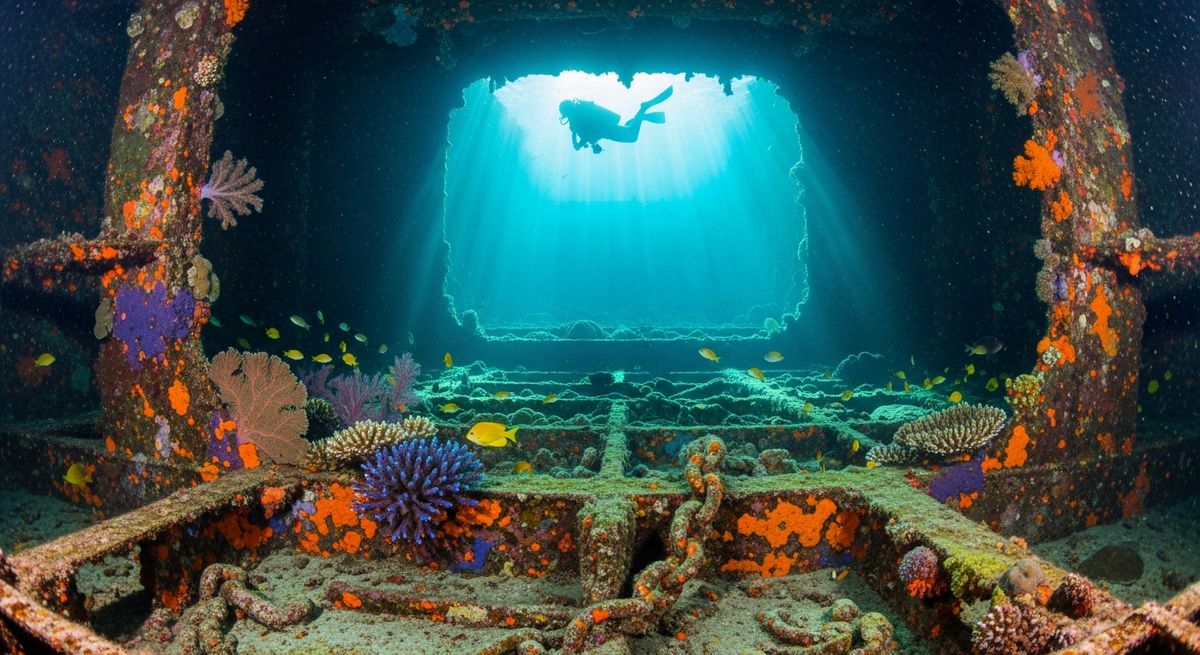
The Astrid is a fascinating wreck, especially if you appreciate a good story with your dive. She was a beautiful brigantine, built in 1918, and sank off the Cork coast in 2013 after an engine failure pushed her onto the rocks in a Force 6 southerly. While the wreck itself is officially classified as dangerous due to potential collapse, the scattered debris field and the sheer character of her remains make for a surprisingly engaging shallow dive. We love exploring the spread of her hull plates and timbers, which are now completely colonised by an incredible array of jewel anemones, dead man's fingers, and colourful sponges. It feels like an underwater archaeological dig, with each piece telling a bit of her history. Keep an eye out for conger eels tucked into crevices, and our favourite, the occasional inquisitive dogfish nosing around the growth. This site is perfect for photographers, especially on a calm, sunny day when the light penetrates the shallows, illuminating the vibrant colours. It's a dive that rewards slow exploration and a keen eye for macro life, rather than penetration. We'd suggest going at slack water, ideally on an incoming tide, for the best visibility and a gentler drift across the site.
Safety Notes
Wreck site - avoid penetration without wreck diving certification. Watch for sharp metal and entanglement hazards.
Cold water this month (avg 14°C). Drysuit or thick wetsuit (7mm+) recommended.
ASTRID Wreck History
Year Sunk
2013
Vessel Type
sailing vessel
Cause
grounding
The Astrid was a magnificent Dutch brigantine with a storied past. Built in 1918 as a freight logger, she was later restored and repurposed as a sail training vessel, teaching new generations of sailors the art of the sea. Her career came to a dramatic end on July 24, 2013, while participating in a flotilla off the south coast of Ireland. Caught in heavy seas near Kinsale, her engines failed, and the majestic tall ship was powerless against the wind and waves.
The Astrid was driven onto rocks at the base of a cliff, leading to a heroic rescue operation that saw all 30 crew and trainees safely evacuated. The ship, however, was battered by the surf and eventually sank. Because she went ashore in a high-energy environment, the wreck is completely broken up. What remains is a debris field scattered in the shallow surf zone. Diving here is highly dependent on calm weather and can be challenging, but for those who explore the site, it's a chance to find remnants of a beautiful ship and reflect on her dramatic final moments.
Nearest Dive Centres to ASTRID
Dive shops near ASTRID
View all dive centres in South CoastReviews for ASTRID
Conditions
Ocean conditions, forecast and tides for ASTRID
ASTRID Ocean Conditions
Monthly averages for ASTRID, sourced from Open-Meteo marine data - nearest station: Open-Meteo marine grid (51.71, -8.38) (9km away)
October Averages
Sea Temperature
14°C
57°F · Range: 12.3–14.8°C
Air Temperature
12°C
54°F
Wind Speed
7.84 m/s
15.2 knots
Atmospheric Pressure
1008.6 hPa
Based on 4 years of monitoring data · Data sources: Open-Meteo marine data
Plan & book
Ways to dive South Coast, from day trips to liveaboards.
Day trips & courses
via GetYourGuideGuided dives, courses and snorkel trips with instant booking.
Find dive trips in South CoastPlaces to stay
via Booking.comHotels and dive resorts near South Coast.
Search stays in South CoastDive insurance
Most travel insurance excludes or limits scuba. Check what you need before you go.
Dive insurance explainedPartner links: we may earn a commission if you book, at no extra cost to you. How we make money
Where to Stay near ASTRID
Prices from Booking.com. We may earn a commission at no extra cost to you.