BARDINI REEFER
Protected Area
Kenmare River
Why dive here
With 185+ marine species recorded in the area - including blue sharks, dolphins, dwarf minke whales, humpback whales and ocean sunfish (mola mola) - BARDINI REEFER offers some of South Coast's richest wreck diving. Water ranges 9-15°C, warmest July, August, September.
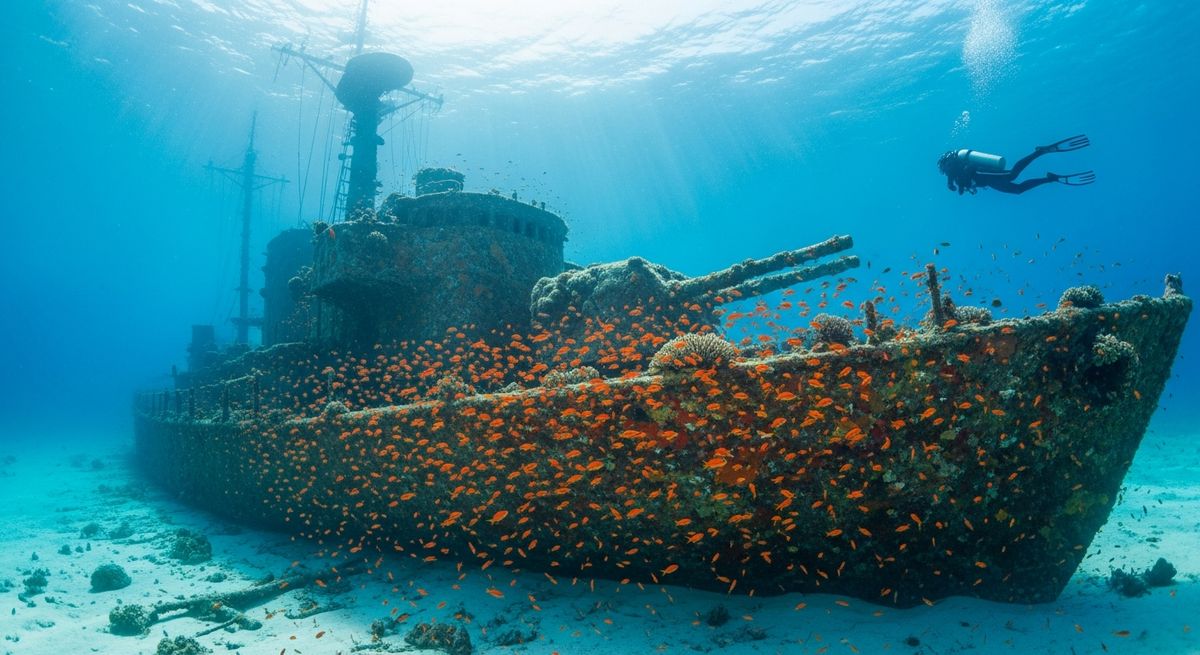
Bardini Reefer is one of those wrecks that just delivers. We’ve dived plenty of Irish wrecks, and while many are just piles of indistinguishable metal, the Bardini still holds its shape, even after sinking in ’82. It's a proper ship, 118 metres long, lying in a manageable 12 metres, which means bottom time isn't an issue. What we really love is how light penetrates the superstructure, creating these shafts of green that illuminate the swim-throughs. The fire and explosion that sent her down left the Bardini Reefer quite mangled in places, but that just adds to the drama. You can poke around the huge engine room, where the machinery is still recognisable, or explore the bridge area. We’ve found conger eels lurking in the deeper holds, and the deck is absolutely covered in anemones and dead man’s fingers. Visibility can swing, but on a good day, the scale of this wreck is impressive. It’s perfect for divers who enjoy exploring history, not just fish. We’d suggest going at slack water; the currents here can pick up.
Typical BARDINI REEFER Dive Profile
Illustrative profile based on site depth and type. Actual dive profiles vary - always follow your dive computer and training.
Safety Notes
Wreck site - avoid penetration without wreck diving certification. Watch for sharp metal and entanglement hazards.
Cold water this month (avg 14°C). Drysuit or thick wetsuit (7mm+) recommended.
Always perform a 3-minute safety stop at 5m before surfacing.
BARDINI REEFER Wreck History
Year Sunk
1982
Vessel Type
cargo ship
Cause
fire
The Bardini Reefer was a refrigerated cargo ship, known as a 'reefer', built in Bilbao, Spain, in 1956. For over two decades, this motor vessel served the essential role of transporting perishable goods across the seas, its refrigerated holds ensuring that cargo arrived fresh at its destination.
In December 1982, while moored in Castletownbere on the south coast of Ireland, disaster struck. A fierce fire broke out on board, quickly followed by a massive explosion that gutted the vessel. The damage was catastrophic, and the ship was declared a total loss. It eventually sank, coming to rest in the shallow waters of the harbour.
Lying at just 12 meters, the Bardini Reefer is now a highly accessible and popular wreck dive. Its shallow depth allows for long bottom times and excellent light penetration, making it suitable for divers of all levels. The wreck shows clear evidence of its violent end, with twisted metal and scarred plating telling the story of the fire and explosion. The structure has become a haven for local marine life, with colourful wrasse, crabs, and lobsters making their homes in the wreckage.
Nearest Dive Centres to BARDINI REEFER
Dive shops near BARDINI REEFER
View all dive centres in South CoastReviews for BARDINI REEFER
Conditions
Ocean conditions, forecast and tides for BARDINI REEFER
BARDINI REEFER Ocean Conditions
Monthly averages for BARDINI REEFER, sourced from Open-Meteo marine data - nearest station: Open-Meteo marine grid (51.71, -8.38) (9km away)
October Averages
Sea Temperature
14°C
57°F · Range: 12.3–14.8°C
Air Temperature
12°C
54°F
Wind Speed
7.84 m/s
15.2 knots
Atmospheric Pressure
1008.6 hPa
Based on 4 years of monitoring data · Data sources: Open-Meteo marine data
Plan & book
Ways to dive South Coast, from day trips to liveaboards.
Day trips & courses
via GetYourGuideGuided dives, courses and snorkel trips with instant booking.
Find dive trips in South CoastPlaces to stay
via Booking.comHotels and dive resorts near South Coast.
Search stays in South CoastDive insurance
Most travel insurance excludes or limits scuba. Check what you need before you go.
Dive insurance explainedPartner links: we may earn a commission if you book, at no extra cost to you. How we make money
Where to Stay near BARDINI REEFER
Prices from Booking.com. We may earn a commission at no extra cost to you.