ALONDRA
Protected Area
Lough Hyne Nature Reserve and Environs SAC
Why dive here
With 185+ marine species recorded in the area - including blue sharks, dolphins, dwarf minke whales, humpback whales and ocean sunfish (mola mola) - ALONDRA offers some of South Coast's richest wreck diving. Water ranges 9-15°C, warmest July, August, September.
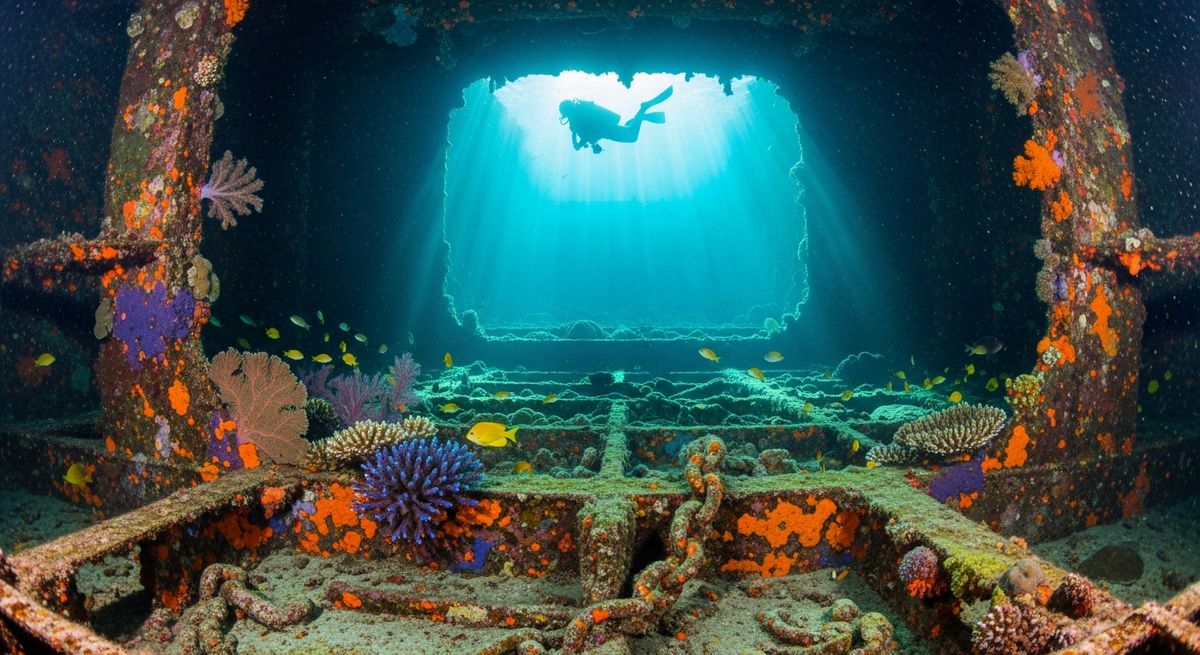
The Alondra is a proper South Coast Ireland wreck dive, and we rate it highly for a mid-depth exploration. She was a steamship, sunk in 1916, and the years underwater have given her a real character. You’ll find her sitting upright at 15 metres, pretty much intact, which is always a bonus. We love how the two huge boilers dominate the midships, often swarming with pollack and shoals of juvenile coley – the light playing off their scales as they dart in and out is genuinely mesmerising. The stern is our favourite part, with the propeller still clearly visible, usually covered in anemones and dead man’s fingers. You can poke around the superstructure, though penetration is definitely for experienced wreck divers only. For everyone else, just circling the Alondra, taking in the scale and the way she’s become a home for conger eels and lobster, is fantastic. Visibility here can be variable, so pick a calm day with a neap tide for the best experience. It's a dive that rewards slow, deliberate exploration.
Typical ALONDRA Dive Profile
Illustrative profile based on site depth and type. Actual dive profiles vary - always follow your dive computer and training.
Safety Notes
Wreck site - avoid penetration without wreck diving certification. Watch for sharp metal and entanglement hazards.
Cold water this month (avg 14°C). Drysuit or thick wetsuit (7mm+) recommended.
Always perform a 3-minute safety stop at 5m before surfacing.
ALONDRA Wreck History
Year Sunk
1916
Vessel Type
cargo ship
Cause
grounding
The SS Alondra was a steamship built in 1899, operated by the Yeoward Brothers' shipping line out of Liverpool. For years she plied the trade routes, a workhorse of the British merchant fleet. Her career came to a tragic and abrupt end during the height of World War I, not from enemy action, but from the raw power of the sea itself.
On December 29, 1916, while battling the fierce winter seas of the North Atlantic, the Alondra was driven aground on the treacherous Kedge Rock, near Baltimore in County Cork. The ship was battered by the waves and broke apart, leading to the loss of seventeen crew members in the icy water. In a testament to the bravery of the local community and surviving crew, twenty-three men were rescued from the disaster.
Lying in just 15 meters of water, the remains of the Alondra are now a fascinating and accessible dive site. The shallow depth and the violence of its sinking mean the wreck is extensively broken up, scattered across the seabed. Divers can easily identify the ship's massive boilers and the triple-expansion engine, which stand proud of the wreckage. Exploring the scattered plates and machinery offers a poignant reminder of the 1916 tragedy and provides a superb habitat for the vibrant marine life of Ireland's south coast.
Nearest Dive Centres to ALONDRA
Dive shops near ALONDRA
View all dive centres in South CoastReviews for ALONDRA
Conditions
Ocean conditions, forecast and tides for ALONDRA
ALONDRA Ocean Conditions
Monthly averages for ALONDRA, sourced from Open-Meteo marine data - nearest station: Open-Meteo marine grid (51.71, -8.38) (9km away)
October Averages
Sea Temperature
14°C
57°F · Range: 12.3–14.8°C
Air Temperature
12°C
54°F
Wind Speed
7.84 m/s
15.2 knots
Atmospheric Pressure
1008.6 hPa
Based on 4 years of monitoring data · Data sources: Open-Meteo marine data
Plan & book
Ways to dive South Coast, from day trips to liveaboards.
Day trips & courses
via GetYourGuideGuided dives, courses and snorkel trips with instant booking.
Find dive trips in South CoastPlaces to stay
via Booking.comHotels and dive resorts near South Coast.
Search stays in South CoastDive insurance
Most travel insurance excludes or limits scuba. Check what you need before you go.
Dive insurance explainedPartner links: we may earn a commission if you book, at no extra cost to you. How we make money
Where to Stay near ALONDRA
Prices from Booking.com. We may earn a commission at no extra cost to you.