BIG CAT
Protected Area
Valencia Harbour/Portmagee Channel SAC
Why dive here
With 185+ marine species recorded in the area - including blue sharks, dolphins, dwarf minke whales, humpback whales and ocean sunfish (mola mola) - BIG CAT offers some of South Coast's richest wreck diving. Water ranges 9-15°C, warmest July, August, September.
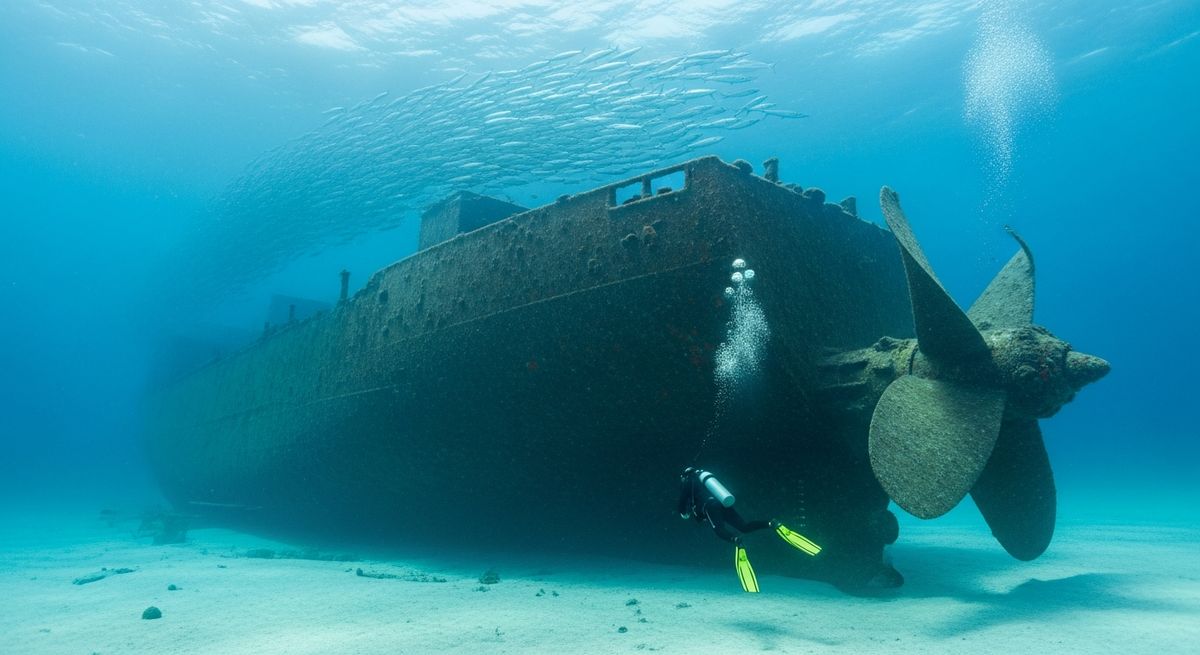
The Big Cat, just outside Valentia Harbour, isn’t about huge pelagics, it’s about history and how the sea reclaims things. We love it because it’s a proper Irish wreck, sunk in bad weather back in '89. This isn't a pristine, intact vessel; she's broken up, scattered across the seabed, which for us, makes it even more interesting. You get a sense of the struggle she had. Diving the Big Cat means navigating these distributed remains, discovering sections of hull, machinery, and twisted metal that are now home to a surprising amount of life. We've seen conger eels tucked into crevices, plenty of wrasse darting between the plates, and often, dogfish resting on the sand nearby. It’s a site that suits divers who appreciate exploring a dynamic, evolving wreck and enjoy piecing together a story from the scattered fragments. For us, the best time to dive it is on a calm day with good visibility, when the light penetrates the green water and really brings the wreck to life.
Safety Notes
Wreck site - avoid penetration without wreck diving certification. Watch for sharp metal and entanglement hazards.
Cold water this month (avg 14°C). Drysuit or thick wetsuit (7mm+) recommended.
BIG CAT Wreck History
Year Sunk
1989
Vessel Type
fishing vessel
Cause
grounding
Tonnage
108 GRT
The Big Cat was a 24-meter fishing vessel, a modern workboat typical of those found along the Irish coast in the late 20th century. These sturdy vessels are designed to handle the often-unforgiving waters of the North Atlantic, but even the most capable ships can fall victim to the ocean's power.
On January 13, 1989, the Big Cat's luck ran out. The vessel was attempting to enter Valentia Harbour on Ireland's rugged South Coast when it was caught in severe weather. Battered by high winds and heavy seas, the crew got into difficulties at the harbour entrance. The storm proved too powerful, driving the vessel aground where it was broken apart by the relentless waves.
Lying at a depth of 0 meters, the remains of the Big Cat are scattered and broken, a testament to the storm's fury. This shallow site is accessible for snorkelers and divers, offering a chance to explore the distributed wreckage. The twisted metal and machinery now form a micro-habitat for the area's marine life. Divers can expect to find conger eels, crabs, and lobsters making their homes among the debris, while schools of wrasse patrol the site, turning a modern tragedy into a lively part of the coastal ecosystem.
Reviews for BIG CAT
Conditions
Ocean conditions, forecast and tides for BIG CAT
BIG CAT Ocean Conditions
Monthly averages for BIG CAT, sourced from Open-Meteo marine data - nearest station: Open-Meteo marine grid (51.71, -8.38) (9km away)
October Averages
Sea Temperature
14°C
57°F · Range: 12.3–14.8°C
Air Temperature
12°C
54°F
Wind Speed
7.84 m/s
15.2 knots
Atmospheric Pressure
1008.6 hPa
Based on 4 years of monitoring data · Data sources: Open-Meteo marine data
Plan & book
Ways to dive South Coast, from day trips to liveaboards.
Day trips & courses
via GetYourGuideGuided dives, courses and snorkel trips with instant booking.
Find dive trips in South CoastPlaces to stay
via Booking.comHotels and dive resorts near South Coast.
Search stays in South CoastDive insurance
Most travel insurance excludes or limits scuba. Check what you need before you go.
Dive insurance explainedPartner links: we may earn a commission if you book, at no extra cost to you. How we make money
Where to Stay near BIG CAT
Prices from Booking.com. We may earn a commission at no extra cost to you.