CARNARVONSHIRE
Protected Area
Lough Hyne Nature Reserve and Environs SAC
Why dive here
With 185+ marine species recorded in the area - including blue sharks, dolphins, dwarf minke whales, humpback whales and ocean sunfish (mola mola) - CARNARVONSHIRE offers some of South Coast's richest wreck diving. Water ranges 9-15°C, warmest July, August, September.
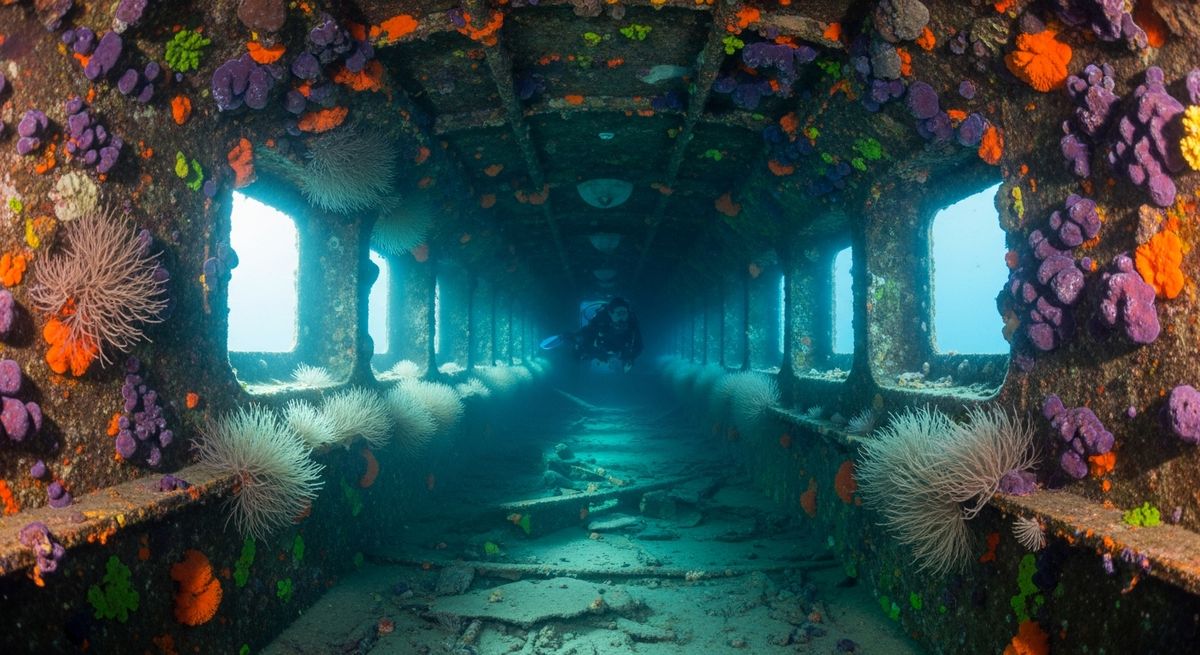
The Carnarvonshire, lying just off Thige Mor Rock, is a proper introduction to Irish wreck diving. She’s an iron-built sailing vessel, driven ashore in 1896, and what’s left sits in a friendly 3m of water. We love the way the light filters through the kelp, dappling the ribs and plates of the old girl. You can easily make out her shape, the bow and stern still distinct, even after all these years. It feels like stepping back in time, seeing a ghost ship slowly surrender to the sea. Our favourite time to dive here is on a calm, sunny day, just after high tide, when the water clears up and you get great visibility. Look for the blennies darting between the frames and the small crabs scuttling across the ironwork. It’s a gentle dive, perfect for photographers or anyone who just wants to spend some time exploring a piece of history without the pressure of depth or strong currents. We often find ourselves just hovering, watching the sway of the kelp and imagining the crew rowing ashore that April day. You can spend a good hour tracing her outlines, feeling the texture of the encrusted iron, and watching the small life that’s made her home.
Typical CARNARVONSHIRE Dive Profile
Illustrative profile based on site depth and type. Actual dive profiles vary - always follow your dive computer and training.
Safety Notes
Wreck site - avoid penetration without wreck diving certification. Watch for sharp metal and entanglement hazards.
Cold water this month (avg 14°C). Drysuit or thick wetsuit (7mm+) recommended.
CARNARVONSHIRE Wreck History
Year Sunk
1896
Vessel Type
cargo ship
Cause
grounding
The Carnarvonshire was a sturdy, iron-hulled sailing vessel built in 1876. In April of 1896, she was nearing the final leg of an epic voyage from San Francisco to her home port of Liverpool. After safely crossing the vast Pacific and Atlantic oceans, disaster struck just off the south coast of Ireland. The ship hit the treacherous Thige Mor Rock and was driven ashore, becoming a complete wreck. Thankfully, the entire crew managed to escape the doomed vessel and rowed to the safety of the nearby land.
Lying in a mere 3 meters of water, the Carnarvonshire is less of a scuba dive and more of an exciting snorkeling site or a very shallow shore dive. After more than a century of being pounded by Atlantic storms, the wreck is completely broken up. Divers and snorkelers can explore a wide area of scattered iron plates and hull ribs, now camouflaged by a thick layer of marine growth. It's a fascinating and easily accessible glimpse into the age of sail, perfect for an adventurous day on the coast.
Nearest Dive Centres to CARNARVONSHIRE
Dive shops near CARNARVONSHIRE
View all dive centres in South CoastReviews for CARNARVONSHIRE
Conditions
Ocean conditions, forecast and tides for CARNARVONSHIRE
CARNARVONSHIRE Ocean Conditions
Monthly averages for CARNARVONSHIRE, sourced from Open-Meteo marine data - nearest station: Open-Meteo marine grid (51.71, -8.38) (9km away)
October Averages
Sea Temperature
14°C
57°F · Range: 12.3–14.8°C
Air Temperature
12°C
54°F
Wind Speed
7.84 m/s
15.2 knots
Atmospheric Pressure
1008.6 hPa
Based on 4 years of monitoring data · Data sources: Open-Meteo marine data
Plan & book
Ways to dive South Coast, from day trips to liveaboards.
Day trips & courses
via GetYourGuideGuided dives, courses and snorkel trips with instant booking.
Find dive trips in South CoastPlaces to stay
via Booking.comHotels and dive resorts near South Coast.
Search stays in South CoastDive insurance
Most travel insurance excludes or limits scuba. Check what you need before you go.
Dive insurance explainedPartner links: we may earn a commission if you book, at no extra cost to you. How we make money
Where to Stay near CARNARVONSHIRE
Prices from Booking.com. We may earn a commission at no extra cost to you.