CELTIC
Protected Area
Cork Harbour SPA
Why dive here
With 185+ marine species recorded in the area - including blue sharks, dolphins, dwarf minke whales, humpback whales and ocean sunfish (mola mola) - CELTIC offers some of South Coast's richest wreck diving. Water ranges 9-15°C, warmest July, August, September.
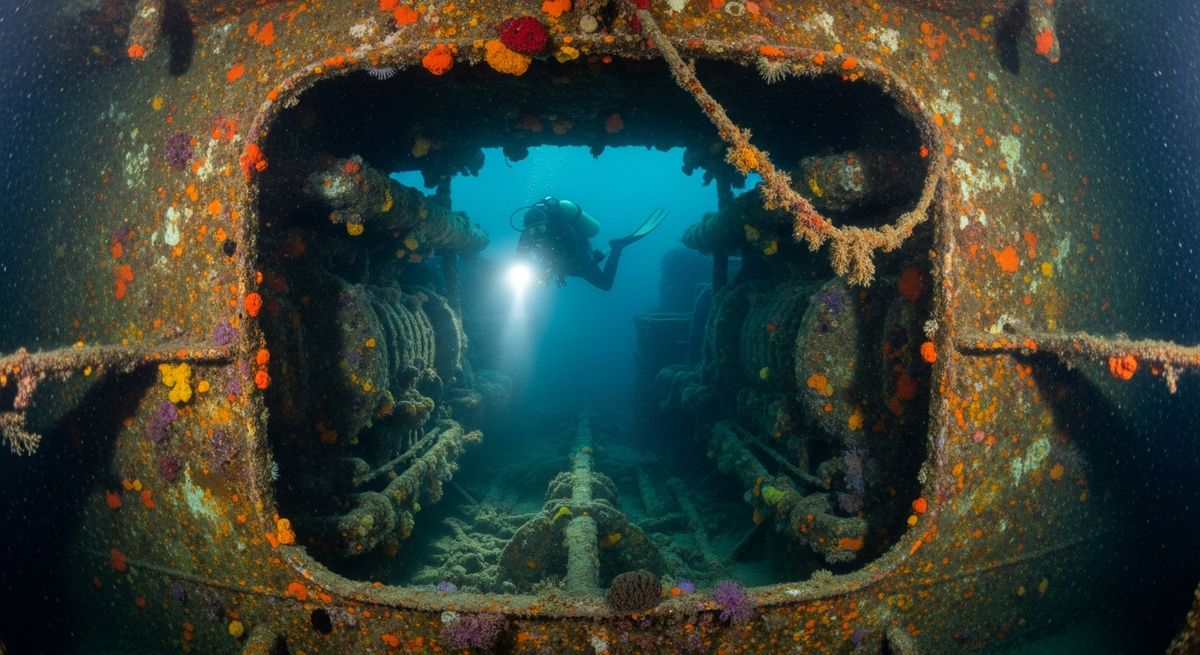
The Celtic, a grand old White Star Line vessel, sits in remarkably shallow water off the South Coast of Ireland. We love this site because it’s a proper piece of history, so accessible. Dropping down, you’re greeted by the sheer scale of it, even if she’s quite broken up. Think enormous plates of steel, a massive boiler, and twisted metal that tells a story of a ship’s final moments. She went down in 1928, and time, along with the Irish Sea, has done its work. Despite the damage, there’s still plenty to see and carefully poke around. We always find conger eels tucked into the darker recesses, and sometimes a dogfish or two resting on the sandy patches around the wreck. Visibility can be hit or miss here – if it’s been calm, you might get 10 metres, but a bit of swell can knock it down to 3 or 4. We’d suggest going on a slack tide for the easiest dive. This isn’t a penetration dive, but rather a chance to immerse yourself in a piece of maritime heritage, feeling the history in the cool Irish water. It’s perfect for divers who appreciate wrecks for their stories and the character they develop over decades on the seabed.
Typical CELTIC Dive Profile
Illustrative profile based on site depth and type. Actual dive profiles vary - always follow your dive computer and training.
Safety Notes
Wreck site - avoid penetration without wreck diving certification. Watch for sharp metal and entanglement hazards.
Cold water this month (avg 14°C). Drysuit or thick wetsuit (7mm+) recommended.
Nearest Dive Centres to CELTIC
Dive shops near CELTIC
View all dive centres in South CoastReviews for CELTIC
Conditions
Ocean conditions, forecast and tides for CELTIC
CELTIC Ocean Conditions
Monthly averages for CELTIC, sourced from Open-Meteo marine data - nearest station: Open-Meteo marine grid (51.71, -8.38) (9km away)
October Averages
Sea Temperature
14°C
57°F · Range: 12.3–14.8°C
Air Temperature
12°C
54°F
Wind Speed
7.84 m/s
15.2 knots
Atmospheric Pressure
1008.6 hPa
Based on 4 years of monitoring data · Data sources: Open-Meteo marine data
Plan & book
Ways to dive South Coast, from day trips to liveaboards.
Day trips & courses
via GetYourGuideGuided dives, courses and snorkel trips with instant booking.
Find dive trips in South CoastPlaces to stay
via Booking.comHotels and dive resorts near South Coast.
Search stays in South CoastDive insurance
Most travel insurance excludes or limits scuba. Check what you need before you go.
Dive insurance explainedPartner links: we may earn a commission if you book, at no extra cost to you. How we make money
Where to Stay near CELTIC
Prices from Booking.com. We may earn a commission at no extra cost to you.