SEAHORSE - South Coast

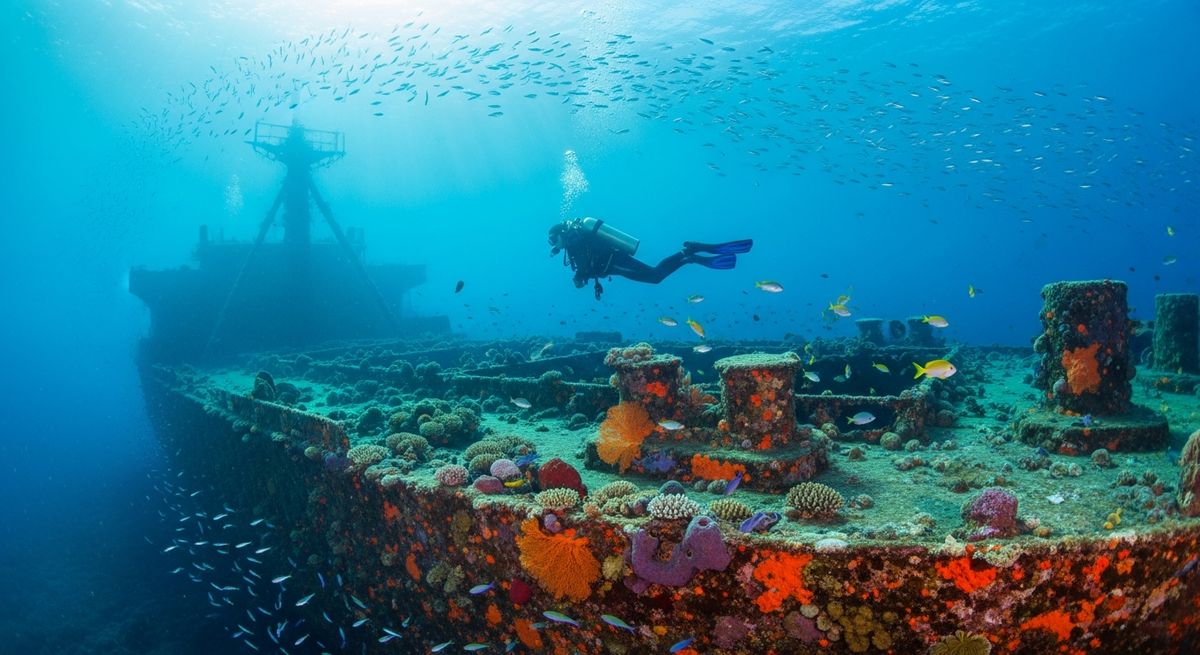
The Seahorse, a transport ship that went down in 1816, offers a different kind of dive on Ireland's South Coast. What you'll find here are the distributed remains of a sailing vessel, not a neat, intact wreck, but rather a historical scattering across the seabed. It’s less about penetrating cabins and more about exploring the debris field, where you can often spot parts of the ship's structure peeking out from the sand. This site really suits divers who enjoy piecing together a story from fragments, with the added bonus of local crustaceans and small fish using the timbers for shelter. It's a quieter, more reflective dive, often with decent visibility when the weather holds.

Location
South Coast, Ireland, Mediterranean & Europe
Coordinates
52.135334, -7.171667
Type
wreck
Maximum Depth
0m

Marine Protected Area: Tramore Dunes and Backstrand SAC

Best Time to Dive in South Coast

The warmest water temperatures in South Coast occur in January, averaging 8.8°C. The coolest conditions are in December at 8.8°C.

Monthly Water Temperatures

  • January: 8.8°C (air: 7.0°C)
  • February: 8.8°C (air: 8.3°C)
  • March: 8.8°C (air: 8.1°C)
  • April: 8.8°C (air: 9.3°C)
  • May: 8.8°C (air: 11.8°C)
  • June: 8.8°C (air: 14.2°C)
  • July: 8.8°C (air: 15.6°C)
  • August: 8.8°C (air: 15.8°C)
  • September: 8.8°C (air: 14.6°C)
  • October: 8.8°C (air: 12.4°C)
  • November: 8.8°C (air: 9.9°C)
  • December: 8.8°C (air: 8.1°C)

Nearby Dive Sites in South Coast

Nearest Dive Centres to SEAHORSE

Marine Life in South Coast

Home to 199 recorded species including 97 reef fish, 24 sharks & rays, 14 whales & dolphins, 14 other, 10 crabs & lobsters, 10 seagrass & algae.

Notable Species

Recommended Packing List for SEAHORSE

Based on average water temperature of 8.8°C.

  • Drysuit - water at 9°C demands a drysuit with thermal undergarments
  • Hood & Gloves (7mm+) - critical to prevent heat loss
  • Mask - essential for every dive
  • Fins
  • BCD - buoyancy compensator
  • Regulator - your most safety-critical piece of gear
  • Dive Computer - tracks depth, time, and NDL
  • Surface Marker Buoy (SMB) - essential for boat pickups
  • Dive Torch - useful for crevices and colour at depth
  • Underwater Camera - capture your diving memories

Frequently Asked Questions

What is the typical depth range for dives at a 'Seahorse' dive site?
The 'Seahorse' dive site, located off the South Coast of Ireland, is noted to have a depth of 0m. This indicates it is likely a very shallow dive, possibly even intertidal or just below the surface. Such a depth makes it accessible for various dive profiles, but divers should be aware of potential surface conditions.
What kind of marine life, besides seahorses, can divers expect to see at a 'Seahorse' dive site?
The provided data for the 'Seahorse' dive site, a wreck off the South Coast of Ireland, does not specify any particular marine life. While the name might suggest seahorses, the site is classified as the distributed remains of a sailing vessel wreck from 1816. For general information on marine life in the region, you might consult our wildlife database.
How difficult is diving at a 'Seahorse' dive site, and is it suitable for all experience levels?
Diving at the 'Seahorse' site is classified as intermediate difficulty. This suggests it is suitable for divers who have some experience beyond basic certification, but may not be ideal for absolute beginners. Divers should always assess their skills and comfort level with intermediate conditions before planning a dive here.
What is the best time of year to visit a 'Seahorse' dive site for optimal seahorse sightings and conditions?
The provided information for the 'Seahorse' dive site off the South Coast of Ireland does not specify the best time of year for optimal conditions or seahorse sightings. The site is primarily known as a historical wreck, sunk in 1816. For general guidance on diving seasons in Ireland, please refer to our When to Dive section.
Are there any specific diving certifications or experience levels required to dive at a 'Seahorse' dive site?
Given that the 'Seahorse' dive site is rated as intermediate difficulty, divers should possess at least an advanced open water certification or equivalent experience. While no specific certifications are explicitly listed, an intermediate rating implies that basic open water certification alone may not be sufficient. It's always recommended to dive within your training and experience limits for safety.
What are the typical current and visibility conditions at a 'Seahorse' dive site?
The available data for the 'Seahorse' dive site, a wreck located off the South Coast of Ireland, does not include specific details on typical current or visibility conditions. As with any wreck site, conditions can vary significantly based on weather and tides. It's advisable to check local dive reports or consult with local dive operators before planning your dive to this 1816 wreck.