ANGMERING
Protected Area
Inner Galway Bay
Why dive here
With 169+ marine species recorded in the area - including dolphins, dwarf minke whales, humpback whales, ocean sunfish (mola mola) and octopuses - ANGMERING offers some of West Coast's richest wreck diving. Water ranges 8-17°C, warmest July, August, September.
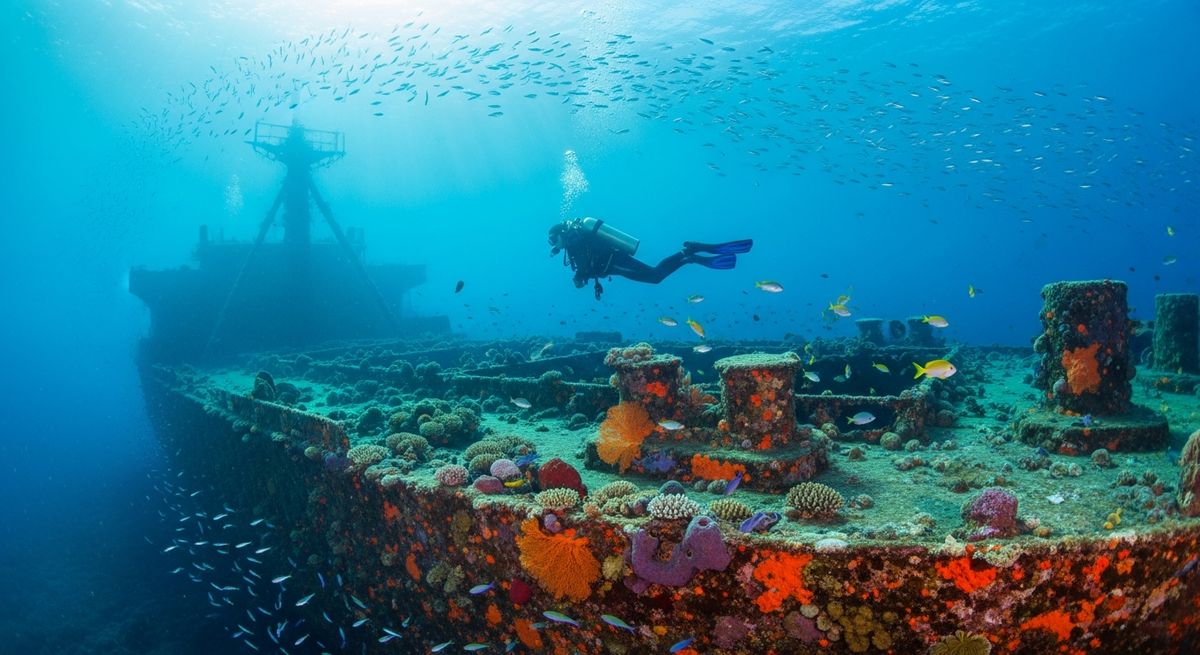
Angmering isn't your typical Irish wreck. At just 5 metres, it’s a brilliant way to spend an afternoon, especially when the weather decides to play nice. We love that you can do long dives here without worrying about deco, giving you ample time to really explore the ship. This old motor vessel, sunk back in '75, lies well broken up but still recognisable in sections. The bow and stern are the most interesting parts, with twisted metal and gaping holes that invite exploration. Keep an eye out for the resident conger eels tucked into the darker recesses – they’re quite common here. The main deck area is a jumble of collapsed plating, but there are always plenty of crabs scuttling about and tiny blennies peering from crevices. Visibility can be hit or miss, as it often is in Ireland, but on a good day, the light plays beautifully through the shallower parts of the wreck. It's a fantastic site for newer wreck divers or photographers wanting to practice their skills without the pressure of depth. Our top tip? Go at slack water for the easiest dive; the currents here can pick up, making it a bit of a push.
Typical ANGMERING Dive Profile
Illustrative profile based on site depth and type. Actual dive profiles vary - always follow your dive computer and training.
Safety Notes
Wreck site - avoid penetration without wreck diving certification. Watch for sharp metal and entanglement hazards.
Cold water this month (avg 14°C). Drysuit or thick wetsuit (7mm+) recommended.
ANGMERING Wreck History
Year Sunk
1975
Vessel Type
cargo ship
Cause
grounding
Tonnage
1,599 GRT
The MV Angmering began her life in 1965 as the Rattray Head, a modern motor vessel built for the coastal trade. A product of the Clelands Shipbuilding Co. on the River Tyne, she was a versatile cargo carrier of 1,599 GRT. In 1973, she was sold to the Stephenson Clarke company and renamed Angmering, continuing her workhorse duties around the British Isles.
Her final voyage in January 1975 turned into a dramatic tale of survival against the odds. While transporting a cargo of coal from Ayr, Scotland, to Limerick, Ireland, the Angmering was caught in a furious Force 10 gale off the coast of County Mayo. The storm proved too much for the vessel, driving her onto the rocks at Rossan Point. As the ship began to break apart in the violent surf, the Arranmore lifeboat launched into the storm in a heroic and highly skilled rescue, saving all 13 crew members from the doomed vessel just before it broke in two and sank.
Lying in just 5 meters of water, the Angmering is a testament to the power of the Atlantic. The wreck is thoroughly broken up due to the violence of its sinking and its exposure to constant wave action. Despite this, it offers a compelling dive, with large sections of twisted steel and machinery creating an intricate habitat for a wealth of marine life. Its extreme shallow depth makes it a bright dive on a clear day, but also means it should only be approached in calm sea conditions.
Nearest Dive Centres to ANGMERING
Dive shops near ANGMERING
View all dive centres in West CoastReviews for ANGMERING
Conditions
Ocean conditions, forecast and tides for ANGMERING
ANGMERING Ocean Conditions
Monthly averages for ANGMERING, sourced from Open-Meteo marine data - nearest station: Open-Meteo marine grid (53.32, -9.66) (22km away)
October Averages
Sea Temperature
14°C
56°F · Range: 11.7–15.4°C
Air Temperature
12°C
54°F
Wind Speed
8.2 m/s
15.9 knots
Atmospheric Pressure
1007.4 hPa
Based on 4 years of monitoring data · Data sources: Open-Meteo marine data
Plan & book
Ways to dive West Coast, from day trips to liveaboards.
Day trips & courses
via GetYourGuideGuided dives, courses and snorkel trips with instant booking.
Find dive trips in West CoastPlaces to stay
via Booking.comHotels and dive resorts near West Coast.
Search stays in West CoastDive insurance
Most travel insurance excludes or limits scuba. Check what you need before you go.
Dive insurance explainedPartner links: we may earn a commission if you book, at no extra cost to you. How we make money
Where to Stay near ANGMERING
Prices from Booking.com. We may earn a commission at no extra cost to you.