Diving in West Coast
Why dive here
West Coast offers some of Ireland's richest diving, with 169+ marine species recorded in the area - including dolphins, dwarf minke whales, humpback whales, ocean sunfish (mola mola) and octopuses. Water ranges 8-17°C, warmest July, August, September.
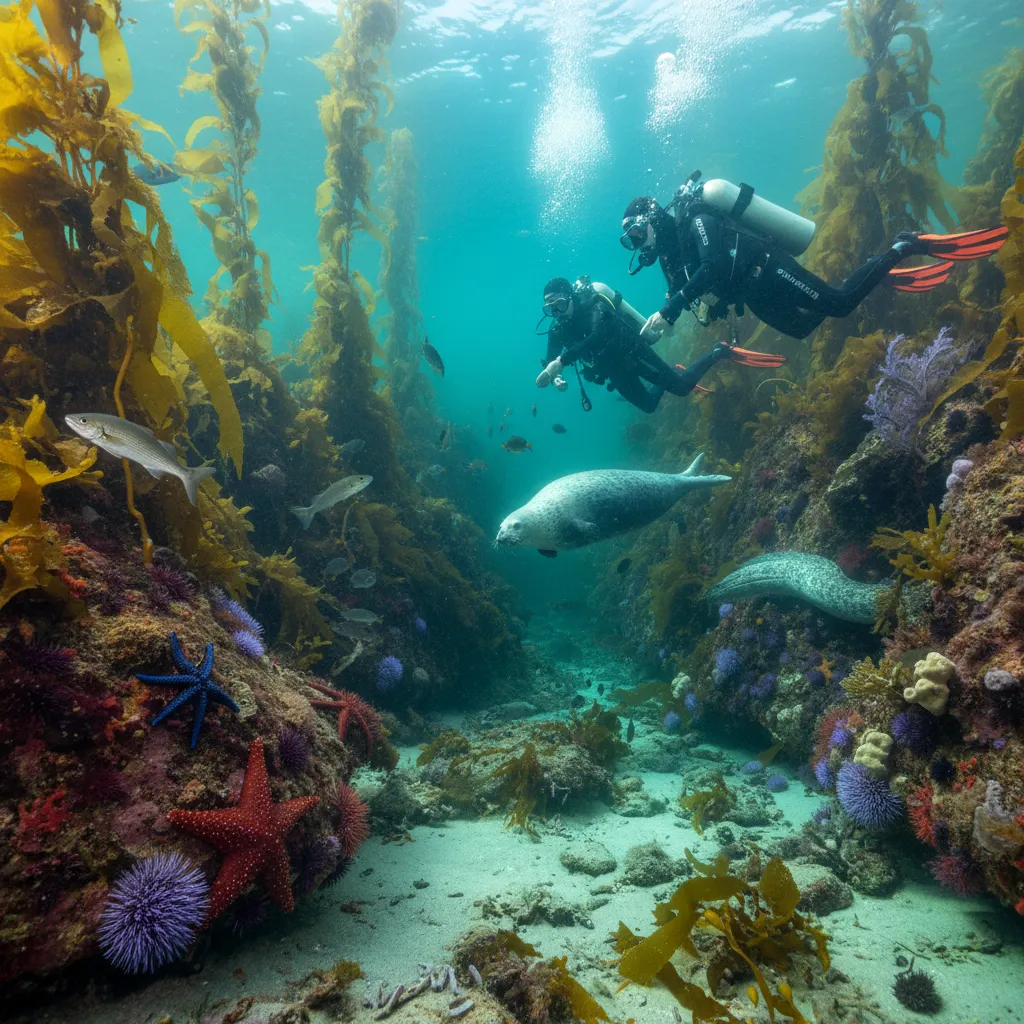
The West Coast of Ireland is where the Wild Atlantic Way truly lives up to its name, especially underwater. We’re talking about proper wild diving here, a place for those who appreciate dramatic seascapes and a touch of the rugged. Think kelp forests swaying like ancient trees, impressive walls that drop into the deep, and a surprising number of bigger animals that glide through the blue. You’re not coming here for warm, gentle drifts; you’re coming for the raw beauty of the Atlantic. We love the sheer variety of dive sites; from sheltered reefs perfect for beginners to exposed pinnacles that challenge even advanced divers. Our favourite dives are often those around the towering walls, where you can watch the resident Cape Sharks cruise past, or spot a curious Bentnose Rabbitfish darting into crevices. If you’re lucky, you might even catch a glimpse of a Shortfin Mako out in the deeper water - a genuinely thrilling encounter. Visibility can be a mixed bag, improving dramatically in the calmer summer months. We'd suggest aiming for late spring or early autumn; you get fewer crowds and some cracking days out on the water. Keep an eye out for the Hooded Shrimp hiding in the kelp and the vibrant reddish crabs on the rocky seabed. It’s an immersive experience, the kind that stays with you long after you’ve toweled off.
West Coast Dive Site Map
Dive sites and dive centres in West Coast
West Coast Dive Sites
88 dive sites in West Coast
Alain Dominique Wreck
The Alain Dominique wreck sits at a comfortable 14 metres, making it a fantastic spot for newer divers to get a feel for wreck diving without the usual depth challenges. We love how accessible this site is, especially for those who might be nervous about their first wreck penetration. You’ll find the remains of a small fishing trawler, sunk over 20 years ago, now completely colonised by the local marine community. Even on a cloudy day, the wreck feels inviting. We’ve spent many a dive here weaving in and out of the wheelhouse, noting the way the light filters through the openings, illuminating the nooks where blennies hide. Keep an eye out for conger eels tucked into the darker sections and the bright orange of jewel anemones covering almost every surface. It’s a gentle introduction to the Atlantic’s embrace, an honest wreck dive that leaves you feeling accomplished, not overwhelmed. We’d suggest going at high slack tide for the calmest conditions; it just makes exploring that much more enjoyable.
ANGMERING
Angmering isn't your typical Irish wreck. At just 5 metres, it’s a brilliant way to spend an afternoon, especially when the weather decides to play nice. We love that you can do long dives here without worrying about deco, giving you ample time to really explore the ship. This old motor vessel, sunk back in '75, lies well broken up but still recognisable in sections. The bow and stern are the most interesting parts, with twisted metal and gaping holes that invite exploration. Keep an eye out for the resident conger eels tucked into the darker recesses – they’re quite common here. The main deck area is a jumble of collapsed plating, but there are always plenty of crabs scuttling about and tiny blennies peering from crevices. Visibility can be hit or miss, as it often is in Ireland, but on a good day, the light plays beautifully through the shallower parts of the wreck. It's a fantastic site for newer wreck divers or photographers wanting to practice their skills without the pressure of depth. Our top tip? Go at slack water for the easiest dive; the currents here can pick up, making it a bit of a push.
Aran Islands
The Aran Islands are a proper commitment, not a casual dip. We're talking advanced diving, full stop. You’re coming here for those dramatic walls, dropping from 10 metres down to a solid 35, riddled with arches and overhangs. It feels ancient, a real sense of scale as you drift past rock faces draped in Pink Sea Fans. This isn't your colourful tropical reef, but the cool Atlantic water holds its own kind of magic – the sheer size of the rock formations, the way the light filters down, and the surprising encounters. Our favourite time to be here is late summer, when there’s a better chance of spotting sunfish lumbering by or even a blue shark cruising the deeper water. The visibility can vary wildly, but on a good day, it’s a deep emerald green, offering incredible views of the wall. Keep an eye out for smaller stuff too: we often see Butterfly Blennies tucked into crevices and Spotted Dragonets camouflaged against the rock. It’s wild, raw diving, perfect for those who appreciate the drama of an untamed coastline and the thrill of bigger pelagic sightings.
AROSA
The AROSA, a 35.8-meter fishing vessel, rests at 40 meters after running aground on Doonguddle Rock in 2000. It's a sombre site, given the history, but it’s an intriguing dive. We find the wheelhouse usually intact enough for a quick look inside, and the trawler gear, winches and nets, are still visible, draped over the deck. Look for conger eels peering from the darker corners and plenty of wrasse darting in and out of the superstructure. It's a deep dive, really for experienced divers comfortable with limited visibility and colder temperatures, but the structure itself offers plenty to explore for those who take their time.
Aughnish Drift
The Aughnish Drift offers a solid drift dive experience off Ireland's west coast. You'll move along with the current, spotting various common temperate species like wrasse and dogfish in the kelp forests. It's a straightforward dive, well-suited for those comfortable with current and looking for a relaxed exploration of the local marine environment without much effort.
Back of Lime Rock
Back of Lime Rock offers a straightforward dive along a rocky seabed, dropping to about 32 metres. It’s a good spot for beginners looking for some depth, or for checking gear before heading to more exposed sites. You'll find a typical Irish rock reef here, with a chance to spot some local crustaceans tucked into crevices. Expect a calm dive, often with decent visibility for the region.
BARRISTER
The Barrister, a huge steamship sitting off the West Coast of Ireland, is a serious dive. Forget gentle drifts; this is about big, imposing metal. She’s over 135 meters long, and when you descend, the sheer scale of her just emerges from the gloom. We’ve found her often shrouded in that beautiful Irish green water, visibility typically settling around 10-15 meters, sometimes less. But that just adds to the atmosphere. As you explore, you're not looking for bright corals, you're looking at the engineering – the three massive boilers, the triple-expansion engine. It’s industrial archaeology. We always check the stern first; the propeller is impressive, often covered in dense plumose anemones, their white tentacles waving in the slight surge. Inside, around the engine room, conger eels are everywhere, thick as your thigh, peering from every nook. Ling and pollack often school above the deeper sections of the wreck. This is a dive for experienced wreck enthusiasts who appreciate history and don't mind a bit of a challenge with conditions. It’s an immersion into a moment in time, a powerful reminder of the sea’s raw strength.
Biraghty Mor
Biraghty Mor drops to 33 metres, offering a decent wall dive for intermediate divers. We often see conger eels tucked into crevices, and colourful anemones cling to the rock face. The site is exposed, so pick a calm day for the best conditions and visibility. It’s a solid choice for those looking for typical Irish coastal diving away from the more sheltered bays.
Bridges of Ross
The Bridges of Ross offers a gentle introduction to diving on Ireland’s west coast. Dropping to a maximum of 19m, it’s a good spot for beginners and those getting back in the water. You'll find a rocky seabed with plenty of nooks to poke around in, keeping an eye out for crabs and small fish darting about. It’s a straightforward dive, unchallenging and pleasant enough on a calm day.
Carraig Cois Ceim
Carraig Cois Ceim offers a typical West Coast Ireland shore dive, accessible and straightforward. You'll find a rocky seabed with patches of sand, home to conger eels tucked into crevices and various wrasse species darting through kelp. It’s a good spot for a relaxed second dive or for divers getting comfortable with temperate water conditions, often with decent visibility for the region.
CARRAIG UNA
Carraig Una isn't a dive you just drop onto; it’s a site that demands respect and a good bit of planning. Lost with all five hands in 1976, this 21-metre trawler sits exposed on a rocky seabed near a small island off the West Coast. We find the site best dived during slack tide, particularly around neaps, when the surge isn't trying to pull you into the open Atlantic. You'll often find the visibility here can be a bit of a lottery. On a good day, with a bit of sunlight filtering through, the wreck feels incredibly atmospheric. You can make out the lines of the hull, parts of the wheelhouse, and what looks like a winch. It’s covered in dahlia anemones and dead man’s fingers, all those cold water corals that just burst with colour when you hit them with a torch. Conger eels definitely call this home, tucked into every nook and cranny, and we’ve spotted plenty of inquisitive wrasse nosing around the debris field. This is a dive for those who appreciate the history as much as the marine life, a thoughtful exploration rather than a frantic wildlife chase. It’s a somber site, but truly a rewarding one for experienced divers comfortable with unpredictable conditions.
Chimney Bay
Chimney Bay is a straightforward shore dive on Ireland's west coast, perfect for beginners and those looking for a relaxed entry. You'll find a gradually sloping seabed, mostly sand and small rocks, down to about 18 meters. It’s a good spot to get comfortable with your gear and practice skills, often with opportunities to spot common local species like wrasse and gobies amongst the kelp. While not spectacular, it's reliable for a low-key dive when conditions are calm.
Show all 88 dive sites in West Coast
- Coral Beach
- CRETEBOOM
- C S PARNELL
- Donegal Point
- Doolin Point
- ELEFTHERIOS M TRICOGLU
- EVELYN MARIE
- Fishing Boat Wreck
- FLOWERETTE
- FULMER
- Galway Quarry
- George s Head
- GIRL MAUREEN
- Gleninagh pier
- Gregory’s Sound
- Grey Rock
- Gurraig Sound
- HMS Audacious
- HMS Dunvegan Castle
- H.M.S. Martin
- HMS MARTIN (PROBABLY)
- H M S Martin Wreck
- HMS Mashona
- HMS RACOON
- HMS Transylvania
- HORIZON II
- Horn Head
- Illaunabaha
- Illaunabarnagh
- Illaunloo
- Inish Barna
- Inishnabro
- Kilkee
- LISA SELENA
- Lough Rea
- MAGPIE
- MARIE
- MORVEN
- MOYALLA
- Myles Creek
- Newfee
- OGANO
- OKEANOS
- Outer Rock
- PATRIARCH
- Poll na bPéist; The Wormhole
- Portnablagh
- Portroe Quarry
- PREMIER
- RMS Carinthia
- RMS Laconia
- ROUSSALKA
- Salthill
- SHAUN SHAUN
- Shingle
- Sick mans rock
- SKIFJORD
- Skuddagh Rock
- Square rock
- SS Laurentic
- SS Laurentic
- ST OLIVER
- The Letterbox
- The Pinnacle
- The Tunnel
- Thumb Rock
- Tony's Crack
- Trabaan Pier
- Trá na Reilige
- Twin peaks
- University of Galway Sub-Aqua Club
- VIKTOR LYAGIN
- VILLAGE QUEEN
- Wreck of U-249
- Wreck of U-2511
- Wreck of U-293
West Coast Dive Centres
2 dive shops and operators in West Coast
Ocean Wildlife in West Coast
169 species recorded in West Coast
West Coast Daylight & Sunrise/Sunset
Sunrise and sunset times for West Coast, calculated from coordinates
Today - Sunday 11 October
Sunrise
05:56
Sunset
16:56
Daylight
11h 0m
Golden Hour
16:08
First light (dawn) at 05:21 · Last light (dusk) at 17:31
Monthly Averages
| Month | Sunrise | Sunset | Daylight |
|---|---|---|---|
| Jan | 07:48 | 15:47 | 7h 59m |
| Feb | 07:00 | 16:46 | 9h 46m |
| Mar | 05:57 | 17:40 | 11h 43m |
| Apr | 04:42 | 18:36 | 13h 55m |
| May | 03:40 | 19:30 | 15h 50m |
| JunLongest | 03:10 | 20:09 | 16h 59m |
| Jul | 03:27 | 20:02 | 16h 35m |
| Aug | 04:16 | 19:11 | 14h 55m |
| Sep | 05:10 | 17:59 | 12h 49m |
| OctNow | 06:03 | 16:46 | 10h 43m |
| Nov | 07:02 | 15:44 | 8h 42m |
| DecShortest | 07:48 | 15:19 | 7h 32m |
Times are approximate local times based on longitude. Actual times may vary slightly depending on the exact timezone observed in West Coast.
Where to Stay near West Coast
Prices from Booking.com. We may earn a commission at no extra cost to you.
Marine Protected Areas near West Coast
122 protected areas near West Coast - please respect local regulations when diving
West Connacht Coast SAC
Lower River Shannon SAC
Kenmare River
Kenmare River SAC
River Shannon and River Fergus Estuaries SPA
Blasket Islands SAC
Blasket IslandS
Kilkieran Bay and Islands
Kilkieran Bay and Islands SAC
Blacksod Bay/Broad Haven SPA
Inishmore Island SAC
Galway Bay Complex SAC
Showing 12 largest of 122
Getting to West Coast
Charlestown
Shannon
Cork
Plan & book
Ways to dive West Coast, from day trips to liveaboards.
Day trips & courses
via GetYourGuideGuided dives, courses and snorkel trips with instant booking.
Find dive trips in West CoastPlaces to stay
via Booking.comHotels and dive resorts near West Coast.
Search stays in West CoastDive insurance
Most travel insurance excludes or limits scuba. Check what you need before you go.
Dive insurance explainedPartner links: we may earn a commission if you book, at no extra cost to you. How we make money