AROSA - West Coast

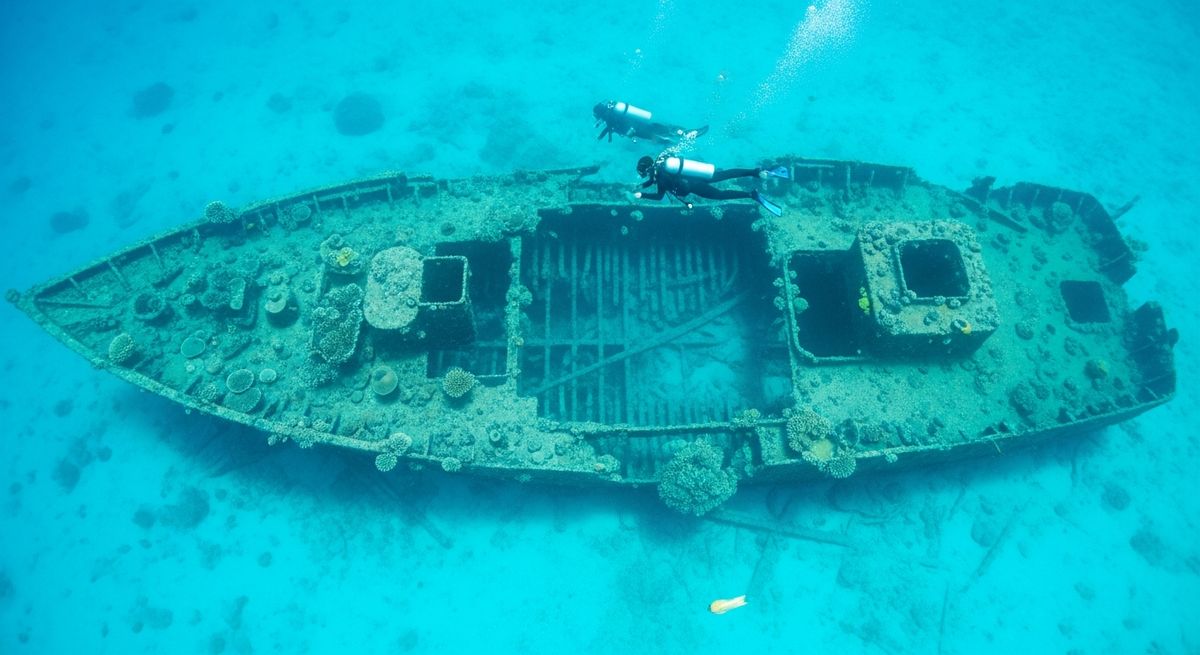
The AROSA, a 35.8-meter fishing vessel, rests at 40 meters after running aground on Doonguddle Rock in 2000. It's a sombre site, given the history, but it’s an intriguing dive. We find the wheelhouse usually intact enough for a quick look inside, and the trawler gear, winches and nets, are still visible, draped over the deck. Look for conger eels peering from the darker corners and plenty of wrasse darting in and out of the superstructure. It's a deep dive, really for experienced divers comfortable with limited visibility and colder temperatures, but the structure itself offers plenty to explore for those who take their time.

Location
West Coast, Ireland, Mediterranean & Europe
Coordinates
53.253666, -9.984167
Type
wreck
Maximum Depth
40m

Marine Protected Area: Slyne Head to Ardmore Point Islands SPA

Best Time to Dive in West Coast

The warmest water temperatures in West Coast occur in January, averaging 8.9°C. The coolest conditions are in December at 8.9°C.

Monthly Water Temperatures

  • January: 8.9°C (air: 7.2°C)
  • February: 8.9°C (air: 8.0°C)
  • March: 8.9°C (air: 8.0°C)
  • April: 8.9°C (air: 9.8°C)
  • May: 8.9°C (air: 12.0°C)
  • June: 8.9°C (air: 14.2°C)
  • July: 8.9°C (air: 15.2°C)
  • August: 8.9°C (air: 15.9°C)
  • September: 8.9°C (air: 14.8°C)
  • October: 8.9°C (air: 12.4°C)
  • November: 8.9°C (air: 10.3°C)
  • December: 8.9°C (air: 8.1°C)

Nearby Dive Sites in West Coast

Nearest Dive Centres to AROSA

Marine Life in West Coast

Home to 183 recorded species including 86 reef fish, 20 sharks & rays, 15 whales & dolphins, 12 other, 10 seagrass & algae, 8 crabs & lobsters.

Notable Species

  • dogfish (Scyliorhinus canicula) - Sharks & Rays
  • Haddock (Melanogrammus aeglefinus) - Reef Fish
  • hake (Merluccius merluccius) - Reef Fish
  • grey gurnard (Eutrigla gurnardus) - Reef Fish
  • whiting (Merlangius merlangus) - Reef Fish
  • Split (Scomber scombrus) - Reef Fish
  • megrim (Lepidorhombus whiffiagonis) - Reef Fish
  • Pollock (Trachurus trachurus) - Reef Fish
  • Common dragonet (Callionymus lyra) - Reef Fish
  • poor cod (Trisopterus minutus) - Reef Fish
  • blue whiting (Micromesistius poutassou) - Reef Fish
  • Boarfish (Capros aper) - Reef Fish
  • Protestant (Clupea harengus) - Reef Fish
  • lesser argentine (Argentina sphyraena) - Reef Fish
  • Soldier (Chelidonichthys cuculus) - Reef Fish
  • Angler (Lophius piscatorius) - Reef Fish
  • dab (Limanda limanda) - Reef Fish
  • Cape Shark (Squalus acanthias) - Sharks & Rays
  • sprat (Sprattus sprattus) - Reef Fish
  • Bastard Sole (Microchirus variegatus) - Reef Fish

Recommended Packing List for AROSA

Based on average water temperature of 8.9°C.

  • Drysuit - water at 9°C demands a drysuit with thermal undergarments
  • Hood & Gloves (7mm+) - critical to prevent heat loss
  • Mask - essential for every dive
  • Fins
  • BCD - buoyancy compensator
  • Regulator - your most safety-critical piece of gear
  • Dive Computer - tracks depth, time, and NDL
  • Surface Marker Buoy (SMB) - essential for boat pickups
  • Dive Torch - useful for crevices and colour at depth
  • Underwater Camera - capture your diving memories

Frequently Asked Questions

What is the typical depth range for diving the AROSA wreck?
The AROSA wreck is located at a depth of 40 meters, offering a deep dive experience for those exploring this historical fishing vessel. This consistent depth requires divers to have appropriate training and experience for deeper dives. You can find more details about this dive site on its dedicated DivePlnr page.
What kind of marine life and underwater features can divers expect to see on the AROSA dive site?
The primary underwater feature divers can expect to see on the AROSA dive site is the wreck of a 35.8m x 6m fishing vessel, which sank on October 3, 2000. While specific marine life sightings are not detailed in the current data, wrecks like the AROSA often become vibrant artificial reefs over time, attracting diverse marine species. For more information on common marine life in the region, explore our wildlife database.
How challenging is the AROSA wreck dive, and is it suitable for beginner or advanced divers?
The AROSA wreck dive is classified as intermediate difficulty. This makes it suitable for divers with some experience beyond entry-level certifications, offering an engaging challenge. While not recommended for absolute beginners, experienced and advanced divers will find exploring this wreck rewarding.
What is the best time of year to dive the AROSA wreck for optimal conditions and visibility?
The current data for the AROSA wreck does not specify the best time of year for optimal diving conditions or visibility. Divers planning to visit this site should consult local dive centers in Ireland's West Coast for up-to-date information. For general advice on seasonal diving, you can explore our When to Dive guide.
What diving certifications are required or recommended to dive the AROSA, especially for wreck penetration?
Given the AROSA wreck's depth of 40 meters and its intermediate difficulty, an Advanced Open Water Diver certification or equivalent is highly recommended. For any wreck penetration, a specialized Wreck Diver certification is essential to safely navigate the interior of the vessel. Always ensure your training and equipment are appropriate for the planned dive.
What are the usual current and visibility conditions at the AROSA dive site?
The current data for the AROSA dive site does not provide specific details on usual current or visibility conditions. To ensure a safe and enjoyable dive, it is highly recommended to consult local dive centers or guides in Ireland's West Coast for the most up-to-date information on prevailing conditions.